
India’s liquefied natural gas (LNG) imports rose in June compared to the same month last year, according to the preliminary data from the oil ministry’s Petroleum Planning and Analysis Cell.
The country imported about 2.64 billion cubic meters, or about 2 million metric tonnes of LNG, in June via long-term contracts and spot purchases, a rise of 11.4 percent compared to the same month in 2023, PPAC said.
In May this year LNG imports dropped compared to the previous year, while in April this year LNG imports rose year-on-year. In March LNG imports dropped slightly following a year-on-year rise in January and February, PPAC’s data previously showed.
During April-June, India took some 7.79 bcm of LNG, or about 5.9 million metric tonnes, up by 0.6 percent compared to the same period last year, according to PPAC.
India paid $1.1 billion for June LNG imports, up compared to $1 billion in June last year, and the country paid $3.2 billion in the April-June period, down from $3.4 billion in the same period last year, PPAC said.
As per India’s natural gas production, it reached about 2.99 bcm in June, a rise of 2.9 percent compared to the corresponding month of the previous year.
Natural gas production of 9.05 bcm in April-June was up by 5.7 percent compared to the same period in 2023.
At the moment, India imports LNG via seven facilities with a combined capacity of about 47.7 million tonnes.
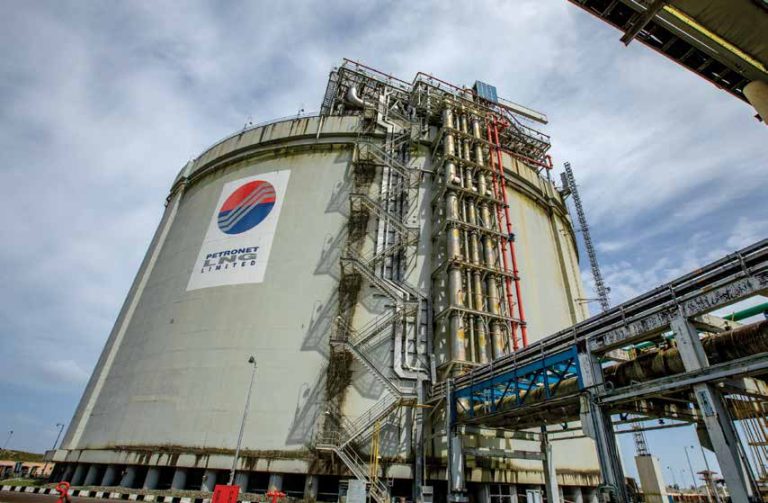
These include Petronet LNG’s Dahej and Kochi terminals, Shell’s Hazira terminal, and the Dabhol LNG, Ennore LNG, Mundra LNG, and Dhamra LNG terminal.
The Chhara LNG import terminal in Gujarat should also receive its commissioning cargo later this year after it failed to unload the cargo from the 2015-built 159,800-cbm, Maran Gas Mystras.
India’s Hindustan Petroleum, a unit of state-owned ONGC, aims to launch its delayed Chhara LNG import terminal by October this year, according to its management.
During April-May this year, the 17.5 mtpa Dahej terminal operated at 107.2 percent capacity, while the 5.2 mtpa Hazira terminal operated at 38.3 percent capacity, PPAC said.
The 5 mtpa Dhamra LNG terminal operated at 25 percent capacity, the 5 mtpa Dabhol LNG terminal operated at 73.8 percent capacity, the 5 mtpa Kochi LNG terminal operated at 20.6 percent capacity, and the 5 mtpa Ennore LNG terminal operated at 25.8 percent capacity, it said.
In May, Petronet said it expects a 15 percent rise in the country’s imports of LNG during this financial year.
The company’s executives said during the company’s earnings call that Petronet expects India’s LNG imports to rise to 27 millions tonnes in the fiscal year 2025/2026 which ends in March next year.