
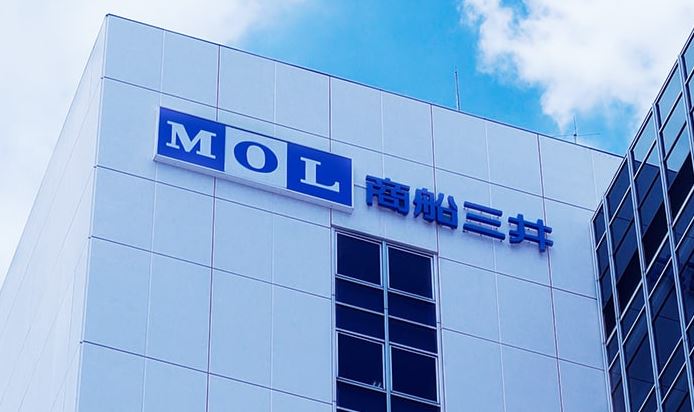
Japan’s shipping giant Mitsui O.S.K. Lines (MOL) revealed this week plans to merge its marine and engineering units, effective April 1.
The firm said in a statement that MOL Marine would absorb MOL Engineering while the merger would not result in the issue of additional shares or other financial transactions.
The merged unit would work in the consulting business covering overall marine engineering technology, engineering business related to the repair of vessels, and dry-docking, it said.
Moreover, the work area would also include the allocation of safety supervisors and management of submarine cable-laying vessels, MOL said.
The new company is slated to move to the MOL head office in Tokyo by the end of June.
Covid impacted consumer behavior
MOL established both of the units in 1988. Since then, MOL Marine’s core competence has been consultancy related to port harbor facilities and marine traffic, training of seafarers using large simulators. It also manages submarine cable-laying vessels.
On the other hand, MOL Engineering’s specialty has been inspection and maintenance of marine equipment, including migration to evolving international regulations, such as retrofitting of ballast water management systems in 2015, and SOx scrubbers in 2019.
“In the background of the merger, Covid-19 has impacted consumer behavior among the global economy,” MOL said.
“Shipping faces higher expectations for contributions to a more efficient value chain, while continuing its momentum of decarbonization to mitigate the environmental load,” the firm said.
MOL says it considers these expectations as an opportunity to align an organization that can tackle the current and future demands by providing “tangible and intangible seamless services, through the merging of the two companies.”
Floating LNG power on the table as well
In addition, the merger would also positively affect the firm’s offshore businesses and the autonomous shipping development.
“The dynamic positioning system that enables precise positioning of vessels under various marine conditions which MOL Marine has developed through submarine cable-laying, and the extensive engineering experience of MOL Engineering will be MOL Groups unique competency that will contribute to area’s such as floating LNG power generation and offshore wind power generation,” the firm said.
The offshore technology will be concentrated in close cooperation with MOL and will evolve the merging companies to a further advantage both in safety and technology, it said.