
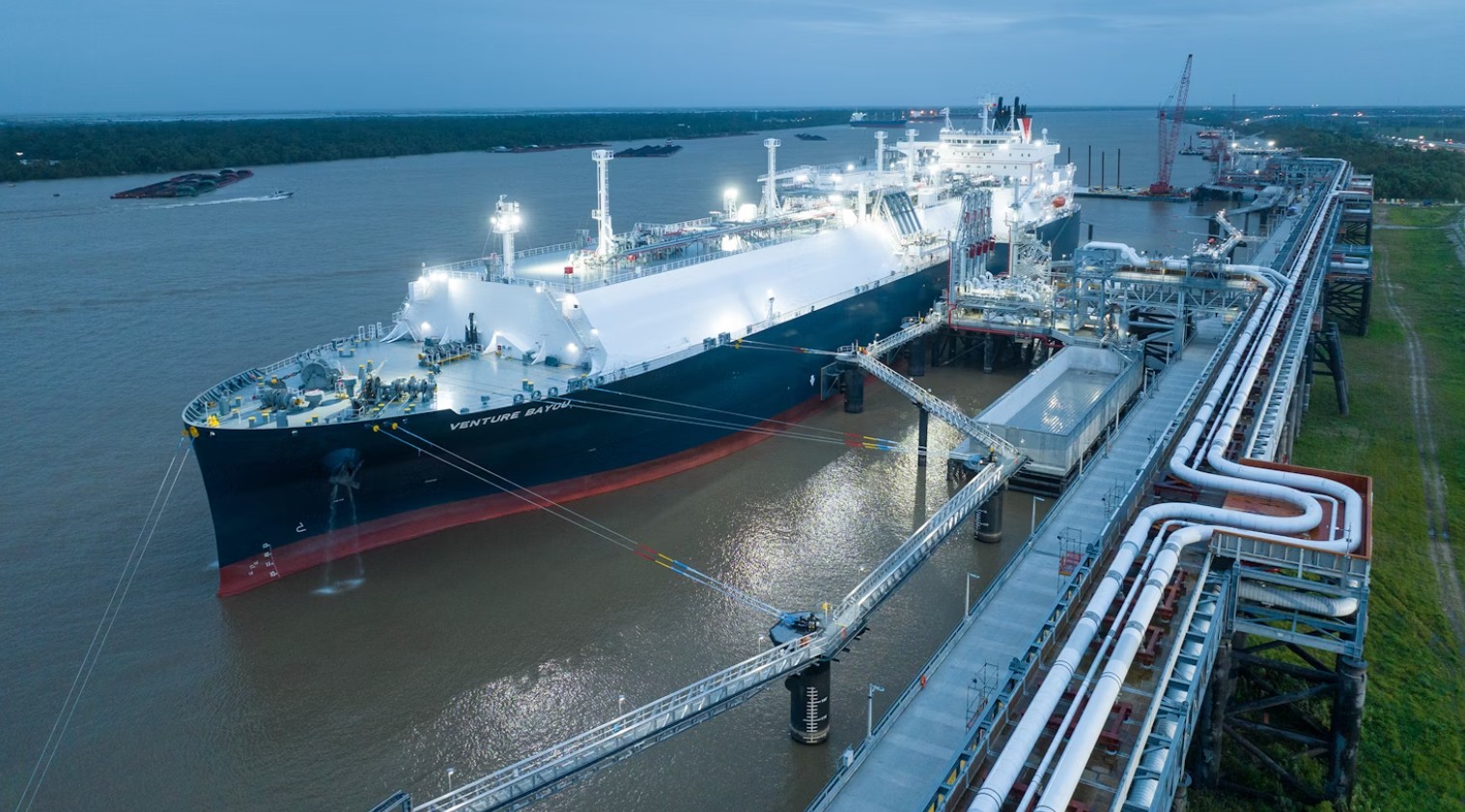
Global natural gas markets are set to remain tight in 2025 as demand continues to rise, and supply expands more slowly than before the pandemic and energy crisis, according to a new report by the International Energy Agency.
The agency said in its latest quarterly gas market report that markets “moved towards a gradual rebalancing last year after the supply shock that followed Russia’s full-scale invasion of Ukraine in February 2022.”
Still, the global gas balance has remained fragile, highlighting the need for greater international cooperation to enhance gas supply security, the IEA said.
Driven by fast-growing markets in Asia, global gas demand rose by 2.8 percent, or 115 billion cubic meters (bcm), in 2024 – well above the 2 percent average growth rate between 2010 and 2020, it said.
At the same time, below-average growth in liquefied natural gas (LNG) output kept supply tight, while extreme weather events added to market strains, the agency said.
According to the report, similar dynamics are expected to persist in 2025 before the arrival of a wave of new LNG export capacity, led by the United States and Qatar, that is set to come online over the course of the second half of this decade.
Moreover, geopolitical tensions have continued to fuel price volatility in gas markets, the IEA said.
“Though the halt of Russian piped gas transit via Ukraine on January 1, 2025, does not pose an imminent supply security risk for the European Union, it could increase European LNG import requirements and further tighten global market fundamentals in 2025,” the report notes.
It warns that the vulnerability of Moldova is significantly greater than that of the EU, requiring close coordination between Moldova and its regional and international partners to ensure energy supply security through the winter.
Gas demand to slow
Due to tighter market fundamentals, growth in global gas demand is forecast to slow to below 2 percent this year.
As in 2024, the growth is set to be largely underpinned by markets in Asia, with the region expected to account for over half of the rise in global gas demand, the agency said.
“Gas market fundamentals have improved over the past year, but for now, we are still seeing significant tightness due to rising demand and muted growth in LNG capacity. Heightened geopolitical uncertainty adds to the risks,” said Keisuke Sadamori, the IEA’s director of energy markets and security.
“While international cooperation on gas supply security has expanded since the recent energy crisis began, greater efforts are needed from responsible producers and consumers, who should strengthen their collective efforts to reinforce the architecture for safe and secure global gas supplies,” Sadamori said.