This story requires a subscription
This includes a single user license.
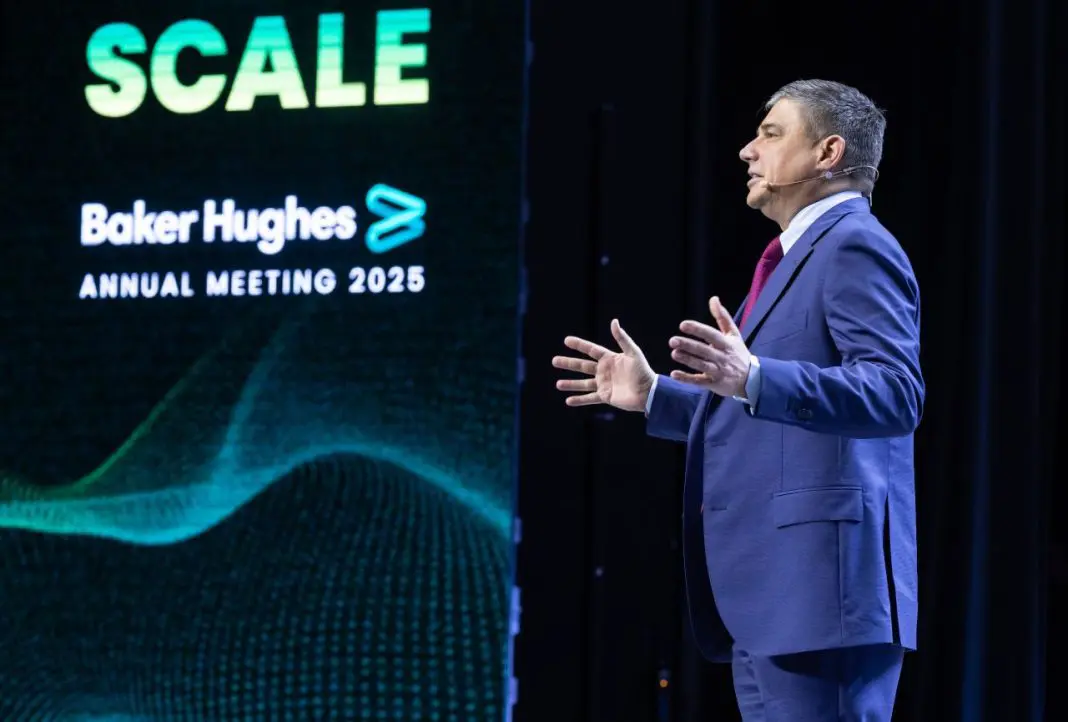
Simonelli said during the third-quarter earnings call on Friday that the company’s long-held target of 800 mtpa by 2030 is now largely supported by projects that have already reached FID but are not yet commissioned.
“Looking beyond 2030, we now expect global LNG installed capacity to increase to approximately 950 mtpa by 2035,” he said.
To achieve this level of capacity, an additional 175 mtpa of projects would need to reach FID by 2031, Simonelli noted.
“Our positive long-term outlook is anchored in a simple reality: The world needs more energy. This requirement is being amplified by the exponential growth in AI-driven power demand,” he said.
Simonelli said natural gas is “well-suited to meet this demand, offering abundance, affordability, and lower emissions than coal, without the intermittency issues associated with renewable sources.”
In many emerging markets, natural gas accounts for less than 5 percent of the power mix – compared to over 40 percent in the US, he said.
“This disparity presents substantial potential for natural gas to displace coal and support the transition to a lower carbon economy, especially in regions with high energy requirements that demand reliable and affordable power solutions,” he said.
Nonetheless, periods of market volatility may occur due to the non-linear nature of supply growth, according to Simonelli.
“Historically, declines in spot prices have encouraged new buyers to enter the market, thereby spurring the next wave of demand and supporting LNG’s sustained long-term growth trajectory,” he said.
LNG FIDs
By 2040, Baker Hughes expects natural gas demand to grow by over 20 percent, with global LNG increasing by at least 75 percent.
Simonelli said LNG demand continues to demonstrate solid growth, increasing by 6 percent this year, largely driven by a strong storage injection season in Europe, although this was partly offset by softer demand in China.
He said this demand is driving record LNG contracting activity, which is essential for future project FIDs.
According to Wood Mackenzie, 84 mtpa of long-term LNG offtake contracts were signed in the first nine months of the year, surpassing last year’s total of 81 mtpa.
“Over the past two years, nearly 75 mtpa of LNG projects have taken FID, with an additional 25 mtpa needed to reach our three-year target of 100 mtpa,” Simonelli said.
$800 million in LNG orders
Baker Hughes, which is buying US LNG equipment maker Chart Industries, secured $510 million in LNG equipment orders in the first quarter of this year, while the firm achieved no material LNG equipment orders in the second quarter.
Simonelli said during the call that the company secured over $800 million in equipment orders this quarter, including Trains 3 and 4 of Sempra’s Port Arthur Phase 2 and Train 4 of NextDecade’s Rio Grande LNG.
At Rio Grande, Baker Hughes’ Cordant Asset Health digital solution is being deployed on the first three trains.
“These awards reflect continued investment in large-scale LNG infrastructure and demonstrate our ability to deliver value by integrating equipment and digital capabilities to reduce downtime and boost availability and production,” he said.
Looking ahead, Baker Hughes is targeting at least $40 billion of IET orders over the next three years.
“This outlook is supported by the breadth and versatility of our technology portfolio, which continues to generate a robust pipeline across an expanding range of end markets,” he said.
“We expect growth to be led by gas infrastructure, power generation, and new energy markets, while LNG equipment orders are expected to remain consistent with our solid performance over the past two years,” Simonelli said.