This story requires a subscription
This includes a single user license.
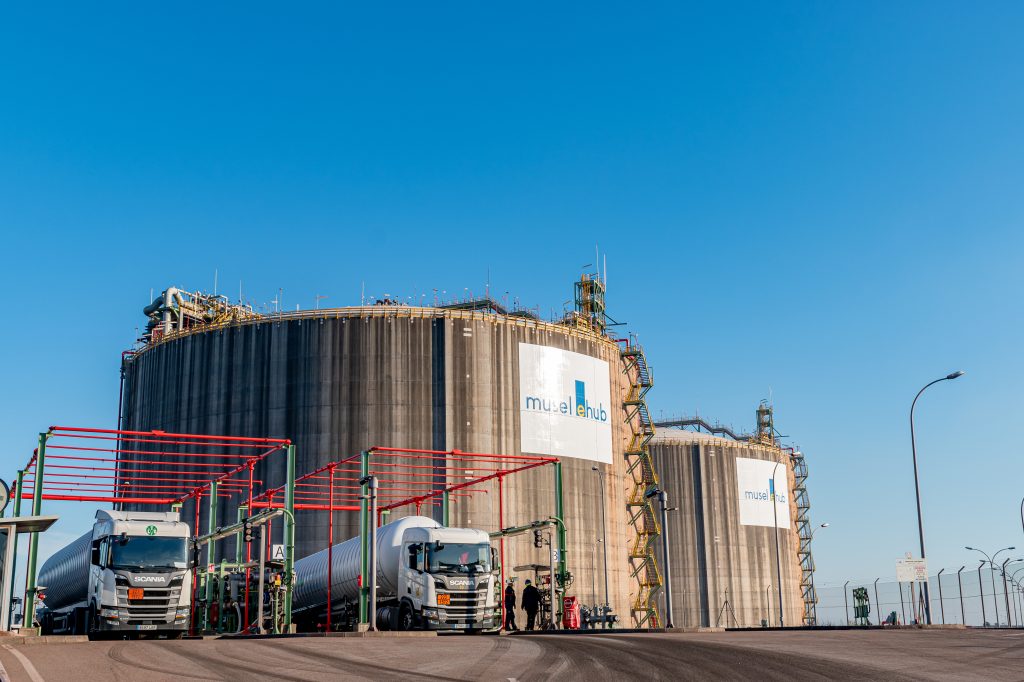
Enagas owns 75 percent and Reganosa owns 25 percent in the LNG facility now knoknw as Musel Energy Hub.
According to a statement by Enagas, the new service utilizes the interconnected infrastructure, allowing the biomethane injected into the gas network to be recognized as bio-LNG and supplied via the terminal.
The plant willl supply ships with bio-LNG, allowing shipping companies operating with dual and adapted engines to refuel in Gijon.
Enagas said the new service, available since November 5, meets all the environmental, social, and traceability criteria set forth in the International Sustainability and Carbon Certification of the European Union (ISCC EU) and the European Commission.
The Spaish firm noted that LNG bunkering in Spain surged in recent years, multiplying its activity more than tenfold between 2022 and the current date.
Between January and September this year, 4.6 TWh were supplied at the terminals operated by Enagas and Reganosa in Spain, of which 4.1 TWh were loaded onto small ships (ship-to-ship) and 0.5 TWh were loaded by trucks (truck-to-ship).
Musel Energy Hub’s new bioLNG service will help to “consolidate this growth and lead to further progress in sustainability and innovation,” Enagas said.
El Musel LNG
Last year, Spanish power group Endesa completed the first reloading operation at the Enagas-owned El Musel LNG terminal.
In August 2023, Endesa delivered the first commercial cargo to the terminal after it won the logistics services contract from Enagas.
Prior to that, the LNG facility has been in hibernation since its completion in 2013.
The LNG terminal has two tanks each with a capacity of 150,000 cbm and two tanker loading bays with a capacity to load a maximum of 9 GWh/d, and a maximum emission capacity of 800,000 Nm3/h.