This story requires a subscription
This includes a single user license.
Last month, global LNG imports increased by 2.85 Mt year-on-year to 37.04 Mt, marking a y-o-y increase for the ninth consecutive month of annual growth.
Doha-based GECF said Europe and, to a lesser extent, the MENA region continued to drive the rise in global LNG imports, offsetting weaker imports in Asia.
Europe continued to act as the premium market for US LNG exports, underpinned by a narrow price spread between European and Asian spot LNG prices, it said.
From January to October 2025, aggregated global LNG imports reached 357.27 Mt, up 5.3 percent (17.90 Mt) y-o-y, driven mainly by Europe, according to GECF.
European LNG imports jump
In October 2025, Europe’s LNG imports rose sharply to 11.18 Mt, a 48 percent increase (3.62 Mt) y‑o‑y, GECF said.
This marks the highest level since March and a record high for October.
GECF noted that stronger gas consumption, combined with reduced pipeline gas inflows, drove the surge in LNG imports.
At the country level, Belgium, Germany, Italy, the Netherlands, Spain, Türkiye, and the UK were the main contributors to the increase, which offset a decline in France.
GECF said the increase in LNG imports to Belgium, Germany, Spain, and Türkiye was driven by stronger gas consumption and higher pipeline exports to neighbouring countries.
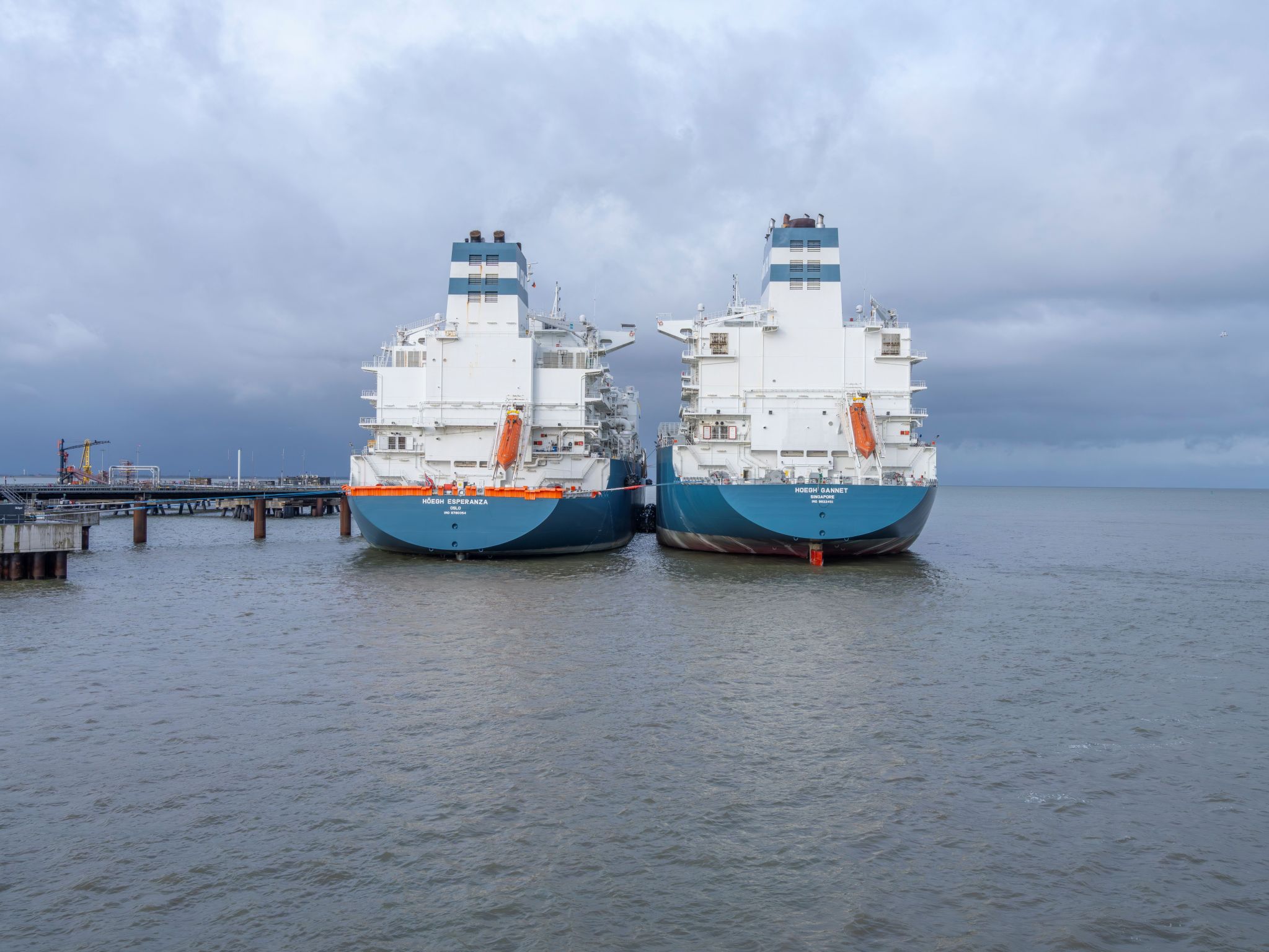
In Germany, the ramp-up of the Wilhelmshaven FSRU 2 facility also supported the rise in imports.
Italy’s LNG imports grew due to higher domestic gas demand, increased underground storage injections, greater pipeline exports, and a decline in pipeline imports from Algeria.
In the Netherlands, the increase was attributed to a combination of rising gas consumption, lower domestic production, reduced pipeline imports from Norway, and higher cross-border exports.
In the UK, a drop in pipeline gas imports from Norway prompted greater reliance on LNG, GECF said.
Conversely, France experienced a decline in LNG imports due to strike actions at several LNG terminals and a pipeline outage affecting regasified LNG flows from the Fos Cavaou and Fos Tonkin terminals.
Between January and October 2025, Europe’s aggregated LNG surged by 30 percent (24.32 Mt) y-o-y to reach 105.42 Mt, surpassing the region’s total LNG imports of 101.16 Mt for the full year 2024, GECF said.
Asia Pacific LNG imports continue to drop
In October, Asia Pacific’s LNG imports continued to slide, falling by 5.4 percent (1.30 Mt) y-oy to 22.73 Mt, unchanged from a month earlier, GECF said.
China, Pakistan, and South Korea drove this decline, which was partially offset by higher LNG imports in Japan and Taiwan.
China’s LNG imports continue to decline due to rising domestic gas production and increased pipeline imports, coupled with weak industrial gas demand.
In Pakistan, reduced gas demand—particularly from the power sector—has led to lower LNG imports.
GECF said the country cancelled several contractual cargoes from Eni and deferred some Qatari cargoes to 2026.
In South Korea, elevated LNG storage levels in September curbed import requirements in
October.
Conversely, Japan’s LNG imports rose in October, driven by pre-winter restocking efforts, GECF said.
In Taiwan, LNG imports increased due to stronger power sector demand following the phase-out of nuclear power.
From January to October 2025, Asia Pacific’s aggregated LNG imports reached 223.61 Mt, representing a decline of 4.5 percent (10.57 Mt) y-o-y, GECF said.
Latin America and MENA
GECF said that LNG imports in the Latin America & the Caribbean region totalled 1.03 Mt in October, marking a y-o-y decline of 28 percent (0.40 Mt).
Brazil accounted for the majority of this decrease, with Argentina, Chile, and Colombia also registering smaller declines.
GECF said the drop in LNG imports in Argentina and Brazil can be attributed to increased domestic gas production.
In Brazil and Chile, higher renewable energy output limited the need for additional gas-fired power generation.
Meanwhile, Colombia’s LNG imports declined due to maintenance activities at the SPEC FSRU terminal.
From January to October 2025, aggregated LNG imports in the LAC region dropped by 13 percent (1.68 Mt) y-o-y to reach 11.08 Mt, GECF said.
On the other hand, LNG imports in the MENA region continued their upward momentum, soaring by 87 percent y-o-y (0.98 Mt) to reach 2.11 Mt, it said.
The surge was led by Egypt, where lower domestic gas production sustained strong LNG import demand.
Between January and October 2025, aggregated LNG imports in the MENA region jumped by
62 percent (6.19 Mt) y-o-y to 16.14 Mt and is on track to reach a record high, GECF said.
LNG exports hit record
GECF said that global LNG exports reached a record high of 38.56 Mt, marking a 13 percent y-o-y increase (4.50 Mt) — the largest annual increment since April 2019.
Both GECF and non-GECF countries contributed to the surge, offsetting a decline in LNG re-exports.
From January to October 2025, cumulative global LNG exports rose sharply by 5.5 percent y-o-y (18.78 Mt), reaching 357.98 Mt.
GECF said the increase was primarily driven by non-GECF countries, while GECF member countries also contributed to a lesser extent.
Over the same period, LNG re-exports declined slightly.
The share of LNG exports from GECF and non-GECF countries increased from 45.3 percent and 53.7 percent in October 2024 to 45.4 percent and 54.5 percent in October 2025, respectively.
In contrast, the share of LNG re-exports dropped significantly, from 1 percent to just 0.1 percent.
GECF said that the US, Qatar, and Australia remained the top three LNG exporters during the month.