This story requires a subscription
This includes a single user license.
“We are currently in a competitive tender process. As part of this process, several suitable options from different international suppliers have been offered to us,” the spokesman said.
He said that Deutsche ReGas is reviewing all options “very carefully and in detail.”
“At this point, no decisions have been taken. Currently, no further details of the ongoing process can be disclosed,” the spokesman said.
He said that a timeline can be communicated once FID (final investment decision) has been made.
Deutsche ReGas is working to bring the second FSRU back to Mukran “as soon as possible,” the spokesman added.
The company revealed plans in March this year to reinstall a second FSRU at the Mukran facility.
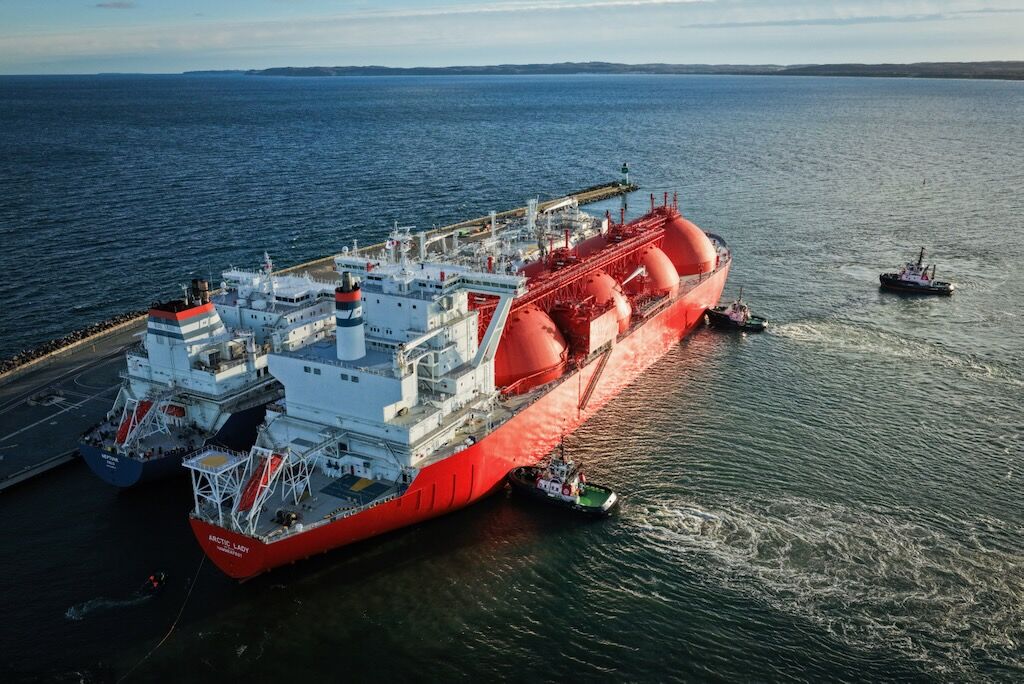
The Mukran LNG terminal currently consists of the 2009-built 145,000-cbm, FSRU Neptune, after Deutsche ReGas terminated the charter contract for the 174,000-cbm FSRU Energos Power with the German government.
The FSRU Neptune is 50 percent owned by Hoegh Evi and sub-chartered by Deutsche ReGas from French energy giant TotalEnergies, who also holds capacity rights at the Mukran facility along with trader MET.
In June, Deutsche ReGas and Germany’s Ministry for Economic Affairs and Energy reached a mutual agreement on resolving the sub-charter agreement for the FSRU Energos Power.
Mukran sendout levels rising
The tender process for the second FSRU comes at a time when the Mukran facility reached the highest monthly sendout levels of all facilities in Germany in November, the second month of the heating season.
In October and November, a total of 8.35 TWh of natural gas was fed into the German transmission grid via the Deutsche Ostsee terminal, according to Deutsche ReGas.
Deutsche ReGas said this compared to 6.20 TWh at the Wilhelmshaven 1, 4.25 TWh at Wilhelmshaven 2, and 0.13 TWh at the Brunsbüttel FSRU-based facilities, all operated by state-owned Deutsche Energy Terminal (DET).
This demonstrates that in October and November 2025, Deutsche ReGas provided around 80 percent of the combined sendout of the four floating LNG terminals in western Germany, the company said.
In October, Deutsche ReGas said that companies have booked 80 percent of available regasification capacity at its FSRU-based facility in 2026.
In addition, German chemicals giant BASF and Norwegian energy firm Equinor booked long-term regasification capacity at the facility.