This story requires a subscription
This includes a single user license.
Preliminary bunkering data on MPA’s website shows LNG bunkering sales in the world’s largest bunkering port reached 571,350 mt last year.
This compares to 460,950 mt in 2024, which surged compared to 110,850 mt in 2023.
In December 2025, LNG bunkering sales reached 54,570 mt, up from 48,310 mt in December 2024 and slightly below 55,040 mt in November 2025.
LNG bunkering volumes in Singapore increased due to new bunkering vessels working in the Singapore port, the growth of the global fleet of LNG-powered vessels, and lower LNG fuel prices.
In addition, MPA is currently looking for ways to scale up use of LNG as a marine fuel in the port of Singapore.
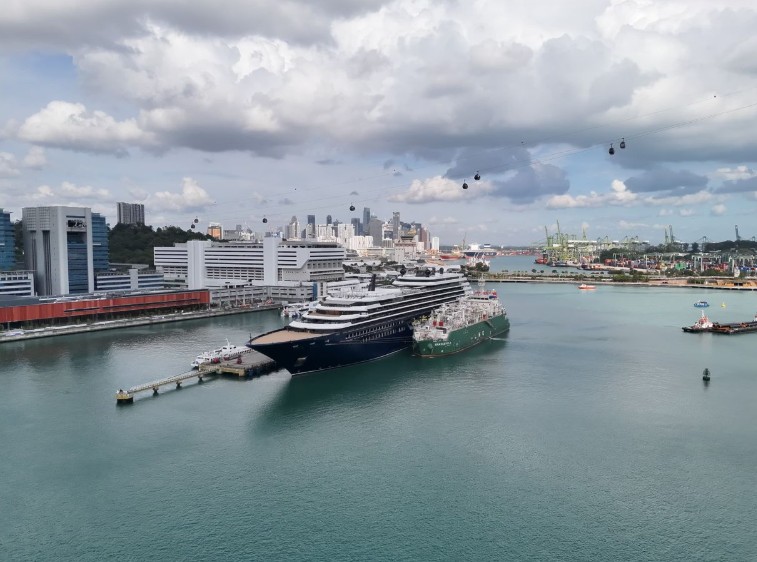
At present, the port of Singapore is served by three licensed LNG bunker suppliers and hosts three LNG bunkering vessels which provide ship-to-ship fueling operations.
The bunkering vessels are the 7,500-cbm FueLNG Bellina, the 18,000-cbm FueLNG Venosa, and the 12,000-cbm Brassavola.
Additional LNG bunkering licences
MPA said in a separate announcement that it has opened applications for additional licences to supply LNG as a marine fuel in the port of Singapore.

According to MPA, the licence application is open to both existing LNG licensees and new entrants.
This call follows the recent updates to the Singapore LNG bunkering licensing framework and standards, which now include the provision of sea-based LNG reloading and the supply of liquefied bio-methane and e-methane in the port of Singapore.
Licensees are required to implement end-to-end LNG bunkering supply arrangements, which include securing LNG supply, demand planning, cargo transfers operations, storage and safe handling of LNG, as well as the sale, supply, and delivery of LNG fuel to vessels in Singapore.
Also, licensees are required to own or charter at least one LNG bunkering vessel for the entire licence period.
Applications must be submitted to MPA by March 27, 2026.

