This story requires a subscription
This includes a single user license.
K Line announced the bio-LNG deal in a statement on Wednesday, saying it has begun using this fuel on LNG-fueled car carriers.
However, the shipping firm did not reveal the name of the seller or the bio-LNG quantities,
K Line expects this procurement agreement to enable it to reduce its greenhouse gas (GHG) emissions by approximately 60,800 tons per year.
Bio-LNG fuel is an alternative to LNG that is produced from livestock excrement, food residue, and other organic waste, the shipping firm noted.
Ko Line said that the GHG emissions from the entire product lifecycle, from the manufacturing to the consumption of the fuel, are lower than the emissions from traditional fuels, while bio-LNG can be used as-is in existing LNG-fueled vessels.
Taking advantage of this characteristic, K Line expects to use it in its existing LNG-fueled car carriers.
The bio-LNG supplies are ISCC-EU certified, ensuring a degree of sustainability that is in compliance with the European Union’s Renewable Energy Directive (RED), the company added.
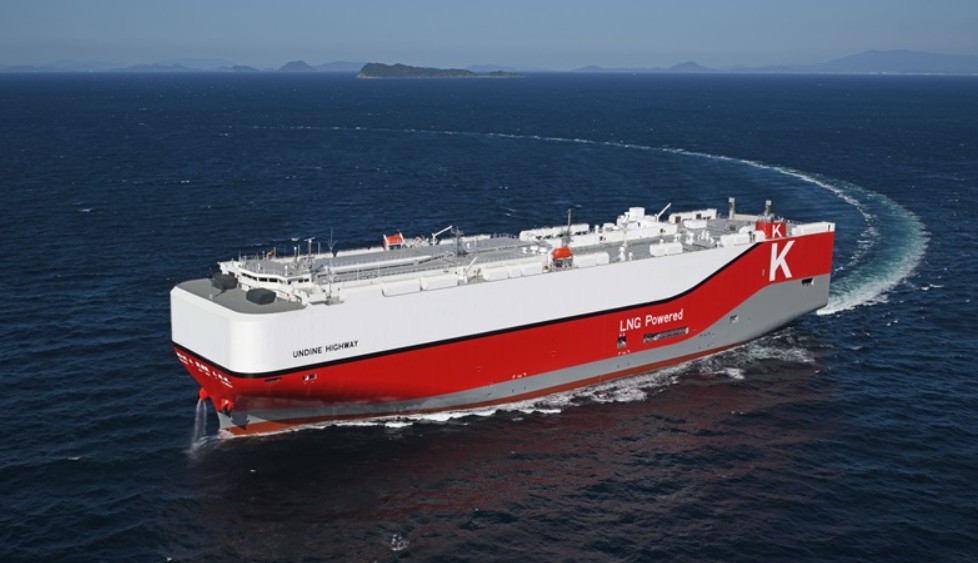
Earlier this year, K Line took delivery of the 7,000-ceu Undine Highway from Imabari Shipbuilding.
K Line previously said it aims to have approximately 40 LNG-powered vessels in its fleet by 2030.
The company said in its financial report in November 2025 that “a total of 12 LNG-fueled car
carriers have already been delivered, and the number of environmentally-friendly vessels is planned to reach 30 by FY2030.”
Besides LNG-fueled vessels and one LNG bunkering vessel, K Line also has a large fleet of LNG carriers.
K Line is on track to have 65 LNG carriers in its fleet by fiscal 2026.