This story requires a subscription
This includes a single user license.
“The Rovuma Basin holds significant natural gas reserves, allowing not only the implementation of ongoing projects, but also creating opportunities for new developments,” the spokesperson said.
“In this context, Eni is currently assessing the possibility of advancing with a third project based on the FLNG technology, whose success has been demonstrated by the Coral South FLNG project,” the spokesperson added.
Eni’s spokesperson did not provide further details.
Last year, Eni and its partners took a final investment decision on the second FLNG project, Coral Norte (Coral North) in Mozambique, worth more than $7 billion.
The Italian company has a 50 percent operating stake in the JV.
Other partners include CNPC (20 percent), Kogas (10 percent), ENH (10 percent), and Adnoc’s XRG (10 percent).
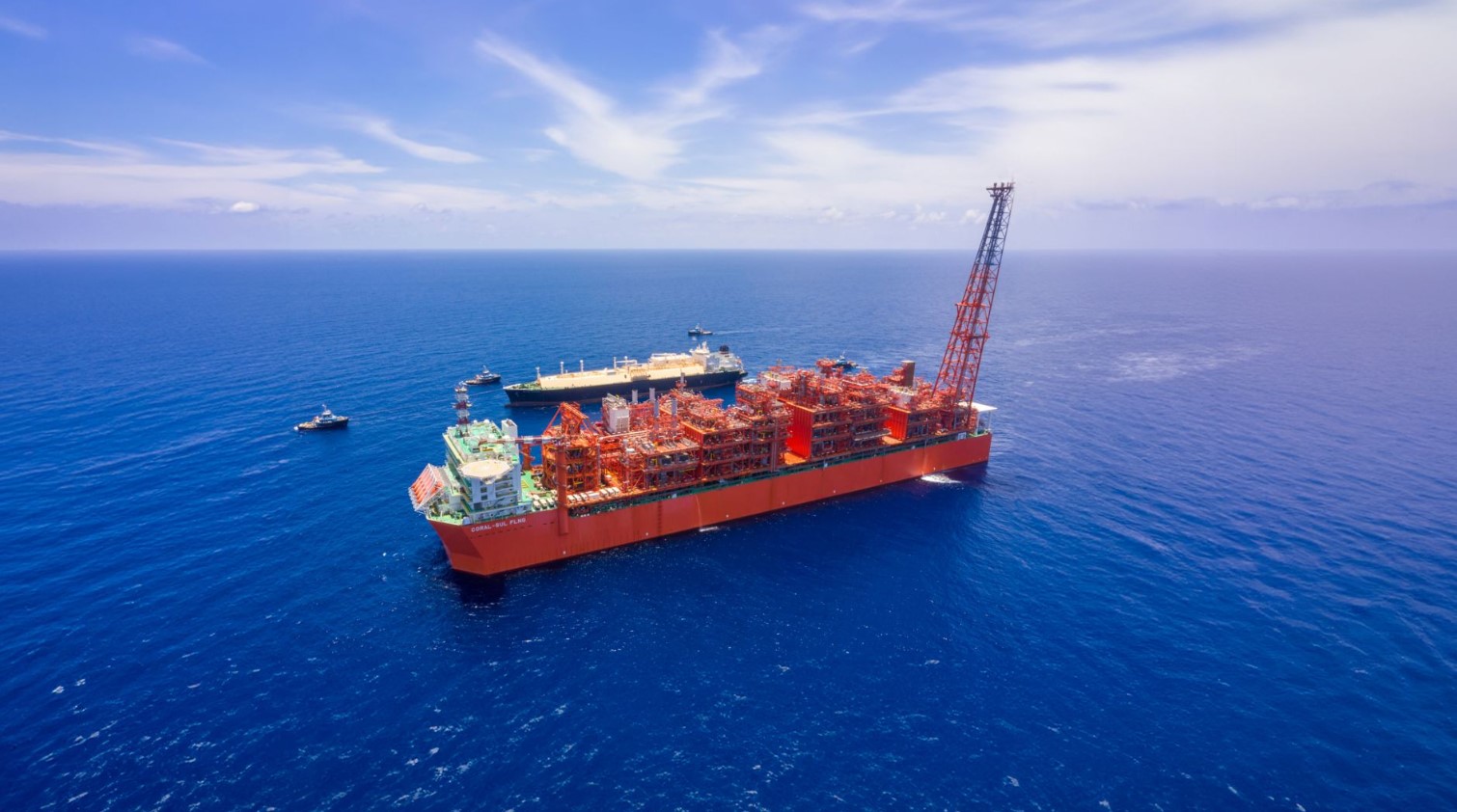
Building on the success of Coral South FLNG, which became operational in 2022, the Coral North FLNG project will develop, construct, and operate a floating LNG facility with annual capacity of 3.55 million metric tonnes approximately 55 kilometers off the coast of northern Mozambique’s Cabo Delgado province.
The FLNG measures 432 meters in length and 66 meters in width, making it large enough to line up four soccer fields end to end, according to Samsung Heavy.
With a 3.6 mtpa liquefaction capacity, Coral North will double Mozambique’s total LNG output to 7 mtpa.
Eni said this unit will position the country as Africa’s third-largest LNG producer and exporter, strengthening its role as a key player in the global energy market.
In addition to Eni’s FLNG, France’s TotalEnergies and its partners in the giant Mozambique LNG project have recently restarted work on the 12.8 million tonnes per annum (mtpa) project after five years of suspension.
The TotalEnergies-led Mozambique LNG project is 42 percent complete with more than 6,000 people working on the project in the Cabo Delgado province, according to TotalEnergies CEO Patrick Pouyanne.