This story requires a subscription
This includes a single user license.
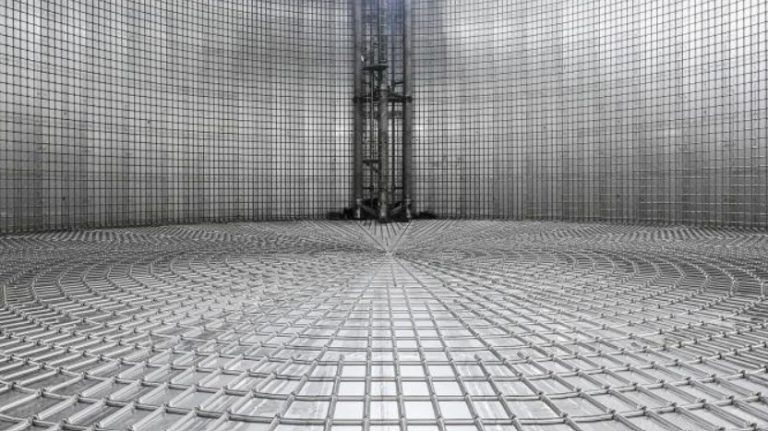
Each tank will offer a capacity of 240,000 cbm, making them the largest onshore LNG storage tanks in the world to feature GTT’s GST membrane full containment technology, according to a statement by GTT.
GTT did not provide the pricing details of the contract.
The LNG tanks specialist claims that the design enables a 40 percent reduction in steel requirements.
“Thanks to the compactness of the GST technology, the tanks can offer up to 10 percent more LNG storage capacity within the same footprint,” GTT said.
Beyond LNG storage, these tanks will also provide the versatility needed to anticipate future energy and industrial needs, with the capability to store other liquefied gases such as ethane, propane, ethylene, and ammonia, GTT said.
The delivery of the three tanks is scheduled for the fourth quarter of 2028.
GTT’s onshore LNG tank business in China
This contract follows an order for GTT in April to design a 10,000-cbm onshore LNG tank to be built at the Yangjiawan LNG liquefaction plant in Yan’an city in China’s northern Shanxi province.
GTT won the order from Beijing Petrochemical Engineering, in cooperation with Shaanxi Yanchang Petroleum & Natural Gas.
GTT is mainly providing LNG tanks for LNG carriers, LNG fueled-vessels, etc.
However, LNG storage tanks in China already feature GTT’s GST membrane containment technology.
In 2024, China’s Beijing Gas launched the third phase at its Tianjin Nangang LNG import terminal in the Tianjin south port industrial zone.
This phase included the construction of two 220,000-cbm LNG storage tanks, which feature GTT’s tech.
Following the launch of the third phase, the Tianjin Nangang LNG terminal has 10 operational tanks with a total capacity of 2.2 million cbm, and eight of these feature GTT tech.
Yuedong LNG
In December 2025, state-owned LNG terminal operator PipeChina started building three 240,000-cbm LNG tanks at its Yuedong LNG import terminal in southern China’s Guangdong province.
LNG Prime reported at the time that the LNG tanks would feature GTT’s latest membrane containment technology.
The new LNG tanks will add to the three existing tanks, each with a capacity of 160,000 cbm.
In addition to storage capacity, the Yuedong LNG terminal, or the Jieyang LNG terminal, will boost its regas capacity to 6 mtpa.
PipeChina expects to complete and commission the new project in December 2028.
The company currently operates eight LNG receiving terminals and is building two more facilities.
This accounts for about one-third of China’s total LNG receiving capacity.
The operational terminals are Dalian, Tianjin, Zhangzhou, Yuedong, Shenzhen, Beihai, Fangchenggang, and Hainan, while the under construction facilities are Longkou and Diefubei.