This story requires a subscription
This includes a single user license.
In April this year, the two firms signed a framework agreement.
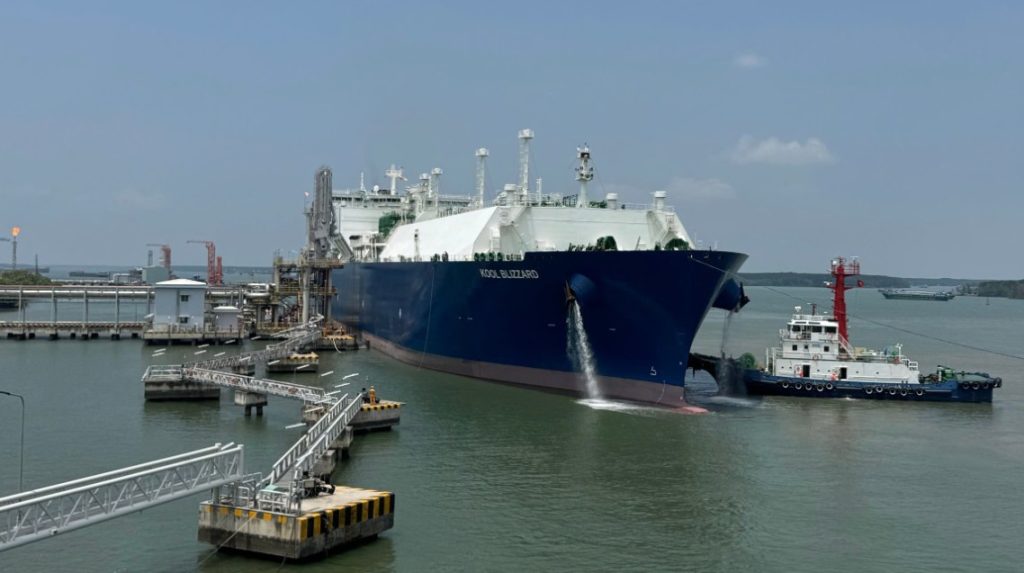
According to PV Gas, the supply of regasified LNG would come from its planned North Central LNG terminal project, which will be located in the Vung Ang Economic Zone.
The first phase of the terminal will have a capacity of up to 3 mtpa of LNG per year, with a total investment of approximately 26.7 trillion Vietnamese dong ($1 billion).
EVN said in a statement last week that the partners held a meeting to discuss progress in implementing LNG supply to the Quang Trach II and III power plants and to review technical, investment, and commercial coordination matters.
PV GAS plans to complete its internal review of the feasibility study and submit it to the Ministry of Industry and Trade in August 2026, the statement said.
EVN said that Quang Trach II is expected to require gas supply for trial operations starting in April 2029.
Regarding the draft gas sales agreement (GSA), EVN and PV GAS will continue to discuss and finalize the details to reach an early consensus, thereby supporting the overall progress of the project to supply LNG to the Quang Trach II and III power plants, the company said.
In addition, the two parties agreed to continue collaborating on determining the pipeline route, location, and area of the gas station within the Quang Trach power center site, EVN said.
In February this year, EVN awarded an EPC contract to a consortium of PowerChina and Lilama for its Quang Trach II LNG power plant in the province of Quang Binh.
The contract is worth 25.2 trillion Vietnamese dong ($957 million).
The LNG power plant will have a capacity of 1,612 MW, consisting of two 806 MW units.
The project consists of two components and its total investment will reach 52,490 billion dong ($2 billion).
The first is the power plant, using the combined cycle gas turbine (CCGT) technology, with a total investment of 40,123 billion dong, while the second comprises the LNG storage facility and jetty, with an estimated investment of 11,800 billion dong.