This story requires a subscription
This includes a single user license.
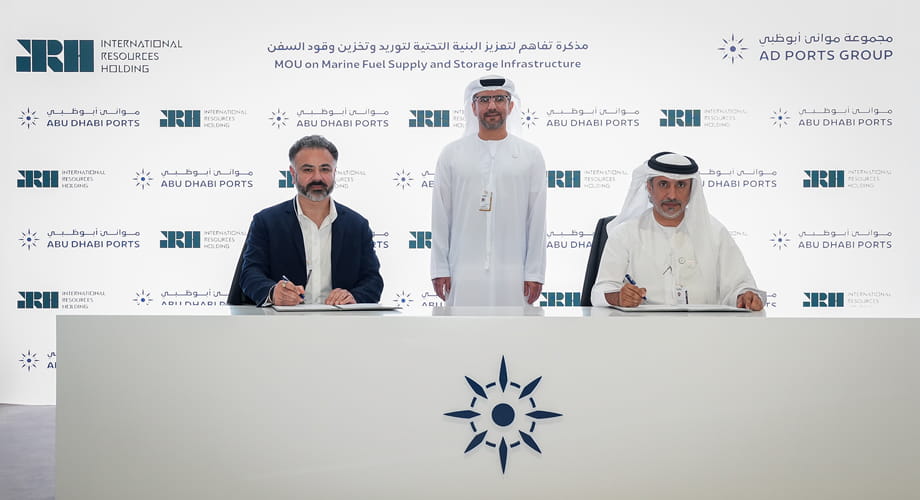
According to a joint statement on Tuesday, the memorandum outlines potential collaboration across a range of areas.
This includes the provision of bunkering services to vessels calling at the port in Abu Dhabi, the development of alternative fuel solutions such as LNG, biofuels, and methanol, and the exploration of opportunities related to fuel storage infrastructure, terminal facilities, and fuel sampling and testing capabilities.
Through this collaboration, the partners aim to “further enhance Khalifa Port’s value proposition as a multi-purpose, deep-water port that supports efficient, sustainable, and future-oriented maritime operations,” they said.
IRH Global Trading is a global commodities trading firm with interests across the mining and energy value chain and plans to build a diversified global minerals and energy trading platform, including LNG, LPG, crude oil, and petroleum products.
The collaboration would explore leveraging IRH’s international trading capabilities alongside AD Ports’s port infrastructure and trade ecosystem, the statement said.
DNV’s latest data shows that there are now 892 LNG-powered ships in operation and 663 LNG-fueled vessels on order.
Moreover, 240 LNG-powered containerships and 140 LNG-powered car carriers are in operation, followed by 91 oil/chemical tankers, and 84 crude carriers.
As per vessels on order, LNG-powered containerships account for a big part of the orders with 414 units. Shipping firms also ordered 97 car carriers, 48 crude oil tankers, and 36 cruise ships.
These statistics do not include smaller inland vessels or dual-fuel LNG carriers.