
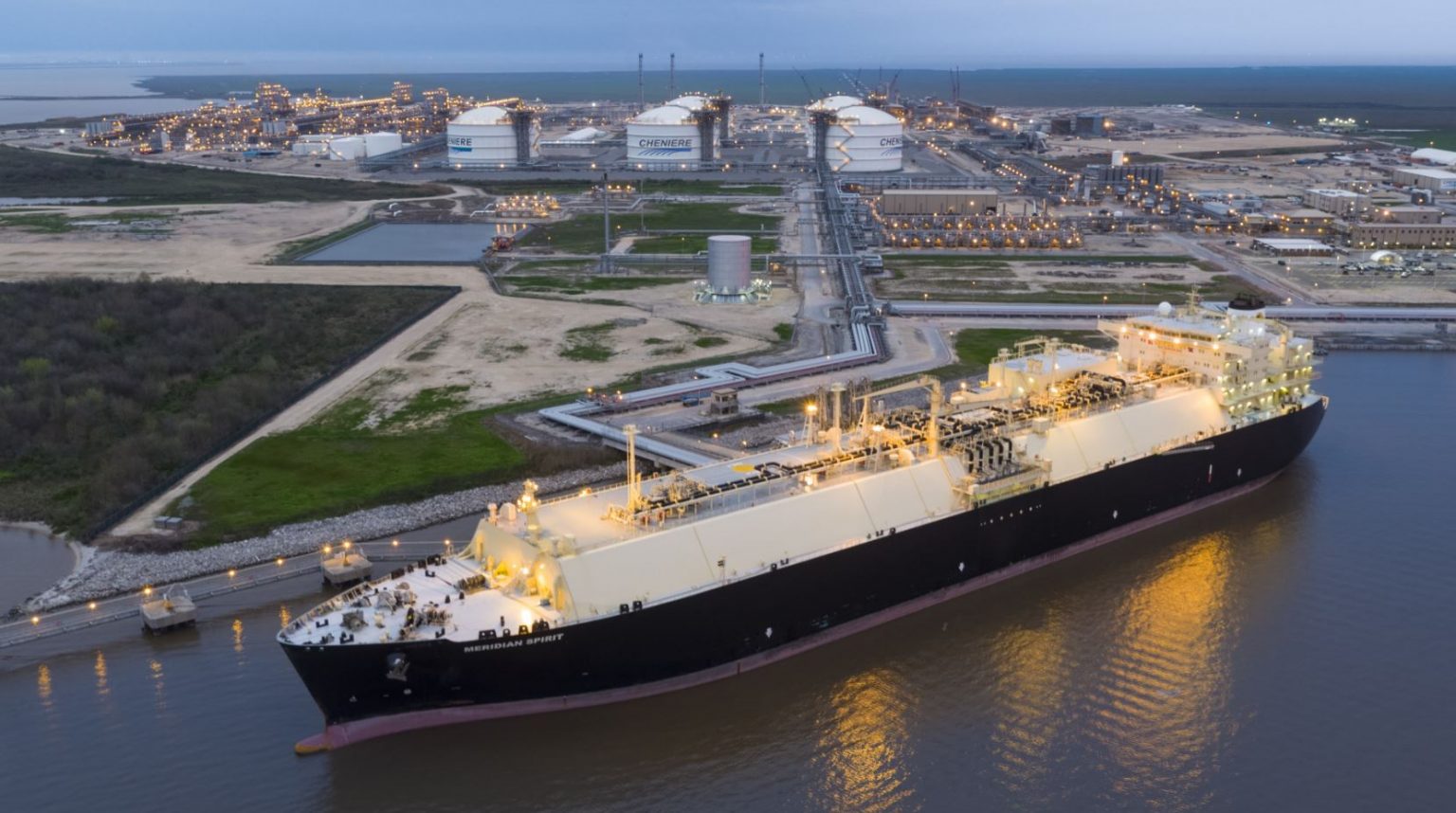
US LNG exports rose in the week ending November 17, while the Henry Hub spot price logged an increase as well when compared to the week before, according to the Energy Information Administration.
The agency said in its weekly natural gas report that the US has exported 22 LNG shipments between November 11 and November 17.
Natural gas deliveries to US LNG export facilities averaged 11.1 Bcf/d, or about 0.1 Bcf/d lower than last week, it said.
Six US terminals exported the 22 cargoes during the week under review. The total capacity of LNG vessels carrying these cargoes is 79 Bcf.
Cheniere’s Sabine Pass plant dispatched seven cargoes, while its Corpus Christi plant sent five shipments. The Freeport LNG terminal and Cameron each sent four shipments while Cove Point dispatched two cargoes.
Henry Hub spot price increased this week
This report week, the Henry Hub spot price rose from $4.58/MMBtu last Wednesday to $4.79/MMBtu this Wednesday, while it increased as high as $5.06/MMBtu on Tuesday, EIA said.
The agency said last week the Henry Hub spot price would average $5.53/MMBtu from November through February and then generally decline through 2022, averaging $3.93/MMBtu for the year amid rising US natural gas production and slowing growth in LNG exports.
Production from Shell-operated Mars and Ursa platforms, which were curtailed as a result of damage sustained from Hurricane Ida, has been restored.
Enbridge, operator of the Mississippi Canyon Gas Pipeline that serves offshore production from Shell’s Olympus, Mars, and Ursa platforms, reported natural gas volumes delivered to the gas plant in Venice, Louisiana, increased by 70 million cubic feet per day (MMcf/d) on November 5 and an additional 100 MMcf/d on November 6.
Current flows on the pipeline are approximately 230 MMcf/d, or more than 130 MMcf/d higher than before Shell’s November 5 announcement that production was restored at the two offshore platforms, EIA said.
LNG prices and TTF climb
International natural gas prices rose this report week, EIA said.
Bloomberg Finance reported that swap prices for LNG cargoes in East Asia for the balance of November increased for the second week in a row.
The weekly average rose to $32.69/MMBtu this report week, 55 cents/MMBtu above last week’s average of $32.13/MMBtu.
At the Title Transfer Facility (TTF) in the Netherlands, the day-ahead price rose for the second week in a row to a weekly average of $27.68/MMBtu, up $2.95/MMBtu from last week’s average of $24.73/MMBtu.
In the same week last year (week ending November 18, 2020), prices in East Asia and at TTF were $6.80/MMBtu and $4.74/MMBtu, respectively, the agency said.