
Germany has decided to back the construction of two liquefied natural gas (LNG) import terminals as the country looks to reduce dependence on Russian pipeline gas imports, according to Chancellor Olaf Scholz.
Scholz said during a special Bundestag session called to address the Ukraine crisis on Sunday that Germany would boost its gas stocks by 2 Bcm and build two LNG terminals to guarantee a more secure energy supply for the country.
Germany is a major gas importer and gets a big chunk of these supplies from Russia’s Gazprom. The country currently has no large LNG import terminals.
“We have decided to quickly build two LNG terminals at Brunsbuettel and Wilhelmshaven,” Scholz said.
He also said that the country would work on that the LNG terminals could also handle green hydrogen in the future.
Scholz did not provide any additional information regarding the LNG import terminals.
Brunsbuettel LNG import terminal
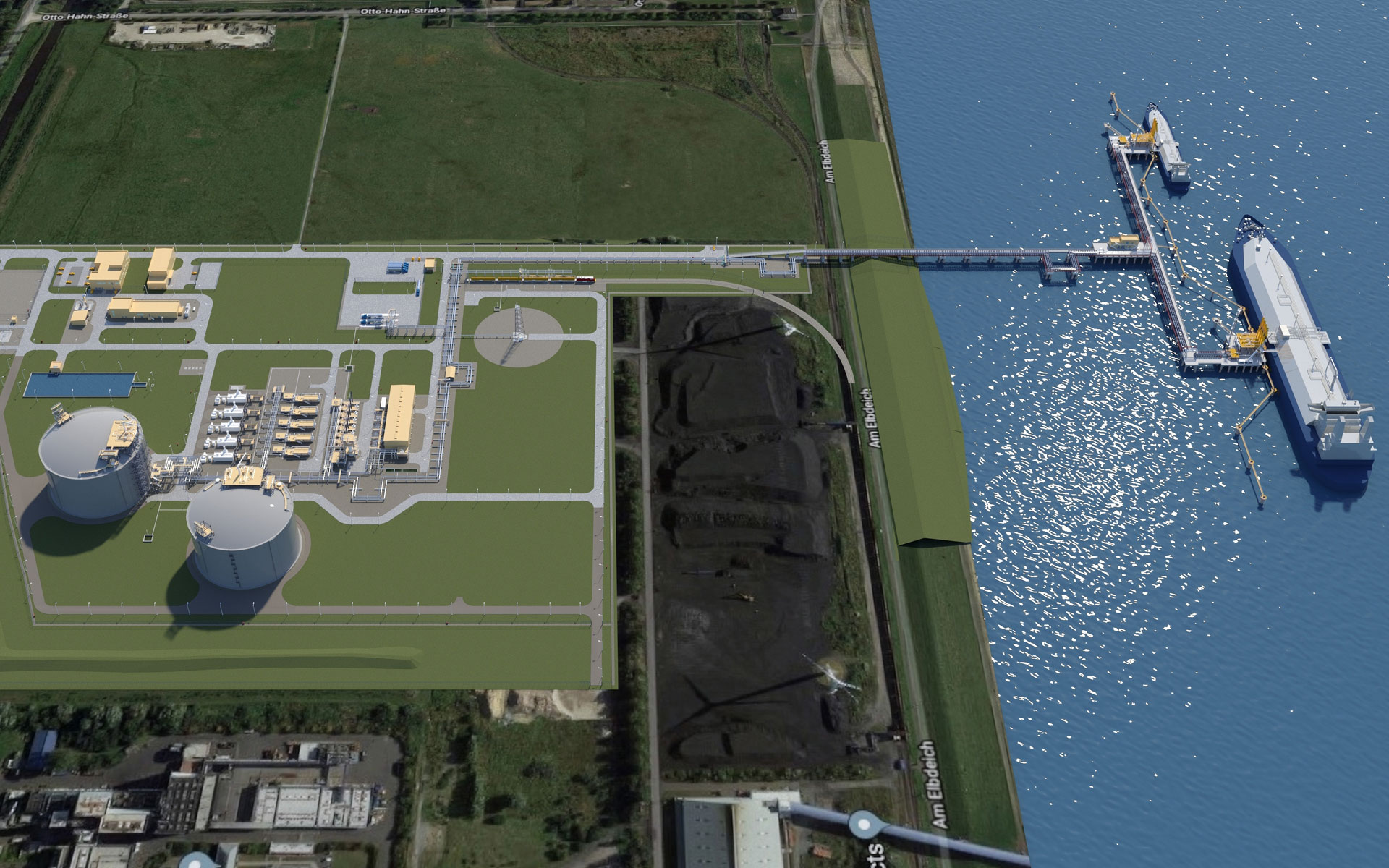
German LNG Terminal is looking to build a regasification facility in Brunsbuettel with a capacity of up to 8 bcm per year with two 165,000-cbm storage tanks.
The JV consists of Dutch Gasunie and Germany’s Oiltanking while Dutch tank firm Vopak decided to become a passive shareholder last year.
In January this year, German LNG Terminal told LNG Prime the JV was “still convinced of the necessity of the project” despite difficulties caused by the ongoing Covid-19 pandemic.
Germany’s RWE previously expressed interest to take a large part of the terminal’s capacity as well as to import hydrogen from Australia to Brunsbuettel.
Also, German LNG Terminal signed two agreements for long-term capacity back in 2019 with Switzerland’s Axpo and an unidentified “global LNG player.”
Uniper to revive plans for Wilhelmshaven FSRU?
In April last year, Germany’s Uniper, a unit of Fortum, said it had decided to build a hydrogen hub instead of an LNG import terminal in Wilhelmshaven due to a lack of customer interest.
The new announcement by Scholz could mean that the project could come to life after all.
The original plans included installing an FSRU in Wilhelmshaven with a sendout capacity of 9.78 bcm per year helping diversify German gas supplies.
Japan’s MOL and Uniper signed a build and charter deal for the 263,000-cbm FSRU. After Uniper’s announcement, MOL changed the FSRU order to an LNG carrier at South Korea’s DSME.
Stade LNG terminal
Germany’s Hanseatic Energy Hub is also looking to build the Stade LNG import terminal near Hamburg. The LNG terminal developer joined forces with Belgium’s Fluxys.
Located on the Elbe river within the Dow industrial park, the Stade terminal would have a 12 Bcm/year capacity.
Besides offering sendout to the German gas grid and for local consumption, the facility would also enable reloading to LNG tankers, river barges for bunkering, trucks and on-site rail, according to HEH.
HEH previously said it plans to launch the facility in 2026. German media recently reported that HEH aims to submit the application documents for the project this summer.