
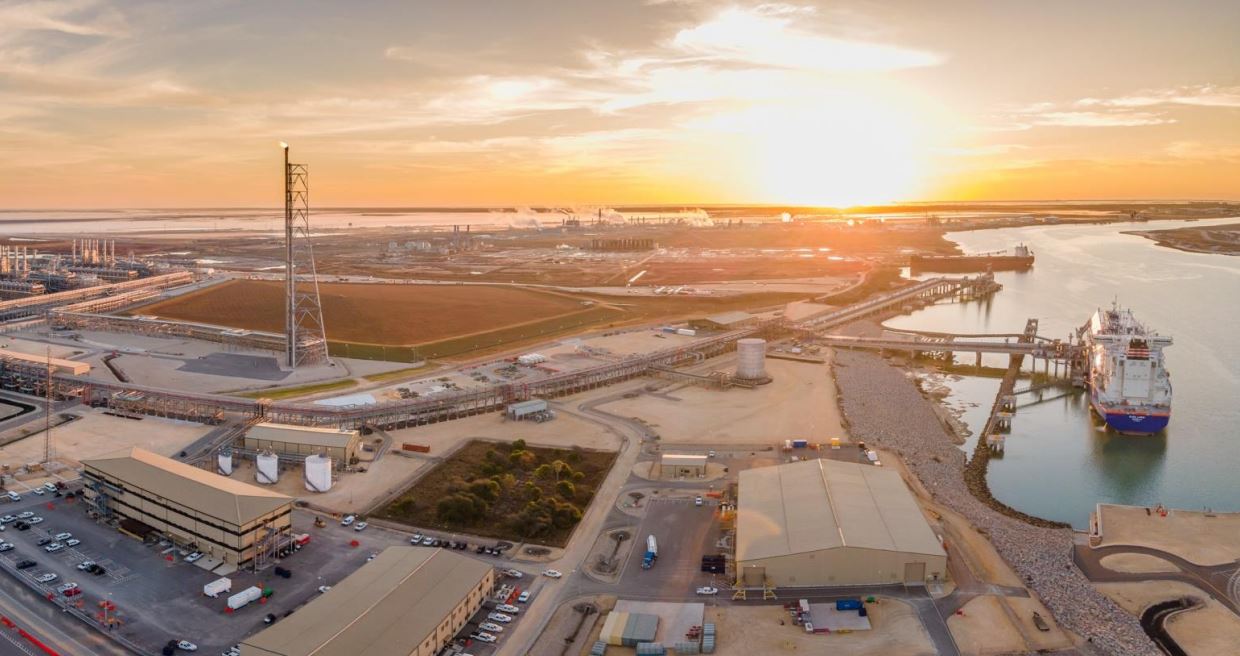
US LNG exports increased in the week ending May 4, while the Henry Hub spot price surged when compared to the week before, according to the Energy Information Administration.
The US has exported 25 LNG shipments between April 28 and May 4, up by two shipments when compared to the week before, the agency said in its weekly natural gas report.
Natural gas deliveries to LNG export facilities averaged 12 Bcf/d, 0.2 Bcf/d lower than the previous week.
All seven large US LNG terminals exported the 25 cargoes during the week under review.
The total capacity of LNG vessels carrying these cargoes is 91 Bcf.
Cheniere’s Sabine Pass plant dispatched nine cargoes, while its Corpus Christi plant sent four shipments.
The Freeport terminal and the Cameron plant each sent three cargoes.
In addition, Elba Island, Calcasieu Pass, and Cove Point each sent two cargoes during the week under review.
Henry Hub jumps to $8.30/MMBtu
This report week, the Henry Hub spot price rose $1.36 from $6.94/MMBtu last Wednesday to $8.30/MMBtu this Wednesday.
This price is the highest since a winter storm contributed to record-high spot prices in February 2021, EIA said.
Prices in the South were all higher this report week. Higher temperatures across the region resulted in rising air-conditioning demand, leading to a 1.1 bBcf/d increase in natural gas consumption in the electric power sector, according to data from PointLogic.
Feed gas deliveries to LNG export terminals along the Gulf Coast decreased by 0.1 Bcf/d.
Deliveries to terminals in South Texas increased by 0.5 Bcf/d but were more than offset by a decline in deliveries to terminals in South Louisiana, which fell by 0.6 Bcf/d as a result of a maintenance outage at the Cameron LNG terminal, the agency said.
Sempra, operator of Cameron LNG, reported that a scheduled three-week maintenance turnaround on Train 1 began on April 28.
As a result, natural gas deliveries to the terminal averaged 1.4 Bcf/d this week, which is 0.7 Bcf/d less than a week ago. Cameron LNG plans to return Train 1 to operation on or around May 19.
Spot LNG, TTF down
According to the agency, international natural gas prices dropped this report week.
Bloomberg Finance reported that swap prices for LNG cargoes in East Asia fell $1.46/MMBtu to a weekly average of $23.93/MMBtu.
At the Dutch TTF, the day-ahead prices decreased 11 cents to a weekly average of $30.84/MMBtu.
The price at TTF averaged above the East Asia price for the third week in a row.
In the same week last year (week ending May 5, 2021), the prices in East Asia and at the TTF were $8.83/MMBtu and $8.35/MMBtu, respectively, the agency said.