
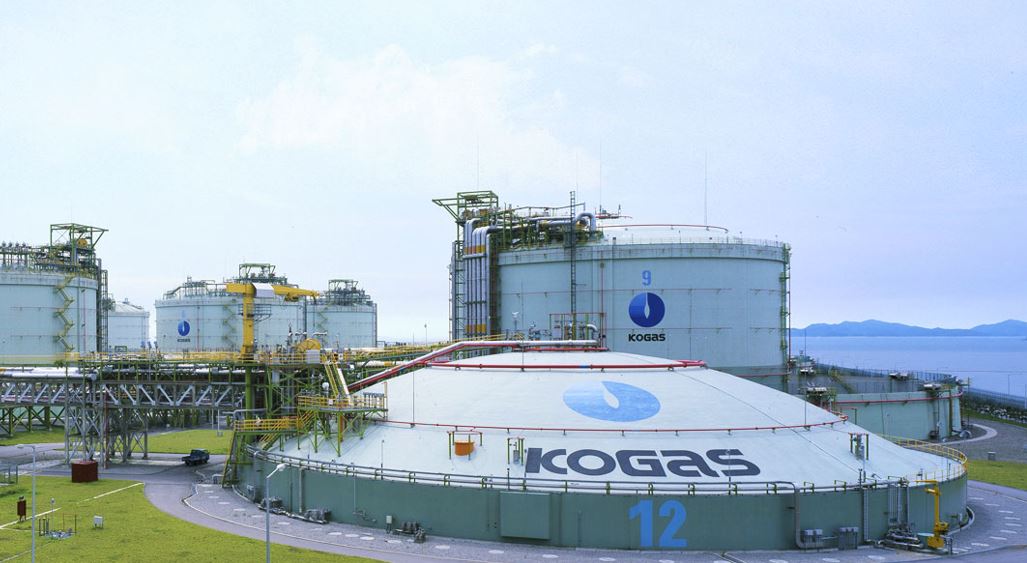
South Korean LNG importing giant Kogas has signed two deals as part of the company’s plans to develop hydrogen infrastructure in the country.
Under the first deal revealed last week, McDermott’s storage business, CB&I, and Kogas have signed a memorandum of understanding.
They plan to explore the development of large-scale liquid hydrogen storage to support South Korea’s roadmap for a hydrogen economy, according to a joint statement.
Last year, South Korea announced plans to achieve carbon neutrality by 2050 by replacing coal-fired power generation with renewable sources and internal combustion engine vehicles with hydrogen-powered and battery-based electric vehicles.
“Hydrogen has emerged as a key enabler to meet these decarbonization goals and Kogas will play a leading role in building the infrastructure for hydrogen shipping, storage and distribution to make these ambitions a reality,” Seung Lee, executive VP of Kogas, said.
In a separate statement, Kogas said it has also signed a memorandum of understanding with Korea Iron and Steel Association.
Under the deal, the partners will work on developing specialized high-pressure hydrogen pipelines.
Big hydrogen plans
Kogas previously said it aims to utilize its LNG infrastructure and knowledge gained in the LNG industry over the years to develop a hydrogen production and supply chain.
The company currently operates four large LNG terminals. These include Incheon, Pyeongtaek, Tongyeong, and Samcheok, but the firm has a small-scale regasification terminal at the Aewol port on Jeju island as well.
On top of these facilities, the LNG importer is building a large terminal in Dangjin.
Kogas imports LNG from plants located around the globe and it recently signed a deal with BP to buy US LNG for a period of 18 years.
Last year, the company revealed ambitious plans for its hydrogen business as it aims to reach 3 trillion won ($2.55 billion) in operating profit by 2030.
The firm said then it plans to supply 830,000 tons of hydrogen per year by 2030, including importing green hydrogen from overseas from countries such as Australia.
In December, Kogas also started building a hydrogen production plant in Gwangju, a city in the country’s southwestern region.
This is the first out of three mid-to-large scale hydrogen plants the company plans to build by 2023.