
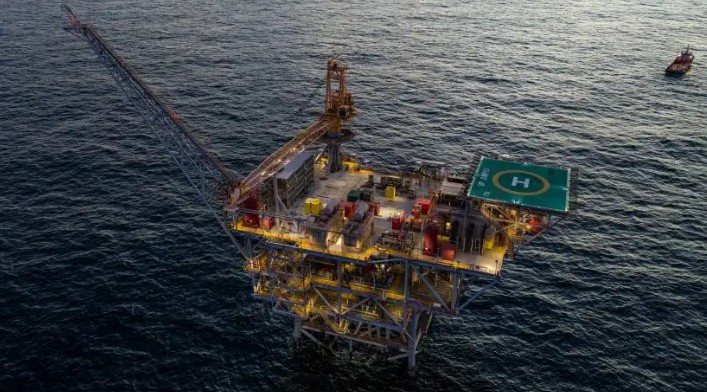
BP’s Cypre development, located offshore Trinidad and Tobago, has delivered its first gas.
The Cypre gas field is located 78 kilometers off the southeast coast of Trinidad and Tobago within the East Mayaro Block, in water depth of about 80 meters.
It is owned by BP Trinidad and Tobago, which is owned by BP (70 percent) and Repsol (30 percent).
Cypre is BP TT’s third subsea development and will comprise seven wells tied back into BPTT’s existing Juniper platform.
At peak, it is projected to deliver around 45,000 boed, or about 250 million standard cubic feet of gas a day, according to BP.
The first phase of the development – four wells – was completed at the end of 2024, while the second phase is expected to start in the second half of this year.
Cypre is one of BP’s 10 major projects expected to start up worldwide between 2025 and 2027, announced as part of its reset strategy to grow the upstream.
Production from Cypre will make a significant contribution towards the 250,000 barrels of oil equivalent per day (boed) combined peak net production expected from these 10 projects, BP said.
“Cypre is another key milestone in BPTT’s strategy to maximize production from our shallow water acreage using existing infrastructure. The project not only reinforces our commitment to maintaining production but also plays a crucial role in satisfying our existing gas supply commitments,” BPTT president David Campbell said.
Last week, BP also took the final investment decision on the Ginger gas development offshore Trinidad and Tobago.
In addition, BP also discovered gas at its Frangipani well offshore the country.
Atlantic LNG
BP is a shareholder in Trinidad and Tobago’s Atlantic LNG plant.
In December 2023, Trinidad and Tobago finally signed a restructuring deal with the shareholders of Atlantic LNG, Shell, BP, and NGC.
The new commercial structure has resulted in an increase of government shareholding through NGC from 10 percent and 11.2 percent in trains one and four respectively to 10 percent government shareholding for each of the four LNG trains.
The Point Fortin facility features four trains with a total capacity of about 15 million tonnes per annum of LNG, but the facility has been experiencing supply issues due to dwindling domestic gas reserves.
Atlantic LNG’s first train has been idled since 2020 due to reduced gas supplies.