This story requires a subscription
This includes a single user license.
Last month, global LNG imports increased by 4.69 Mt year-on-year to 37.91 Mt, marking a y-o-y increase for the seventh consecutive month of annual growth.
Doha-based GECF said this marks the strongest annual growth in monthly LNG imports since January 2022.
According to GECF, the increase was primarily driven by higher imports into Asia Pacific, Europe, and the MENA region.
Notably, after months of subdued activity, Asia Pacific re-emerged as a key engine of growth in global LNG demand, it said.
From January to August 2025, aggregated global LNG imports stood at 286.29 Mt, representing an increase of 5.3 percent (14.47 Mt) y-o-y, GECF said.
European LNG imports on track to hit record this year
In August 2025, Europe’s LNG imports increased by 20 percent year-on-year (1.34 Mt), reaching 8 Mt.
However, this reflects a moderation in the pace of growth compared to previous months, GECF said.
Stronger gas demand for reinjection coupled with a decline in pipeline gas imports contributed to the uptick in its LNG imports.
At a country level, stronger LNG imports were driven by Belgium, France, Germany, Greece,and the Netherlands, which together offset a decline in Finland, GECF said.
In Belgium, the increase in LNG imports was driven by higher domestic gas consumption and a decline in pipeline gas flows from the UK via the Interconnector pipeline.
France recorded a surge in LNG imports, largely due to a sharp rise in regasified LNG exports to Belgium, reversing its trade balance with Belgium from a net importer of pipeline gas in August 2024 to a net exporter, GECF said.
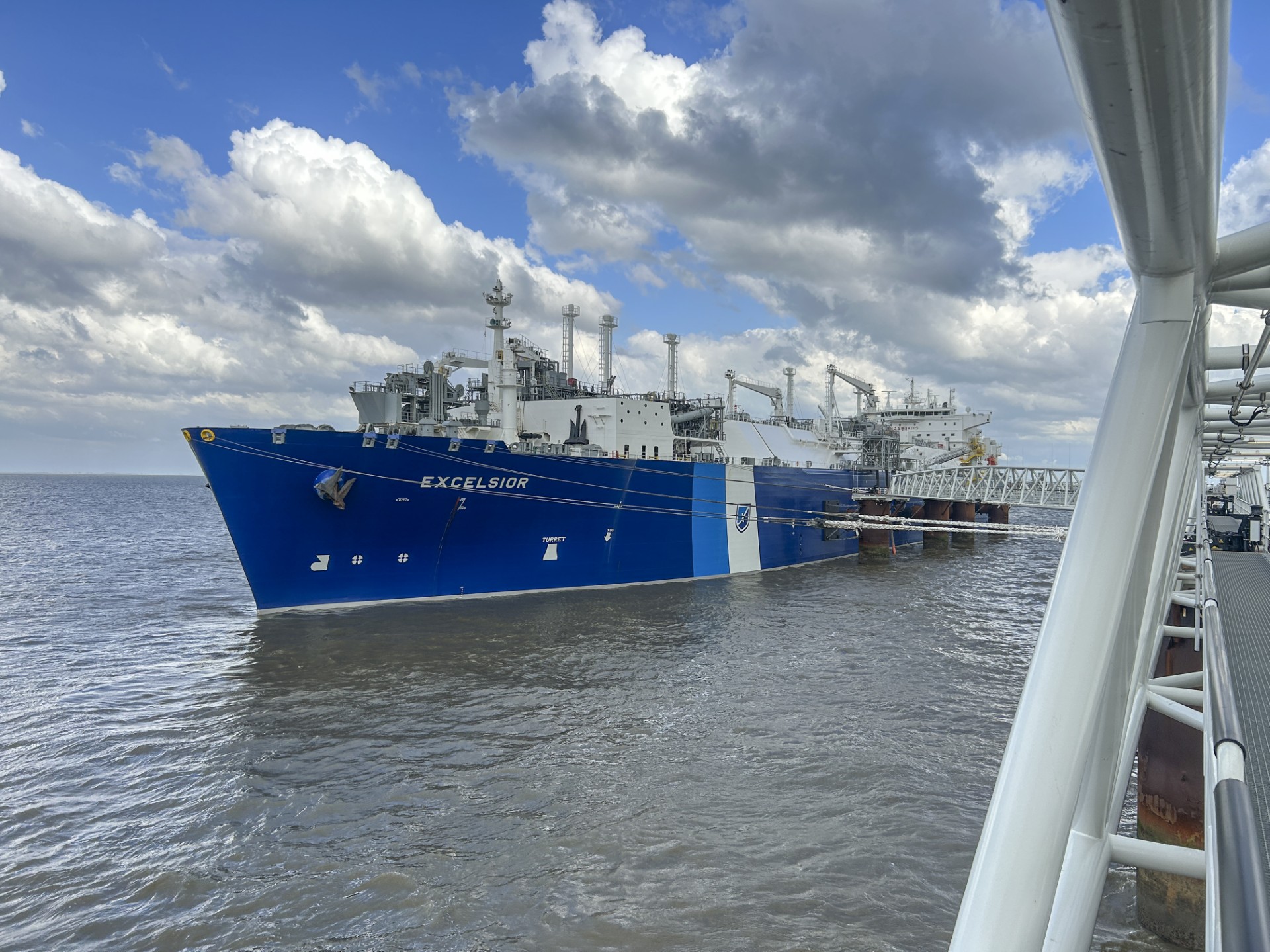
In Germany, the start-up of the Wilhelmshaven 2 FSRU in August contributed to higher LNG receipts, further supported by increased gas injections into storage.
GECF said that Greece saw a boost in LNG imports due to stronger domestic gas demand and higher pipeline gas exports to neighbouring countries.
Meanwhile, the rise in the Netherlands’ LNG imports was underpinned by growing gas consumption, reduced pipeline gas flows from Norway, and increased pipeline gas exports to Germany.
In contrast, Finland’s LNG imports declined as a result of ongoing maintenance at its Inkoo FSRU.
Between January and August 2025, Europe’s aggregated LNG imports surged by 27 percent (17.96 Mt) y-o-y to 85.09 Mt, with the region’s imports on track to reach a record high this year, GECF said.
Asia Pacific LNG imports climb
GECF said that Asia Pacific’s LNG imports rose by 9.4 percent year-on-year (2.19 Mt)
to reach 25.35 Mt in August, marking a notable reversal after nine consecutive months of annual declines.
According to GECF, the increase was primarily driven by stronger imports in Bangladesh, Japan, the Philippines, South Korea, and Taiwan.
Meanwhile, China’s LNG imports remained stable for the second consecutive month compared to the previous year, GECF said.
From January to August 2025, aggregated LNG imports in the Asia Pacific region declined by
3.8 percent (7.09 Mt) y-o-y, reaching 179.12 Mt.
In Bangladesh, the full operationalisation of the Summit FSRU, following the delayed restart
experienced in August 2024, significantly contributed to the increase in LNG imports, GECF said.
Japan’s higher LNG intake may be linked to an anticipated rise in electricity demand for cooling between September and November, due to forecasts of warmer-than-average temperatures, GECF said.
In the Philippines, the commencement of contractual LNG deliveries has supported the recent uptick in imports.
South Korea’s LNG imports rose to a record high for the month of August, largely attributed to restocking ahead of the upcoming winter season, GECF said.
Meanwhile, in Taiwan, growing gas demand in the power sector has underpinned the increase in LNG imports, it said.
Latin America and MENA
LNG imports in the Latin America & the Caribbean region moved marginally higher by 5.2 percent (0.05 Mt) y-o-y, reaching 1.46 Mt, GECF said.
Brazil and Puerto Rico drove the increase in LAC’s LNG imports offsetting declines in Argentina and Jamaica.
From January to August 2025, aggregated LNG imports in the LAC region dropped by 6.8 percent (0.68 Mt) y-o-y to 9.30 Mt, GECF said.
The increase in LNG imports in Brazil and Puerto Rico was primarily driven by stronger gas demand in the power generation sector.
In Brazil, this was supported by the recent start-up of the UTE GNA II LNG-fired power plant, which contributed to the uptick in consumption, GECF said.
In contrast, Argentina’s LNG imports declined due to a rise in domestic natural gas production.
Additionally, the sharp y-o-y increase in Jamaica’s LNG imports observed in July led to a corresponding decline in August, as volumes normalised following earlier inventory buildup, GECF noted.
According to GECF, the MENA region’s LNG imports continued their upward trajectory, surging by 55 percent y-o-y (1.03 Mt) to reach a record high of 2.89 Mt.
This growth was primarily driven by increased imports in Bahrain and Egypt.
From January to August 2025, aggregated LNG imports in the MENA region rose to 11.88 Mt, an increase of 62 percent (4.54 Mt) y-o-y and have already surpassed the region’s total LNG imports for the entire previous year, GECF said.
The increase in LNG imports by Bahrain and Egypt was driven by lower feedgas availability in both countries, amid rising domestic gas demand, it said.
LNG exports rise
GECF said that global LNG exports stood at 36.55 Mt, representing an increase of 7.8 percent (2.65 Mt) y-o-y.
This growth was primarily driven by non-GECF countries, with GECF member countries contributing to a lesser extent.
Together, these increases outweighed a decline in LNG re-exports.
From January to August 2025, aggregated global LNG exports rose by 5.1 percent y-o-y (13.80 Mt) to 285.43 Mt, GECF said.
GECF noted that this growth was driven by a surge in exports from non-GECF countries, supplemented by moderate increases from GECF member countries and re-exports.
Non-GECF countries continued to dominate global LNG exports, increasing their market share to 56.1 percent in August 2025, up from 53.5 percent a year earlier.
In contrast, the share of GECF member countries declined to 43.4 percent, down from 46 percent, while LNG re-exports maintained a steady share of 0.5 percent.
GECF said that the US, Qatar, and Australia remained the top three LNG exporters.