This story requires a subscription
This includes a single user license.
The JV told FERC in its request on Monday that it continues to progress construction and now requests authorization to begin commissioning systems in Train 2.
Golden Pass noted that it will utilize the same design and procedures for Train 2 that were reviewed and approved by FERC for commissioning of Train 1.
The JV will make separate requests for written authorization prior to introducing hazardous fluids to Train 2 systems.
This NTP request to commission systems in Train 2 includes the flare system, refrigeration system, inlet facilities, condensate stabilization, liquefaction, regen gas system, and other systems, it said.
In May, ExxonMobil CEO Darren Woods said that the company expects the second liquefaction train to be mechanically complete by the end of this year.
“Train 2 we expect to be mechanically complete by the end of this year, and Train 3 should be mechanically complete as we head into the second quarter of next year,” Woods said.
During the same month, the Fluxys-operated Zeebrugge LNG import terminal received the first Golden Pass LNG cargo produced from the first liquefaction train.
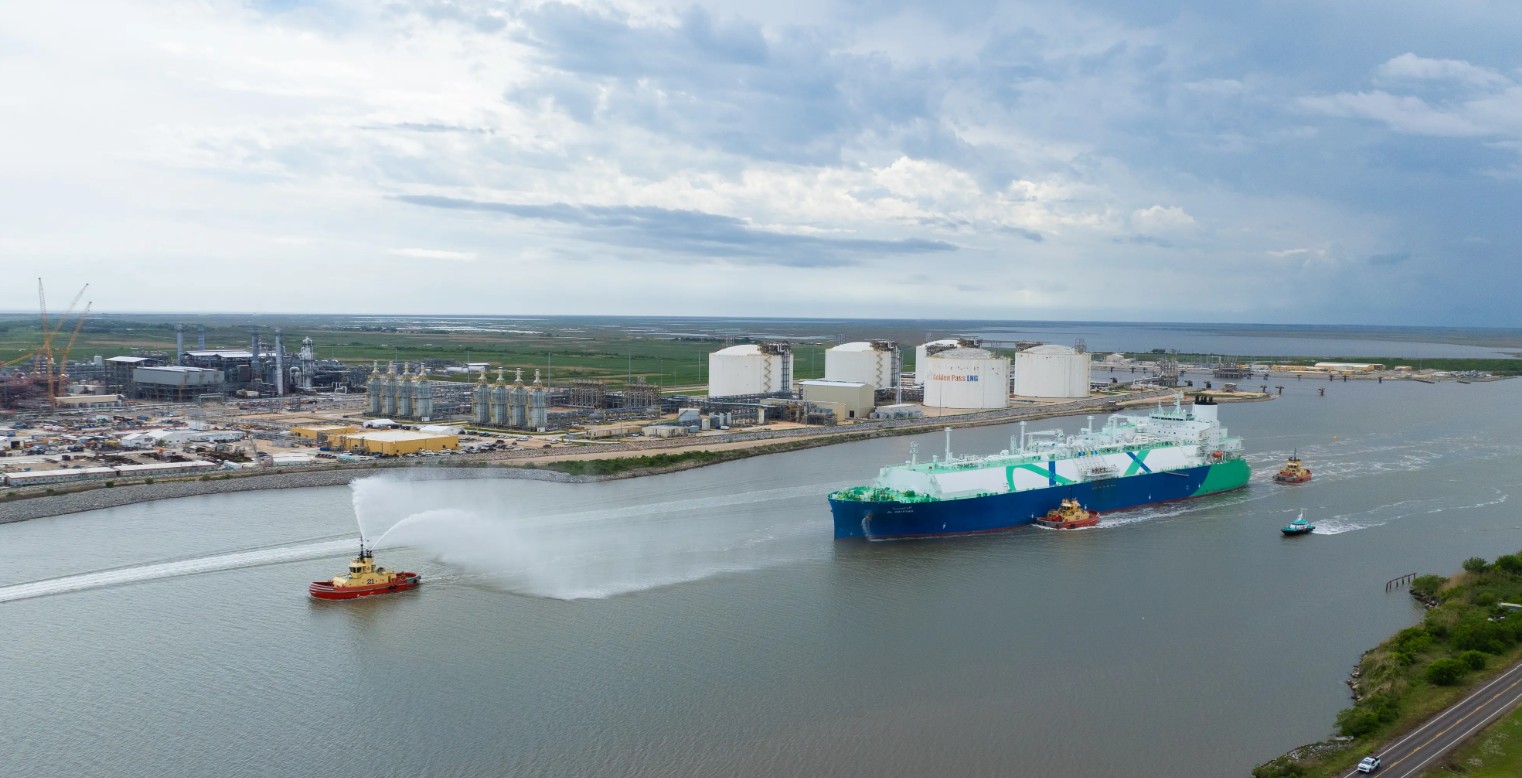
The Golden Pass LNG export terminal is the 10th such facility in the US.
It has three liquefaction trains with a total capacity of 18.1 million tons per year, five 155,000 cbm LNG storage tanks, and two marine berths to accommodate the world’s largest LNG carriers.
State-owned QatarEnergy, whose LNG and other facilities in Ras Laffan were attacked last in March, owns a 70 percent stake in the Golden Pass project and will offtake 70 percent of the capacity, while US energy firm ExxonMobil has a 30 percent share.