This story requires a subscription
This includes a single user license.
Longboard TerminalCo, a wholly-owned subsidiary of Jera Americas, submitted a request on May 15 to initiate the Commission’s pre-filing review process for the proposed LNG import terminal and related natural gas facilities to be located in state waters offshore Kalaeloa (Barbers Point), and onshore within Campbell Industrial Park, on Oahu, Hawaii.
Jera’s unit said the purpose of the project is to provide a near-term supply of natural gas to support Oʻahu’s energy transition goals, including affordability, reliability, and emissions reduction.
FSRU and subsea pipeline
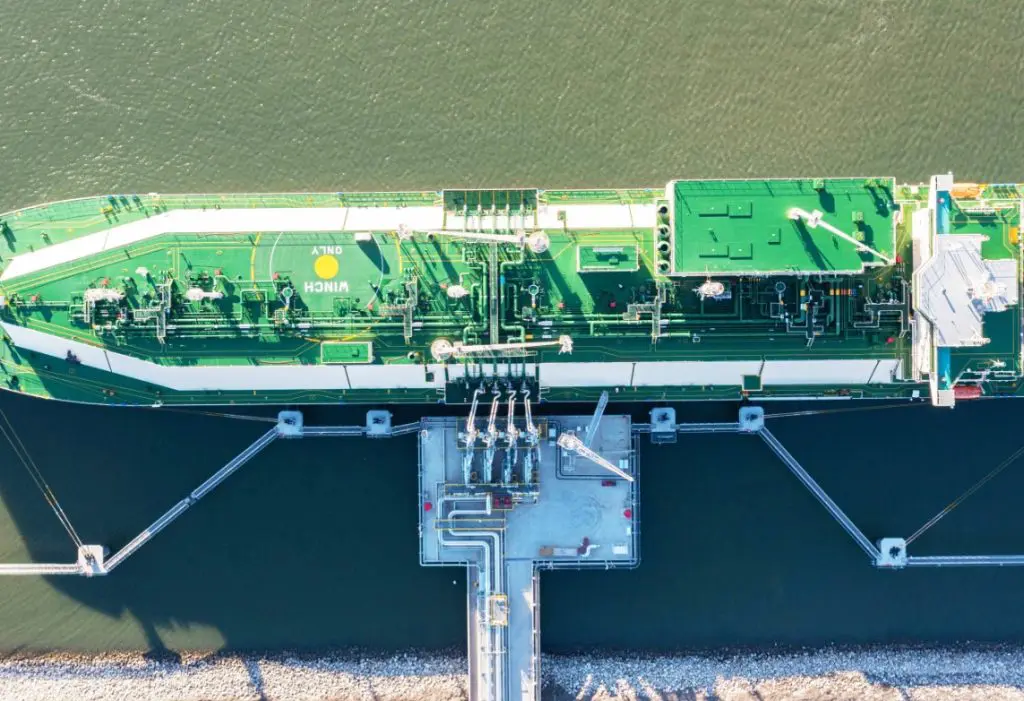
The company noted that LNG will be imported as an alternative to fuel oil using a disconnectable, non-jurisdictional floating storage and regasification unit (FSRU), with an expected storage capacity of 138,000 cbm to 174,000 cbm.
Moreover, the LNG supplies will be delivered by ship-to-ship transfer to the FSRU, where it will be regasified and sent onshore via a single point mooring (SPM) system and 3-mile-long, 16-inch diameter subsea natural gas pipeline-
Jera noted that the jurisdictional project facilities will include the SPM system, the subsea natural gas pipeline, an approximately 2-acre onshore receiving facility (ORF) connecting the subsea pipeline to onshore pipelines, and other appurtenant and ancillary facilities necessary for the safe and reliable operation of the project.
These facilities will provide a “dependable” fuel source for firm power generation on Oahu, it said.
In October last year, Jera’s unit signed a strategic partnering agreement with the government of Hawaii to support the US island state’s plans to shift away from oil by using alternative fuels, including natural gas.
In March this year, the company submitted a proposal to the government of Hawaii to build LNG infrastructure and a 500 MW hybrid combined-cycle and simple-cycle gas turbine facility on Oahu, valued at $2 billion.
FSRU charter
According to the FERC submittal, Longboard LNG intends to enter into a long-term time charter party (TCP) agreement with an “experienced FSRU owner and operator” to provide offshore regasification services for the project.
The FSRU owner will be responsible for vessel design, classification, certification, and operation, with oversight from Longboard LNG.
Jera noted that the NGA Section 3 application for the project will not be based on a specific vessel.
Instead, Longboard LNG will define a “conservative design envelope of environmental and safety parameters consistent with the size and class of modern FSRUs expected to serve the project.”
The specific vessel will be confirmed once the TCP is awarded, and the FSRU owner may periodically substitute vessels within its fleet for maintenance or operational reasons, it said.
Longboard LNG anticipates that annual LNG demand from power generation, industrial facilities, retail gas customers, and LNG bunkering will peak at approximately one million metric tons per annum (mtpa), equivalent to roughly one LNG carrier arrival every three to four weeks, depending on vessel size.
The company estimates that the project will provide approximately 0.6 mtpa of LNG for power generation and gas distribution, and approximately 0.4 mtpa of LNG for marine fuel bunkering operations.
2030
Longboard LNG anticipates filing its formal application with the Commission by December 2026, and anticipates requesting that the Commission issue an order authorizing the LNG project no later than the second quarter of 2028.
Moreover, Longboard LNG anticipates filing the initial project implementation plan and requesting authorization to commence construction soon after receipt of the Commission’s order authorizing the project.
The firm anticipates FERC authorizing the project in the second quarter of 2028, and an authorization to proceed and commence project construction in the third quarter of 2028.
According to the schedule, the project is expected to go online in the first quarter of 2030.