This story requires a subscription
This includes a single user license.
“Golden Pass looks forward to sending off our first export cargo, bringing Texas energy to power the world,” the spokesman said.
He did not provide further information.
Golden Pass LNG announced on March 30 that it has achieved first production of LNG from the first liquefaction train.
After that, Golden Pass LNG received approval from the US FERC to export commissioning cargoes.
The JV anticipates beginning LNG exports to global customers in the second quarter of 2026.
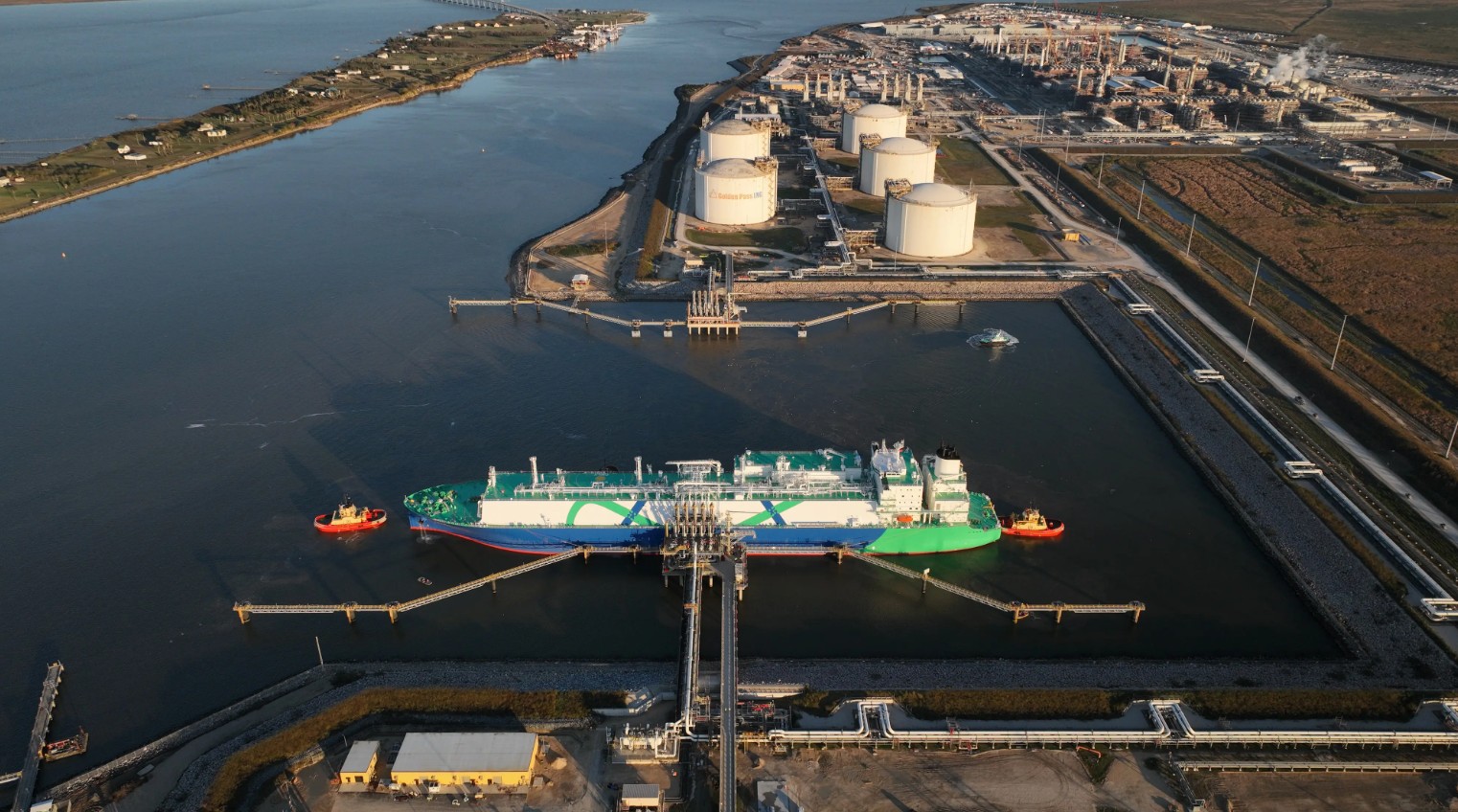
The LNG terminal has three liquefaction trains with a total capacity of 18.1 million tons per year, five 155,000 cbm LNG storage tanks, and two marine berths to accommodate the world’s largest LNG carriers.
State-owned QatarEnergy, whose LNG and other facilities in Ras Laffan were attacked last month, owns a 70 percent stake in the Golden Pass project and will offtake 70 percent of the capacity, while US energy firm ExxonMobil has a 30 percent share.
A joint venture of Chiyoda, McDermott, and Zachry won the EPC contract to build the three Golden Pass trains worth about $10 billion next to the existing LNG import terminal in the vicinity of Sabine Pass, Texas.
However, Zachry Holdings said in May 2024 that it had filed for bankruptcy, initiating a structured exit from the Golden Pass LNG export project due to “financial challenges” related to the facility’s construction.
In November 2024, Japan’s Chiyoda and McDermott’s CB&I reached a deal with Golden Pass LNG to complete the construction of the first liquefaction train following the exit of Zachry.
Additionally, Chiyoda and McDermott signed a revised EPC contract with Golden Pass LNG in November 2025 to complete the construction of the second and third liquefaction units.