
The Netherlands was the top destination for US liquefied natural gas supplies for the third month in a row in July, according to the Department of Energy’s newest LNG monthly report.
The report shows that US terminals shipped 53.3 Bcf of LNG to the Netherlands in July, 40.2 Bcf to Japan, 39 Bcf to China, 34.1 Bcf to Spain, and 20.6 Bcf to France.
These five countries took 53.4 percent of total US LNG exports in July.
In June and May, US terminals shipped 45.9 Bcf of LNG and 64.5 Bcf of LNG to the Netherlands, respectively, while the UK was the top destination for US LNG supplies for six months in a row prior to that.
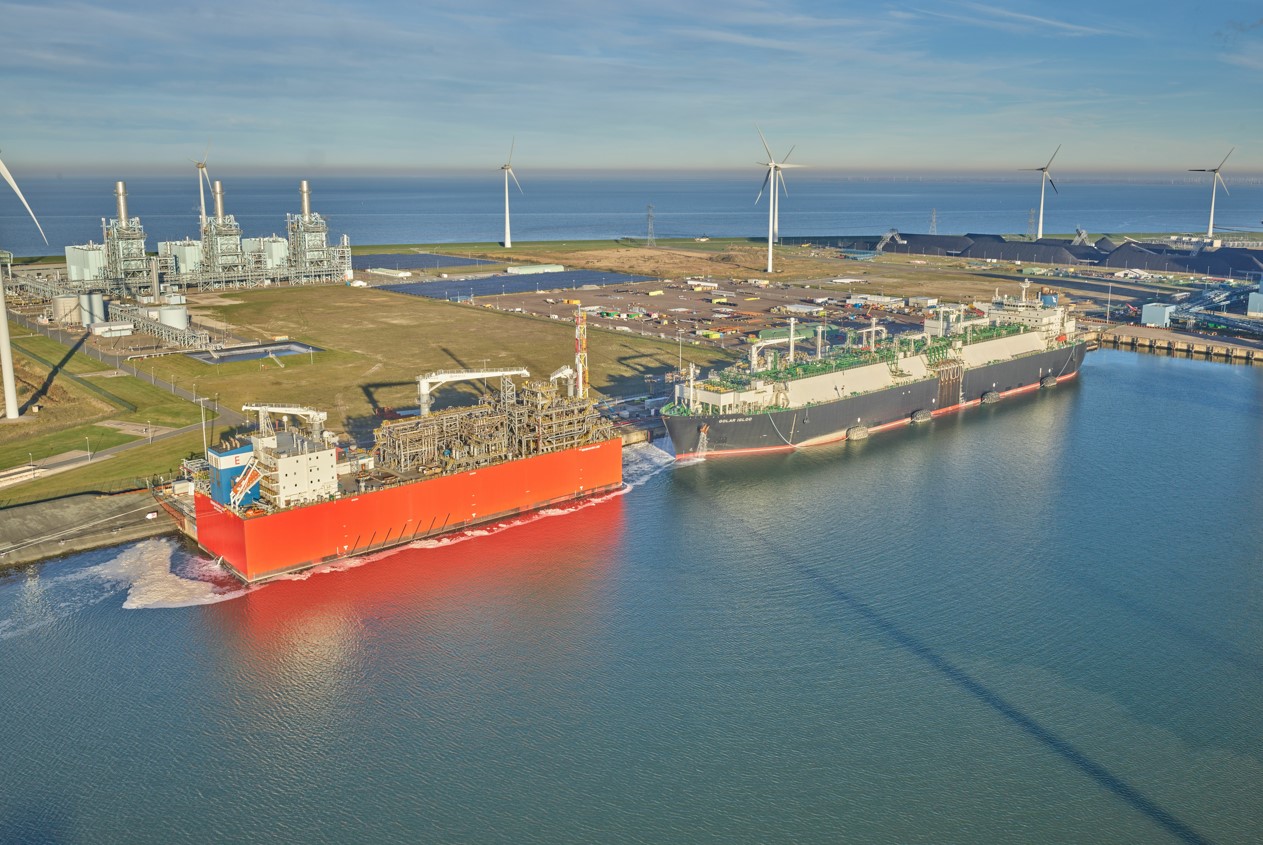
The Netherlands has expanded its capacity with the launching of Gasunie’s Eemshaven FSRU-based LNG terminal that mostly receives cargoes from the US.
The country’s first FSRU-based terminal adds to the Gate LNG import facility in Rotterdam, also operated by Gasunie and Vopak and currently being expanded with the fourth tank and additional regas capacity.
These two terminals deliver regasified LNG to the Dutch grid for customers in the Netherlands as well as to customers in Germany, Czech Republic, and other European countries.
US LNG exports rise 16.7 percent
The US exported in total 350.3 Bcf of LNG in July, up by 16.7 percent compared to the same month last year and a rise of 6.9 percent from the prior month, the DOE report shows.
US terminals shipped 115 LNG cargoes in July, compared to 100 cargoes in July 2022 and 108 cargoes in June this year, according to the report.
Cheniere’s Sabine Pass plant sent 35 cargoes and its Corpus Christi terminal shipped 20 cargoes, while Sempra’s Cameron LNG plant sent 28 shipments during July.
In addition, Freeport LNG sent 22 cargoes, Cove Point LNG sent 6 cargoes, and Elba Island LNG dispatched 4 shipments.
5039 LNG cargoes
According to DOE’s report, the weighted average price by export terminal reached 6.37/MMBtu in July.
Moreover, the report said that in the period from February 2016 through July 2023, the US exported 5039 cargoes or 16,046.8 Bcf to 44 countries.
South Korea remains the top destination for US LNG with 535 cargoes, followed by Japan with 413 cargoes, the UK with 390 cargoes, France with 384 cargoes, and Spain with 385 cargoes.
Spain received one cargo more than France but less volumes.
Besides these five countries, the Netherlands, China, India, Turkey, and Brazil are in the top ten as well.