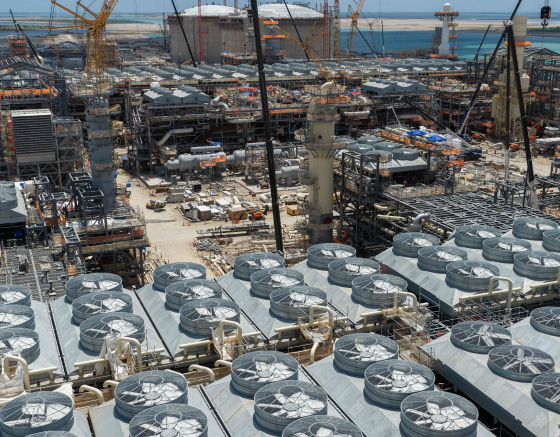
NextDecade’s Rio Grande LNG gets FERC OK to boost capacity

US LNG developer NextDecade has secured a green light from the Federal Energy Regulatory Commission to increase approved capacity at its Rio Grande LNG terminal in the Port of Brownsville, Texas.

LNG Prime Annual Subscription Membership Required

You must be a LNG Prime Annual Subscription member to access this content.

Join Now

Already a member? Log in here

Most Popular

NFE says Altamira LNG offline due to mechanical issue

New Fortress Energy's Fast LNG (FLNG) project off Mexico’s Altamira is offline due to a mechanical issue with the facility’s gas turbine.

Cheniere’s Corpus Christi Trains 8 and 9 project 55.6 percent complete

US LNG exporter Cheniere continues to progress construction on its Corpus Christi Midscale Trains 8 and 9 project in Texas.

Karpowership awards new FSRU conversion job to Seatrium

Singapore’s Seatrium will convert another LNG carrier into a floating storage and regasification unit for Turkiye’s Karpowership under a new contract.

More News Like This

Cheniere’s Corpus Christi Trains 8 and 9 project 55.6 percent complete

US LNG exporter Cheniere continues to progress construction on its Corpus Christi Midscale Trains 8 and 9 project in Texas.

Venture Global seeks FERC OK to place first Plaquemines LNG phase in service

Venture Global's Plaquemines LNG is seeking approval from the US FERC to place Phase 1 of its LNG export plant in Louisiana into service.

NextDecade secures permit for sixth Rio Grande LNG train

US LNG developer NextDecade has secured the US Army Corps of Engineers permit for the Rio Grande LNG Train 6 expansion project.

US FERC issues final EIS for Cheniere’s Sabine Pass expansion project

The US Federal Energy Regulatory Commission (FERC) has released a final environmental impact statement for Cheniere’s planned Sabine Pass Stage 5 expansion project. The regulator confirmed that construction and operation of the LNG project would result in “some adverse environmental effects; however, effects would be reduced to less-than-significant levels.”