This story requires a subscription
This includes a single user license.
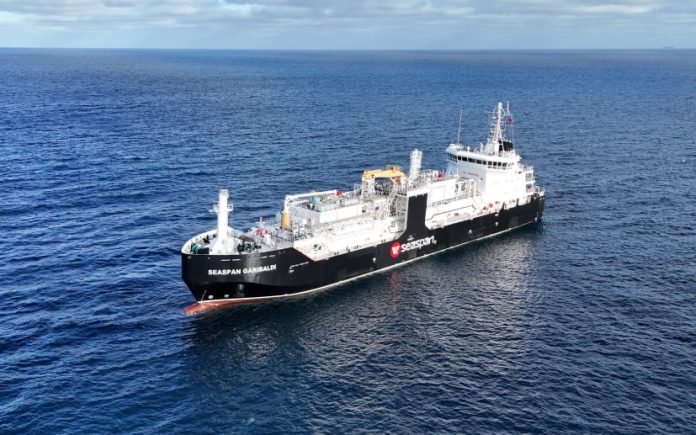
In December 2025, Stabilis entered into a two-year time charter deal with Canada’s Seaspan Energy for the latter’s LNG bunkering vessel, starting in March this year.
In addition, Stabilis has an option to buy the LNG bunkering vessel.
Stabilis founder and executive chairman Casey Crenshaw said during the company’s first-quarter earnings call last week that the company initially chartered the LNG bunkering vessel to support its client in Galveston.
“We ended up, for a number of reasons, with them going to a different solution,” Crenshaw said.
Stabilis recently terminated its previously announced 10-year agreement with a “leading investment-grade global marine operator” to supply LNG from the company’s planned Galveston liquefaction facility.
The company announced the LNG deal with the unnamed firm in October last year, marking the company’s first marine bunkering contract for its proposed 350,000 gallon-per-day Galveston liquefaction facility.
The agreement included the supply of approximately 50 million gallons of LNG per year, roughly 40 percent of the facility’s planned liquefaction capacity, with minimum volume commitments of approximately 32 percent of planned capacity.
Crenshaw said that Stabilis “anticipated a very quick sub-charter capability” with the LNG bunkering vessel Seaspan Garibaldi, but the Iran war “disrupted re-chartering activity and put a delay on it.”
“We anticipate it happening in the second quarter for an effective date in the third quarter,” he said.
He said that Stabilis is working on “numerous” sub-chartering agreements.
“We do not expect the sub-charter to be at a big profit, so we expect it to be net neutral,” Crenshaw said.
Customer may come back
Asked about whether there is a possibility that the previous offtaker would return to sign up for Galveston LNG volumes, Crenshaw said that Stabilis “highly anticipates this customer that we were required to cancel that contract with coming back and doing business with us in Galveston once we get further down the road or complete the plant.”
“Whether or not they will be part of the offtake that helps create the financing, or they become a spot market client post construction, we do not know yet, but we are actively working with that client,” he said.
“Timelines and the Iran war and different things happening caused delays and issues around dates and how that would affect financing, which created the need to exit that contract,” he said.
“While this development has delayed the project timeline, I want to be clear that we remain committed to pursuing the Galveston LNG project,” Crenshaw said.
He said that Satbilis is in “active discussions” with other potential customers to sell the available capacity.
“We also continue to engage with financial partners who have expressed support for the project. Galveston LNG remains an important component of our long-term value creation strategy, particularly as we look to serve durable multi-year demand in the Port of Galveston and the broader Gulf Coast marine market,” he said.