This story requires a subscription
This includes a single user license.
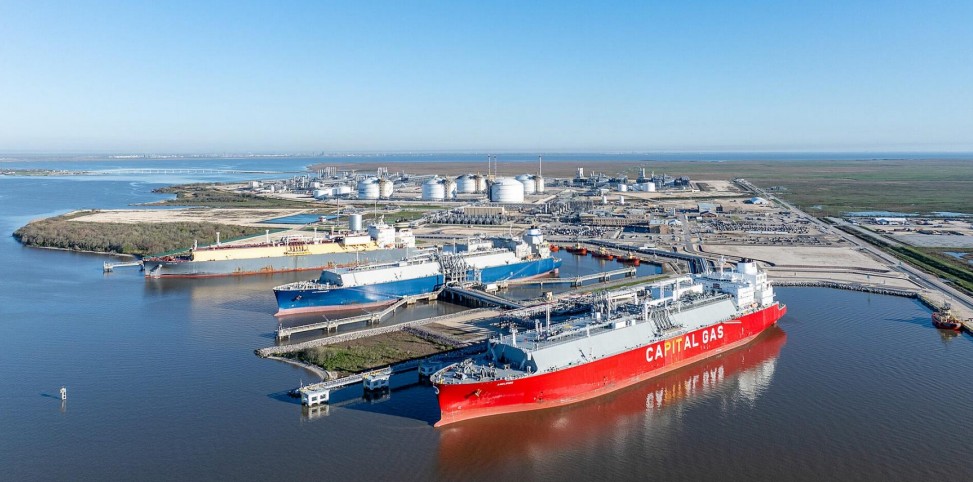
Cheniere’s Sabine Pass facility currently has a capacity of approximately 30 mtpa following the launch of the sixth train in February 2022.
With the Stage 5 expansion project, Cheniere is adding approximately 20 mtpa of liquefaction capacity in two phases.
Phase 1 of the Stage 5 project will include liquefaction Train 7 with a caapcity of approximately 6 mtpa, a BOG re-liquefaction unit, and the Sabine Crossing Pipeline, while Cheniere will add Trains 8 and 9 and other related infrastructure in the second phase.
FERC announced on Friday that it has prepared a draft (EIS) for the project proposed by Sabine Pass Liquefaction, Sabine Pass Liquefaction Stage V, Sabine Crossing Pipeline, and Cheniere Creole Trail Pipeline.
The regulator noted that the US Army Corps of Engineers, the Department of Transportation, the Coast Guard, the National Oceanic and Atmospheric Administration – National Marine Fisheries Service, and the Department of Energy participated as cooperating agencies in the preparation of the draft EIS.
“Commission staff conclude that construction and operation of the proposed project, with the mitigation measures recommended in the draft EIS, would result in some adverse environmental effects; however, effects would be reduced to less-than-significant level,” it said.
FERC said the draft EIS is not a decision document.
It presents FERC staff’s independent analysis of the environmental issues for the Commission to consider when addressing the merits of all issues in this proceeding, it said.
Comments on the draft EIS are due to the Commission on or before 5:00 pm Eastern Time on May 26.
Cheniere said in its 2025 results report in February this year that it expects a FERC permit in late 2026 to enable a final investment decision (FID) in 2027.
The company also expects budgeting for Train 7 limited notices to proceed (LNTPs) in 2026.