
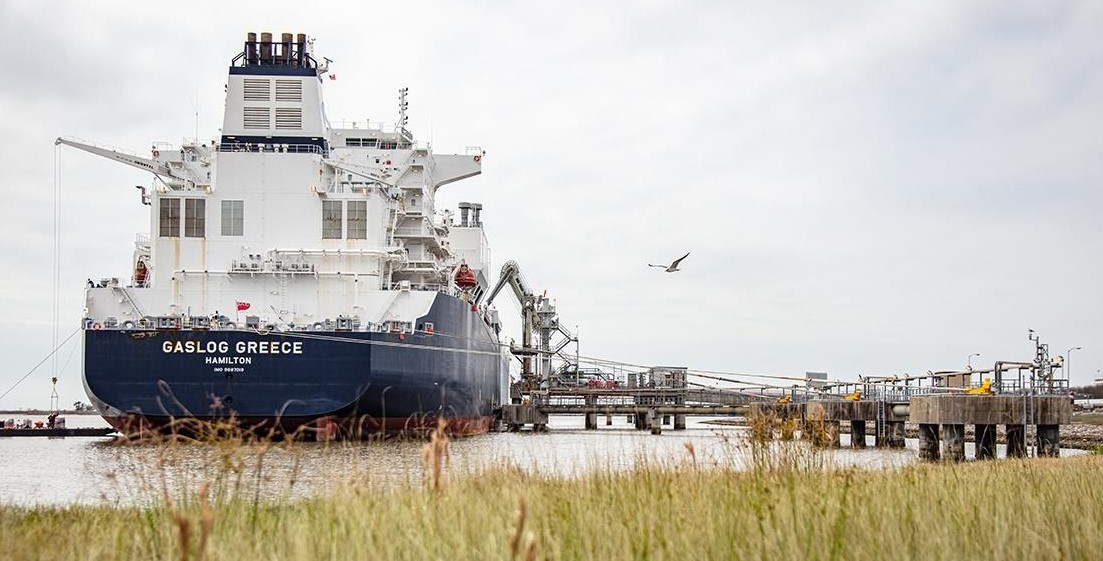
US liquefied natural gas (LNG) exports dropped in the week ending August 31 when compared to the week before, according to the Energy Information Administration.
The agency said in its weekly natural gas report that 18 LNG carriers left the US plants between August 25 and August 31, down by three shipments when compared to the week before.
According to the agency, the total capacity of LNG vessels carrying these cargoes is 67 Bcf.
Also, natural gas deliveries to US LNG export facilities decreased by less than 0.1 Bcf/d and averaged 11 Bcf/d this week.
Cheniere’s Sabine Pass plant shipped eight cargoes and its Corpus Christi facility sent three shipments.
Sempra’s Cameron LNG also dispatched three shipments, while the Cove Point facility sent two cargoes.
Venture Global LNG’s Calcasieu Pass terminal and the Elba Island facility each sent one cargo during the week under review, EIA said, citing shipping data by Bloomberg Finance.
Freeport LNG’s plant remains shut following an incident at the facility that took place on June 8. The LNG terminal operator delayed the restart of its 15 mtpa LNG export plant in Texas to November.
Besides these shipments for export, an LNG vessel discharged a cargo of about 3 Bcf at the Everett LNG facility, near Boston, Massachusetts, operated by Constellation, the agency said.
Henry Hub drops
This report week, the Henry Hub spot price fell 34 cents from $9.29 per million British thermal units (MMBtu) last Wednesday to $8.95/MMBtu this Wednesday, the agency said.
Moreover, the price of the September 2022 Nymex contract expired Monday at $9.353/MMBtu, up 2.3 cents from last Wednesday.
The October 2022 NYMEX contract price decreased to $9.127/MMBtu, down 17 cents from last Wednesday to this Wednesday.
The agency said that the price of the 12-month strip averaging October 2022 through September 2023 futures contracts climbed 4 cents to $7.394/MMBtu.
TTF hits record
According to the agency, international natural gas futures prices surged this report week.
They reached record-high levels driven by natural gas supply constraints in Europe, which have grown as a result of reduced pipeline flows from Russia and a maintenance event on the Nord Stream 1 pipeline, it said.
Bloomberg Finance reported that weekly average futures prices for LNG cargoes in East Asia increased $5.02 to a weekly average of $64.02/MMBtu.
Natural gas futures for delivery at the Dutch TTF increased $6.01 to a weekly average of $83.62/MMBtu, the highest weekly average price on record, the agency said.
The price at TTF rose close to $100/MMBtu earlier in the report week, it said.