
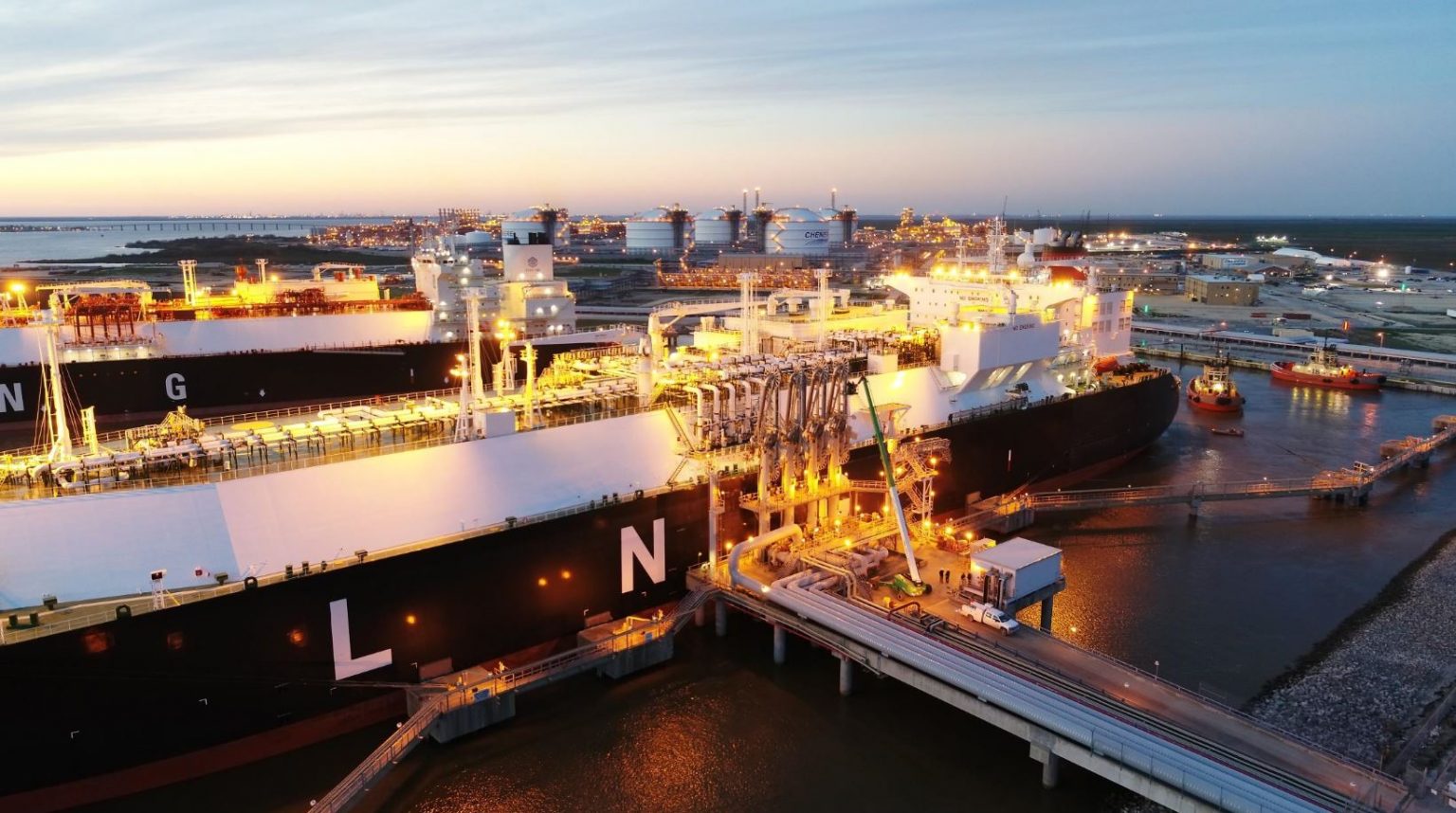
US LNG exports remained flat in the week ending October 27, while the Henry Hub spot price logged an increase when compared to the week before.
The Energy Information Administration said in its weekly natural gas report that the US has exported 20 LNG shipments between October 21 and October 27.
This compares to 20 LNG cargoes during the prior week.
Also, natural gas deliveries to US LNG export facilities averaged 10.6 Bcf/d, or 0.2 Bcf/d lower than last week.
Six US terminals exported the 20 cargoes during the week under review. The total capacity of LNG vessels carrying these cargoes is 73 Bcf, compared to 74 Bcf in the week before.
Cheniere’s Sabine Pass plant dispatched six cargoes, while its Corpus Christi plant sent four shipments. The Freeport LNG terminal also sent four shipments while Cameron dispatched three cargoes.
The Cove Point LNG export facility sent two cargoes and Elba Island dispatched one.
Henry Hub spot price up this week
This report week, the Henry Hub spot price rose $1.07 from a weekly low of $4.79/MMBtu last Wednesday to a weekly high of $5.86/MMBtu this Wednesday, the agency said.
Natural gas demand rose in the Gulf Coast region as a result of higher natural gas flows into the Midcontinent region.
IHS Markit reports weekly average natural gas demand in southern Louisiana fell by approximately 0.2 Bcf/d week over week, primarily as a result of lower feed gas deliveries to LNG export terminals, which were more than 0.2 Bcf/d lower than last week.
However, feed gas deliveries rose near the end of the week, tightening the regional natural gas market.
Cheniere, operator of the Creole Trail pipeline that delivers natural gas to the Sabine Pass LNG export terminal in Louisiana, reported natural gas deliveries to Sabine Pass rose from 1.0 Bcf/d last Wednesday to as high as 1.6 Bcf/d on Tuesday and close to 1.2 Bcf/d this Wednesday.
LNG prices and TTF rise
Increases in international natural gas prices slowed this report week, EIA said.
Bloomberg Finance reported that swap prices for November LNG cargoes in East Asia rose for the ninth week in a row to a weekly average of $34.05/MMBtu this report week, the highest weekly average on record since January 2020 but less than price increases in previous weeks.
The East Asia price rose 13 cents/MMBtu above last week’s average of $33.92/MMBtu.
At the Dutch Title Transfer Facility (TTF), day-ahead prices fell this report week to a weekly average of $29.60/MMBtu, down 83 cents/MMBtu from last week’s average of $30.43/MMBtu.
In the same week last year (week ending October 28, 2020), prices in East Asia and at TTF were $6.89/MMBtu and $5.17/MMBtu, respectively, the agency said.