
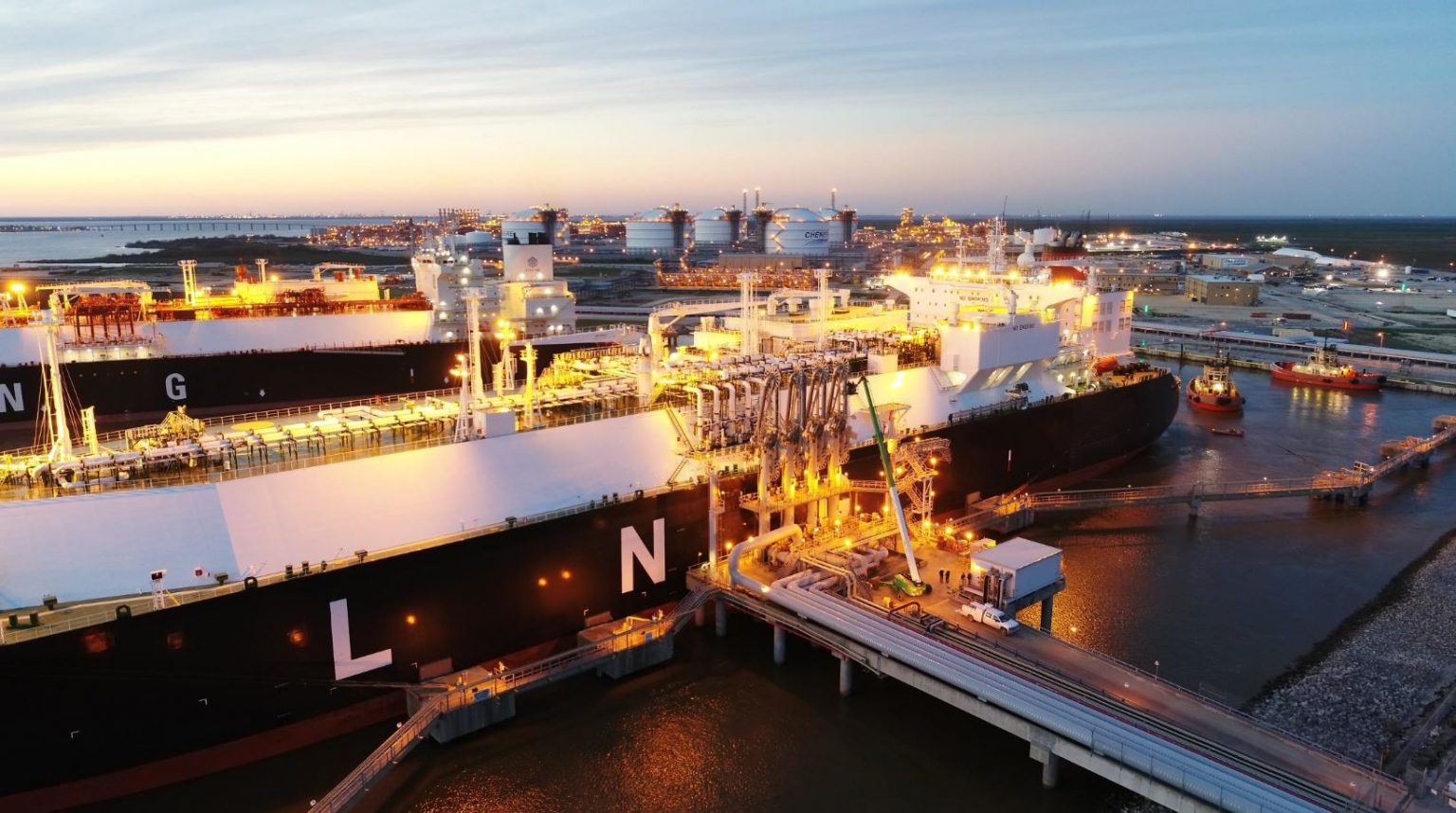
US liquefied natural gas (LNG) exports rose in the week ending July 6, while the Henry Hub spot price increased as well when compared to the week before.
The US has exported 19 LNG shipments between June 30 and July 6, up by one shipment when compared to the week before, the Energy Information Administration said in its weekly natural gas report.
The total capacity of LNG vessels carrying these cargoes is 71 Bcf.
Natural gas deliveries to LNG export facilities averaged 11.2 Bcf/d, or 0.7 Bcf/d higher than last week.
Cheniere’s Sabine Pass plant shipped nine cargoes and its Corpus Christi facility sent four shipments. Sempra’s Cameron LNG dispatched three cargoes.
The Cove Point sent two cargoes and Venture Global LNG’s Calcasieu Pass terminal sent one cargo, EIA said, citing shipping data by Bloomberg Finance.
Elba Island and Freeport LNG did not ship any cargoes.
Freeport LNG said last week it expects to resume partial liquefaction operations at its 15 mtpa export plant in Texas in early October after an incident took place at the facility on June 8.
The LNG terminal operator said it continues to target year-end for a return to full production.
Henry Hub down to $5.63/MMBtu
This report week, the Henry Hub spot price dropped from $6.67/MMBtu last Wednesday to $5.63/MMBtu this Wednesday, the agency said.
Total consumption of natural gas in all sectors along the Gulf Coast (South Texas and South Louisiana subregions) fell slightly by a combined 0.1 billion cubic feet per day (Bcf/d) this report week, according to data from PointLogic.
Natural gas deliveries to LNG export terminals in South Texas remained effectively unchanged at 2.3 Bcf/d, while deliveries to LNG export terminals in South Louisiana increased by 0.7 Bcf/d to 7.8 Bcf/d, the agency said.
Spot LNG, TTF up
According to the agency, international natural gas prices increased this report week.
Bloomberg Finance reported that swap prices for LNG cargoes in East Asia increased $1.56 to a weekly average of $38.43/MMBtu.
At the Dutch TTF, the day-ahead price rose $7.62 to a weekly average of $47.99/MMBtu.
In the same week last year (week ending June 30, 2021), the prices in East Asia and at TTF were $12.75/MMBtu and $11.57/MMBtu, respectively, the agency said.
“The weekly average premium of TTF prices to East Asia was $9.56/MMBtu, the highest such premium since the second week of March, following Russia’s full-scale invasion of Ukraine,” it said.
In the same week last year (week ending July 7, 2021), the prices in East Asia and at TTF were $13.17/MMBtu and $12.27/MMBtu, respectively, the agency said.