This story requires a subscription
This includes a single user license.
FERC said in a letter to Venture Global dated April 16 that it has determined that the forthcoming proposal, known as the CP2 LNG expansion project, is not subject to the mandatory prefiling procedures and review process.
The regulator noted that this determination is limited to the pre-filing review process.
“CP2 LNG and CP Express must fully comply with the application process under 18 CFR 153 and must obtain authorization under Sections 3 and 7 of the Natural Gas Act,” it said.
This includes filing a complete application with environmental reports which sets forth all information necessary to fully advise the Commission concerning the construction and operation of the planned project, FERC said.
Six liquefaction blocks
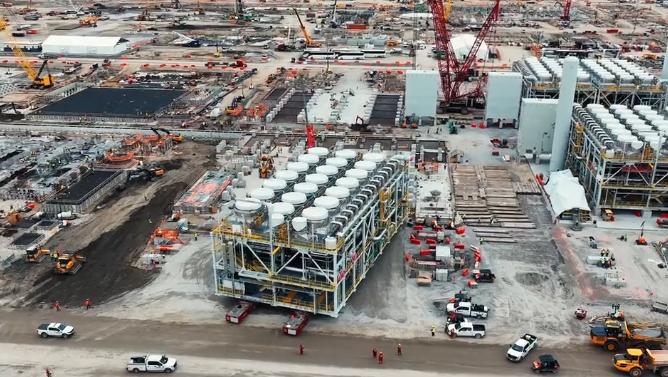
The proposed expansion project includes six liquefaction blocks, each with two single mixed refrigerant process units and ancillary support facilities.
Moreover, it includes a 720-megawatt power plant, with five gas turbines, five heat recovery steam generators, and two steam generators housed in a new building.
The project also would have three gas pre-treatment facilities, two nitrogen removal units and three LNG expanders, three thermal oxidizers for control of acid emissions, five boil-off gas compressors, additional utilities and safety systems, and a third marine berth.
In addition, the project would include one new 272,000-horsepower compressor station in
Jasper County, Texas.
FERC noted that all of the planned CP2 LNG expansion project facilities, other than the marine berth, would be within the storm surge and security enclosure being built to contain the already authorized facilities.
The CP2 LNG expansion project would be an extension of CP 2 Phases 1 and 2 that utilize in-kind or upgraded pretreatment facilities, liquefaction facilities, marine facilities, and other facilities with in-kind or upgraded safety systems, security systems, and other systems recently authorized by the Commission and under construction, it said.
Moreover, through the development of the previously authorized facilities, Venture Global has already consulted state and local agencies (and the U.S. Coast Guard) on the emergency response plan and cost sharing plan, as required by the Natural Gas Act.
Given this, the project would not “involve any significant state and local safety considerations that have not been previously addressed,” FERC said.
CP2 LNG
Venture Global reached a final investment decision (FID) on the $8.6 billion second phase of the CP2 LNG project on March 13.
CP2 will have a peak production capacity of 29 mtpa and has contracted to sell nearly all of its nameplate capacity on a long-term basis with customers predominantly located in Europe and Asia, according to Venture Global.
The CP2 LNG plant site is situated adjacent to Venture Global’s existing Calcasieu Pass liquefaction plant in Louisiana, which commenced commercial operations in April last year.
Phase One has a nameplate capacity of 14.4 mtpa, but following improvements, Venture believes the peak run rate production level of Phase 1 should be closer to 20 mtpa.
Including Phase two, the 36 factory-built liquefaction trains from both phases should be capable of production of 29 mtpa once completed and commissioned.
However, Venture Global expects to add approximately 13 mtpa of bolt-on capacity at both CP2 and its Plaquemines LNG plant.
“The bolt-ons at CP2 and Plaquemines are straightforward liquefaction train and gas turbine additions that should add around 6.4 mtpa each,” Venture Global CEO Mike Sabel said during the company’s earnings call last month.
“The additions leverage the benefits of our modular approach, resulting in what we expect to be much lower cost and much shorter construction timelines,” Sabel said.
Venture is targeting FID for the CP2 bolt-on in early 2027 and for the Plaqumines bolt-on in mid-2027.