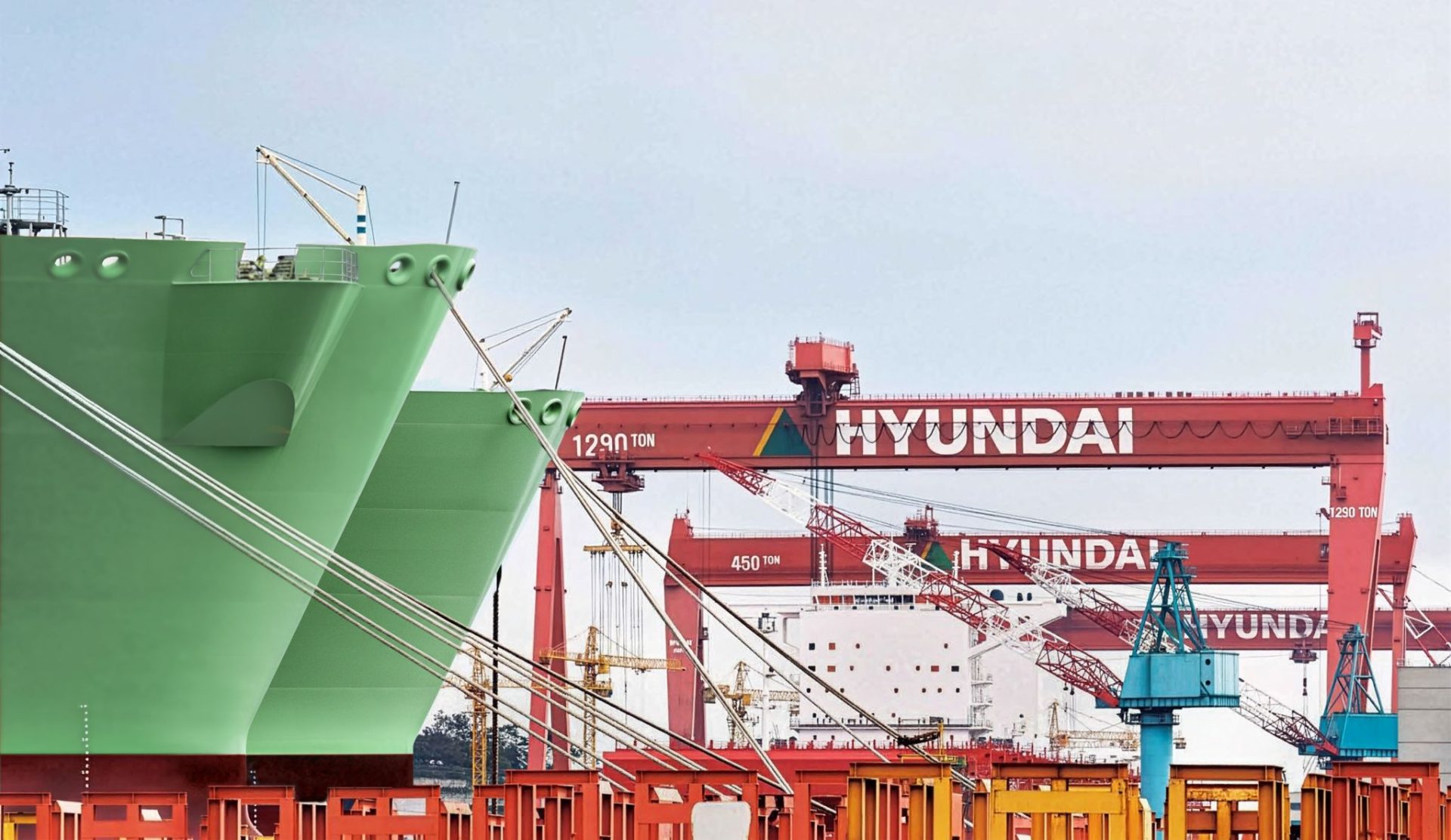
BW orders LNG carrier duo at HD Hyundai Samho

BW LNG, a unit of Singapore-based gas giant BW, has ordered two LNG carriers from South Korea’s HD Hyundai Samho. These vessels are expected to feature three tanks instead of four, according to shipbuilding sources.

This story requires a subscription

Get 12 months of full digital access to LNG Prime for only $295 instead of $600.
This includes a single user license.
Check our FAQ for more info. For group subscriptions please contact us.

Most Popular

Cheniere progresses commissioning of seventh Corpus Christi expansion train

US LNG exporting giant Cheniere is moving forward with commissioning activities at the seventh train of the Corpus Christi Stage 3 expansion project in Texas.

Seaspan, Stabilis terminate charter deal for LNG bunkering vessel

Canada's Seaspan Energy has exercised an option to terminate its previously signed charter agreement with Houston-based small-scale LNG player Stabilis Solutions for the 7,500-cbm LNG bunkering vessel Seaspan Garibaldi.

Venture Global’s shipping unit inks $1.5 billion vessel loan facility

Venture Global's unit Venture Global Shipping Holdings entered into a senior secured term loan facility of up to $1.5 billion.

More News Like This

HD KSOE develops fuel pump for LNG-powered vessels

HD Korea Shipbuilding & Offshore Engineering (HD KSOE) said it had developed a domestically produced high-pressure fuel pump for liquefied natural gas (LNG)-powered vessels.

Trio to work on new LNG carrier design

Classification society Lloyd’s Register (LR) has joined forces with South Korea's HD Korea Shipbuilding & Offshore Engineering and HD Hyundai Heavy Industries to develop a new generation of LNG carrier designs using hybrid electric propulsion.

Asyad Shipping names LNG carrier duo in South Korea

Oman's Asyad Shipping has named two newbuild liquefied natural gas (LNG) carriers in South Korea.

HD Hyundai Heavy scores $501 million LNG carrier order

South Korean shipbuilder HD Hyundai Heavy Industries has won a contract worth approximately $501 million to build two liquefied natural gas (LNG) carriers.