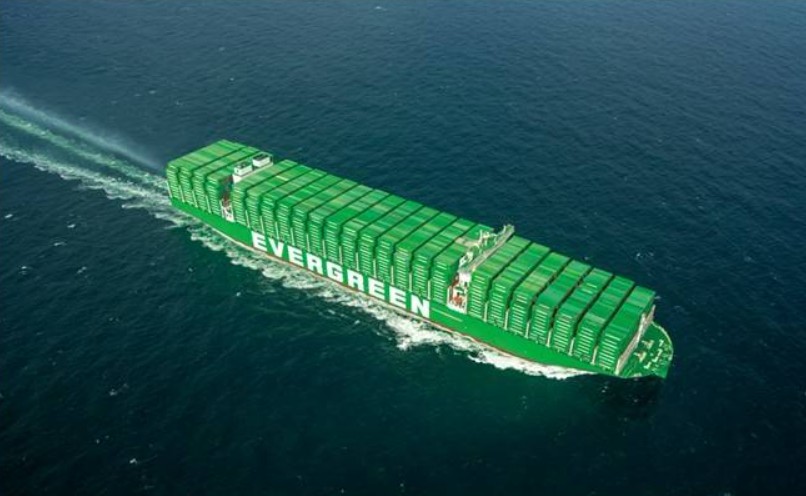
Evergreen to spend up to $2.87 billion on new LNG-powered containership order

Taiwan’s shipping firm Evergreen Marine will spend up to $2.87 billion on an order for 14 LNG dual-fuel container vessels in China and South Korea.

LNG Prime Annual Subscription Membership Required

You must be a LNG Prime Annual Subscription member to access this content.

Join Now

Already a member? Log in here

Most Popular

Galp wins Calcasieu Pass arbitration against Venture Global

Portuguese energy firm Galp has won an arbitration case against US LNG exporter Venture Global LNG over LNG sales from the Calcasieu Pass plant in Louisiana.

MISC to order five more LNG carriers for Petronas charter

Malaysian shipping firm MISC will order five additional newbuild 174,000-cbm liquefied natural gas (LNG) carriers at China's Hudong-Zhonghua. The vessels will serve a 20-year charter with a unit of MISC's parent, Petronas.

Seatrium scores Excelerate FSRU conversion gig

Singapore's Seatrium has secured a floating storage and regasification unit conversion contract with an option for a second contract from US FSRU player Excelerate Energy.

More News Like This

MISC names QatarEnergy LNG carrier

South Korea's Samsung Heavy Industries hosted a naming ceremony for a liquefied natural gas (LNG) carrier it built for Malaysia's MISC and state-owned LNG giant QatarEnergy.

Samsung Heavy nets order for two LNG carriers

South Korean shipbuilding giant Samsung Heavy Industries has secured an order to build two liquefied natural gas (LNG) carriers for approximately $494 million.

GasEntec, Samsung Heavy ink small-scale LNG pact

South Korea-based LNG technology and assets firm GasEntec has entered into a memorandum of understanding with shipbuilder Samsung Heavy Industries to license the latter's liquefaction technology for small-scale applications between 50,000 and 1 million tons per annum.

South Korea’s Samsung Heavy secures order for LNG carrier quartet

South Korean shipbuilding giant Samsung Heavy Industries has secured an order to build four liquefied natural gas (LNG) carriers for approximately $1.05 billion.