This story requires a subscription
This includes a single user license.
Issued by the Ministry of Petroleum and Natural Gas under the Essential Commodities Act, 1955, the order ensures stable supplies for key sectors.
According to the order, the supply of natural gas to the following sectors “shall be treated as priority allocation and shall be maintained subject to operational availability to one hundred percent of their average past six-month average gas consumption.”
The sectors are domestic piped natural gas supply, compressed natural gas for transport, LPG production, including LPG shrinkage requirements, and pipeline compressor fuel and other essential pipeline operational requirements.
Moreover, the supply of natural gas to the fertilizer plants “shall ensure seventy percent” while the gas marketing entities “shall ensure that gas supply to tea industries, manufacturing, and other industrial consumers supplied through the national gas grid is maintained at eighty percent.”
“All city gas distribution entities shall ensure that industrial and commercial consumers supplied through their networks receive eighty percent,” the order said.
QatarEnergy force majeure
India’s largest gas utility, GAIL, recently said it may reduce gas supplies to its downstream customers after it received a force majeure notice from the country’s largest LNG importer, Petronet LNG.
State-owned GAIL said last Thursday that one of its long-term suppliers, Petronet, had issued a force majeure notice on March 3 under its gas sale and purchase agreement.
“The notice has been served due to constraints faced by certain LNG vessels arising from maritime navigation restrictions related to the Strait of Hormuz during transit between India and Qatar, and as well as possibly due to the reported shutdown of the liquefaction facility at Ras Laffan,” it said.
Further, QatarEnergy, Petronet’s upstream LNG supplier, has also issued a communication
indicating a potential force majeure event owing to the recent hostilities in the region, GAIL noted.
Consequently, due to supply restrictions imposed by Petronet, “the allocation of LNG quantities to GAIL under the said contract has been reduced to zero with effect from March 4.”
GAIL is a shareholder in Petronet, along with three other major Indian firms, ONGC, IOCL, and BPCL.
Petronet operates the 17 mtpa Dahej LNG terminal and it expected to launch an additional 5 mtpa capacity at the facility this month.
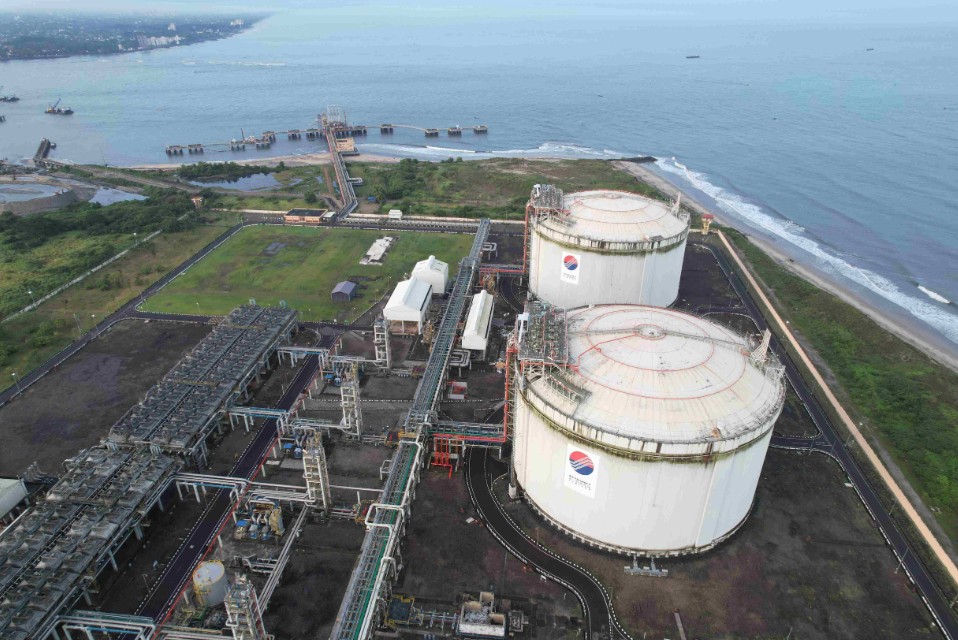
The company also operates the 5 mtpa Kochi facility.
India imports LNG via eight facilities with a combined capacity of about 52.7 million tonnes per year.
In addition to Petronet’s Dahej and Kochi terminals, the facilities include Shell’s Hazira terminal, the Dabhol LNG, Ennore LNG, Mundra LNG, and Dhamra LNG terminals.