This story requires a subscription
This includes a single user license.
State-owned Kogas sold 2.18 million mt last month, compared to 2 million mt in June 2025, the firm said in a stock exchange filing.
June sales were 7.9 percent lower compared to the previous month’s 2.37 million mt, which marked a decrease of 0.8 percent on the year.
Purchases by power firms rose 6.9 percent year-on-year to 1.13 million mt in June and were 5.2 percent lower compared to the previous month.
Moreover, Kogas said its city gas sales rose 12 percent year-on-year to 1.05 million mt last month. City gas sales were 10.7 percent lower compared to the previous month.
Kogas said in its results report in May that it sold 12.23 million mt in the first quarter of 2026.
This is up by 3 percent compared to the three-month period in 2025.
Kogas said its city gas sales decreased by 2 percent year-on-year to 7.29 million mt, while purchases by power firms rose 11.3 percent to 4.92 million mt.
According to Kogas, there was a decline in heating demand due to higher average temperatures in the first quarter compared to the previous year.
Also, Kogas said there was a decrease in industrial demand caused by delayed recovery in the manufacturing sector.
Kogas noted there was an increase in LNG power generation due to lower baseload generation (resulting from increased nuclear power plant maintenance schedules) and reduced direct imports.
Based on the Kogas monthly reports, the firm sold 7.23 million mt in the second quarter of this year, up from 7.02 in the same period last year.
Korean LNG imports
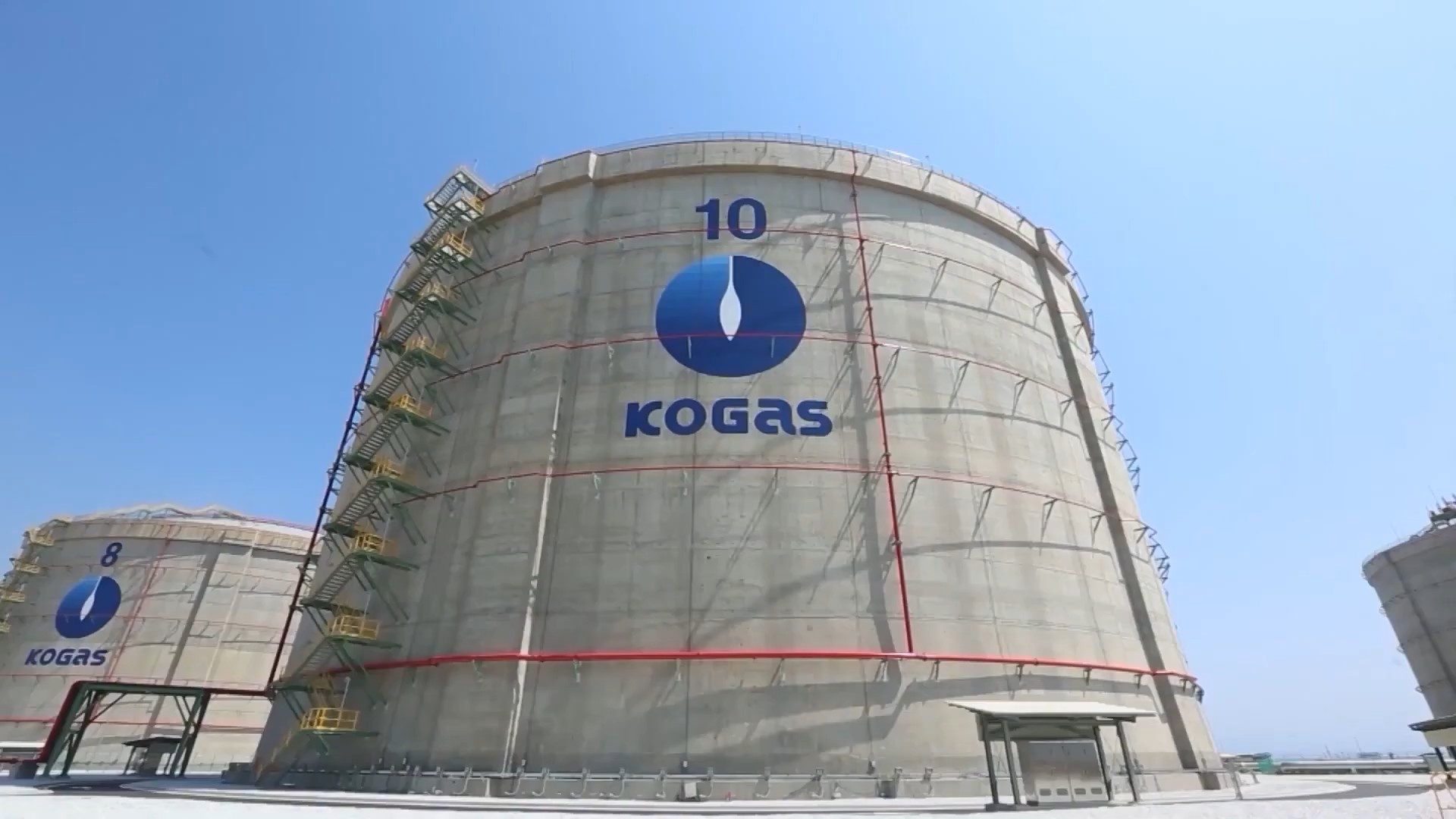
Kogas operates 77 LNG storage tanks at five LNG import terminals in South Korea.
The large terminals include Incheon, Pyeongtaek, Tongyeong, and Samcheok, while the firm has a small-scale regasification terminal at the Aewol port on Jeju island as well.
In addition to these facilities, the firm is building a large terminal in the western port city of Dangjin, and it expects to launch the first phase of this facility in May next year.
Customs data shows that South Korean LNG terminals received 22.27 million mt of LNG in the first six months of this year, a drop compared to 23.04 million mt in the same period last year.
Australia was the biggest supplier to South Korea in January-June with 6.31 million mt of LNG, followed by Malaysia with 4.13 million mt, the US with 2.72 million mt, Canada with 1.99 million mt, and Qatar with 1.60 million mt.
South Korea has not received Qatari LNG in April, May, and June due to the Middle East crisis.