This story requires a subscription
This includes a single user license.
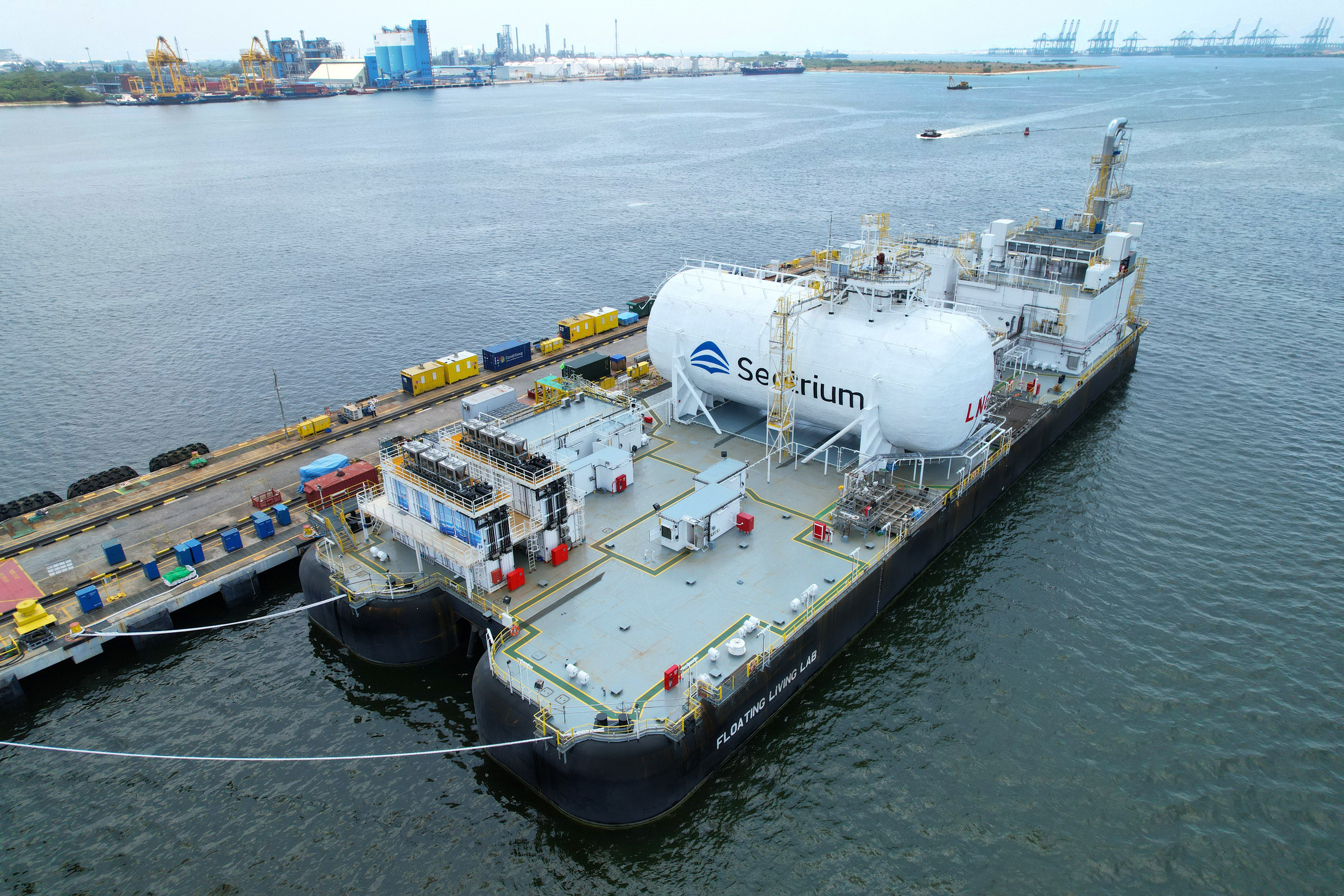
Seatrium announced in a statement on July 3 that it achieved its first electron transfer to the Singapore electricity grid from its floating lab (FLL), marking a “major step forward in next-generation floating energy infrastructure.”
The group claims FLL is a world-first, remote-CON3 notated floating DER platform, classed by ABS and supported by a remote operations center, built on DNV’s assurance frameworks for remote operations.
It integrates distributed energy resources into floating power assets serving both grid and marine consumers across Singapore and Southeast Asia.
LNG bunkering and battery storage
Combining a stacked battery energy storage system and LNG bunkering infrastructure, the facility supports “emerging business models such as PaaS and new energy infrastructure ownership, positioning the group at the forefront of offshore energy as power demand in heavy consumer markets grows,” Saatrium said.
According to the group, the FLL received its first operational LNG parcel in March this year via ship-to-ship bunkering.
The LNG supplies are converted into electricity using onboard gas engines to support Seatrium’s operational energy requirements, with surplus power exported to the Singapore electricity grid.
“This dual capability enables the FLL to reliably meet peak on-site demand while generating sufficient excess electricity that can meet the monthly energy needs of approximately 1,500 four-room HDB households, underscoring its role as an integrated and scalable energy solution,” Seatrium said.

In 2024, Singapore’s FueLNG, a joint venture between Shell and Seatrium, completed the gassing-up, cooling-down, and LNG bunkering of Seatrium’s FLL at its Benoi yard.
FueLNG completed the operation with the 18,000-cbm bunkering vessel, FueLNG Venosa.