This story requires a subscription
This includes a single user license.
He announced this via his social media channels on Thursday.
Tan noted that the Middle East is a major fuel-producing region that ships 25 percent of seaborne oil and 19 percent of global LNG trade through the Strait of Hormuz.
The closure of the Strait of Hormuz due to the conflict will affect global imports of crude oil and LNG from the Middle East, and likely result in higher global fuel prices in the near term, he said.
These effects are felt in Singapore, as the country imports all of the natural gas needed to fuel about 95 percent of its electricity generation.
To safeguard Singapore’s energy security from the Middle East conflict, the Singapore government has “multiple lines of defence.”
Tan said that “about half of our gas is piped to Singapore from the region and is unaffected.”
“We diversify the sources of imported LNG and hence are not overly exposed to the Middle East,” he said.
“Our LNG importers have a global portfolio of sources, such as the US and Australia, which they can tap on to replace cargoes originally from the Middle East. For the one LNG cargo from the Middle East, efforts are underway with the importers to find replacement cargoes,” according to Tan.
He did not provide further details regarding the cargo.
Singapore LNG imports
Singapore’s primary licensed term LNG importers include ExxonMobil LNG Asia Pacific, Shell Eastern Trading and its unit Pavilion Energy, and Sembcorp Fuels, according to the Energy Market Authority.
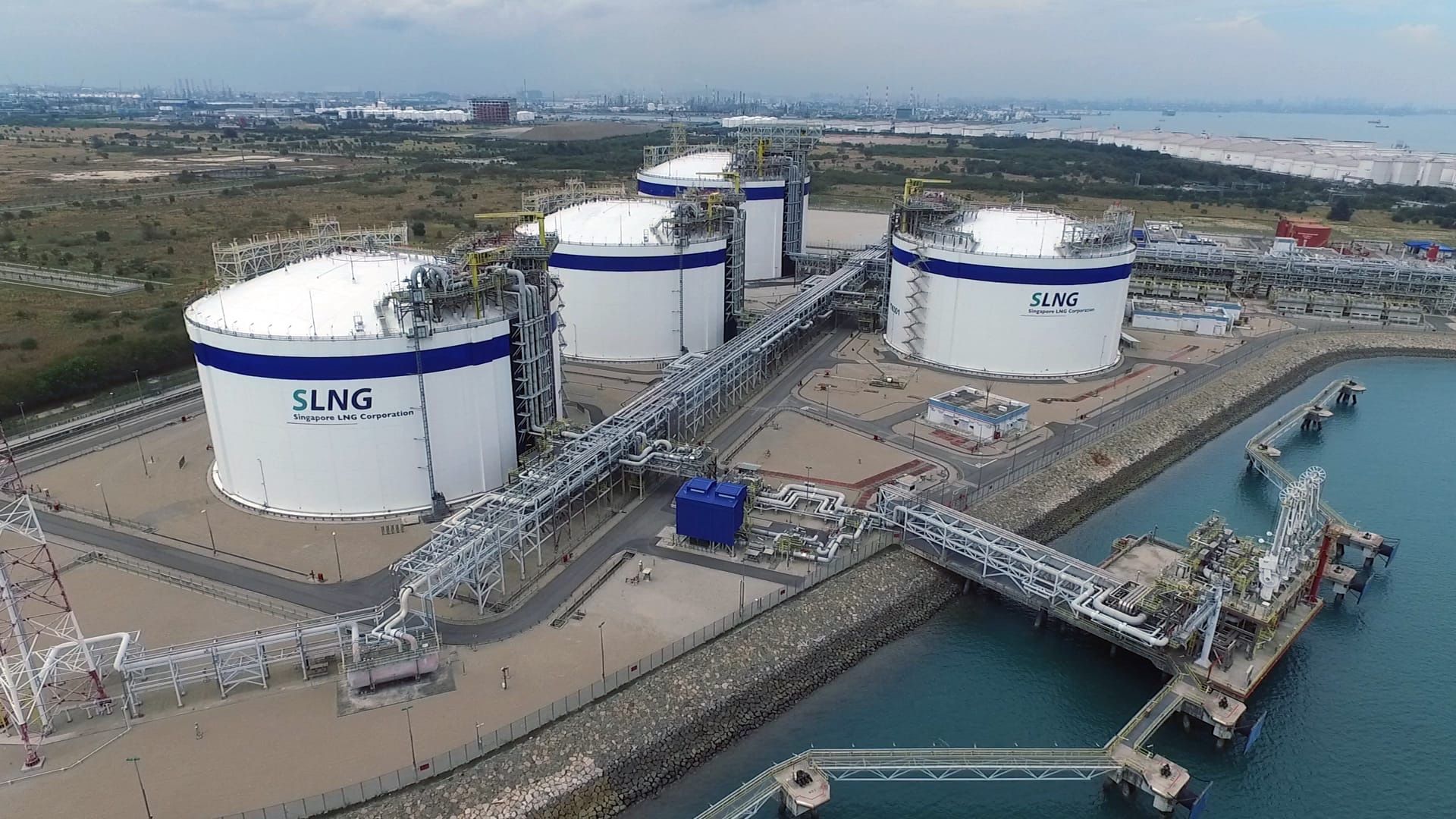
SLNG currently operates Singapore’s only LNG import facility on Jurong Island, and it is also working on Singapore’s second LNG terminal and the country’s first FSRU-based facility.
Qatar is a major supplier of LNG to Singapore.
QatarEnergy stopped producing LNG at its giant Ras Laffan complex on March 2 due to military attacks on its operating facilities.
It declared force majeure to its affected LNG buyers on March 4.