This story requires a subscription
This includes a single user license.
State-owned Kogas sold 3.74 million mt last month, compared to 4.21 million mt in February 2025, the firm said in a stock exchange filing.
February sales were 24.1 percent lower compared to the previous month’s 4.93 million mt, which marked a rise of 14.5 percent on the year.
Purchases by power firms decreased 4.3 percent year-on-year to 1.48 million mt in February and were lower by 20.2 percent compared to the previous month.
Moreover, Kogas said its city gas sales dropped 15.2 percent year-on-year to 2.26 million mt last month. City gas sales were 26.4 percent lower compared to the previous month.
Kogas said in its recent results report that it sold 34.51 million mt in 2025.
This is up by 1.1 percent compared to 34.12 million mt in 2024.
Kogas said its city gas sales rose by 3.3 percent to 19 million mt, while purchases by power firms decreased 1.4 percent to 15.5 million mt.
According to Kogas, there was an increase in heating demand driven by a year-on-year decline in average prices in February, April, and November last year.
Kogas noted that total power generation decreased due to an increase in coal-fired and renewable energy power generation.
Korean LNG imports
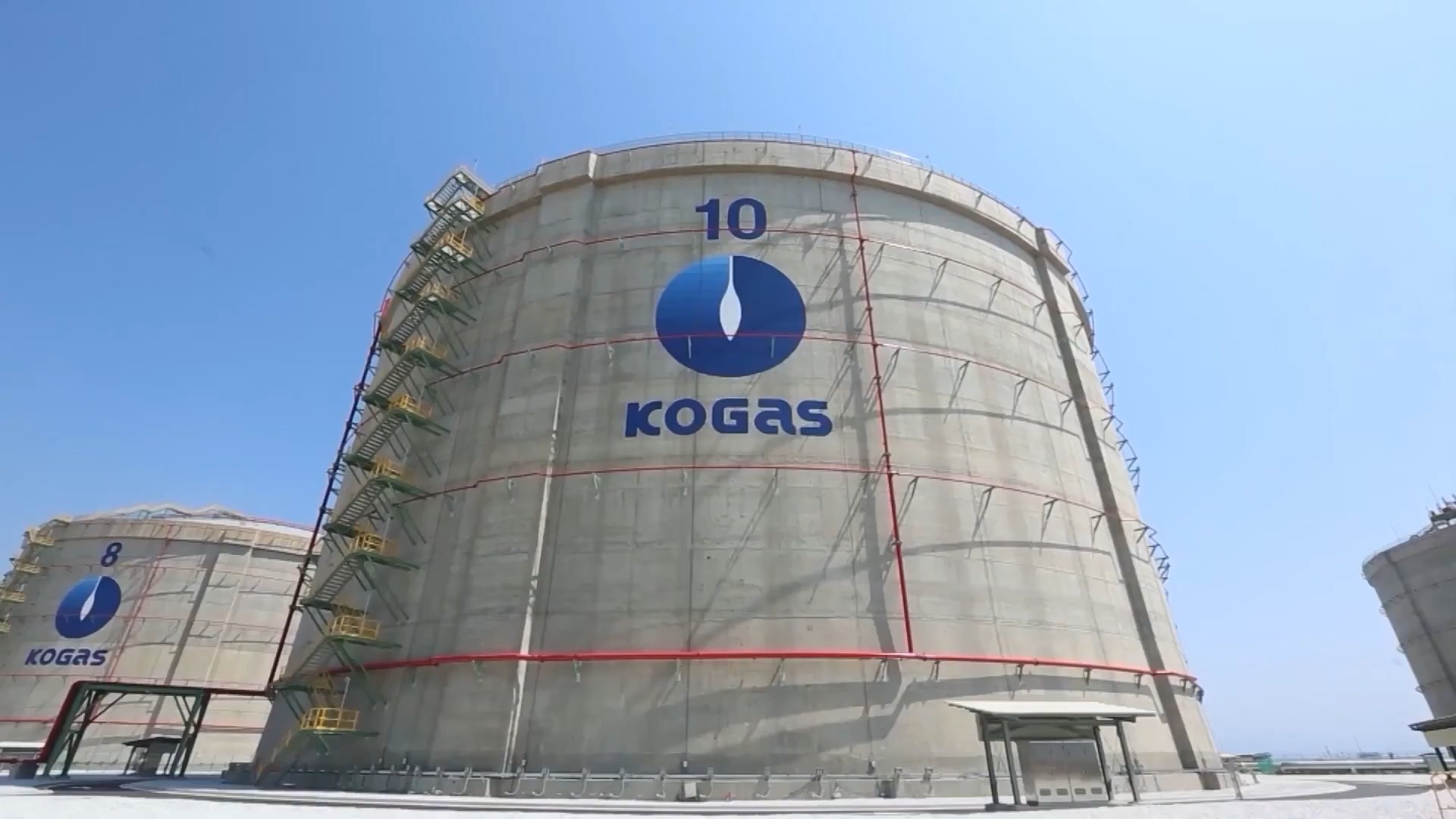
Kogas operates 77 LNG storage tanks at five LNG import terminals in South Korea.
The large terminals include Incheon, Pyeongtaek, Tongyeong, and Samcheok, while the firm has a small-scale regasification terminal at the Aewol port on Jeju island as well.
In addition to these facilities, the firm is building a large terminal in the western port city of Dangjin, and it expects to launch the first phase of this facility in May next year.
There is currently no available official data for Korean LNG imports in February.
Customs data shows that South Korean LNG terminals received 4.38 million mt of LNG in January this year, a slight drop compared to 4.42 million mt in the same month last year.
Australia was the biggest supplier to South Korea in January, with 1.04 million mt of LNG, followed by Malaysia with 720,505 mt, Qatar with 681,034 mt, and the US with 605,750 mt, the data shows.
South Korea has been affected by the Middle East crisis as it buys oil and LNG from the region.
The country reportedly plans to restart six nuclear reactors earlier than scheduled, as authorities gear up for potential energy shortages triggered by turmoil in the Middle East.