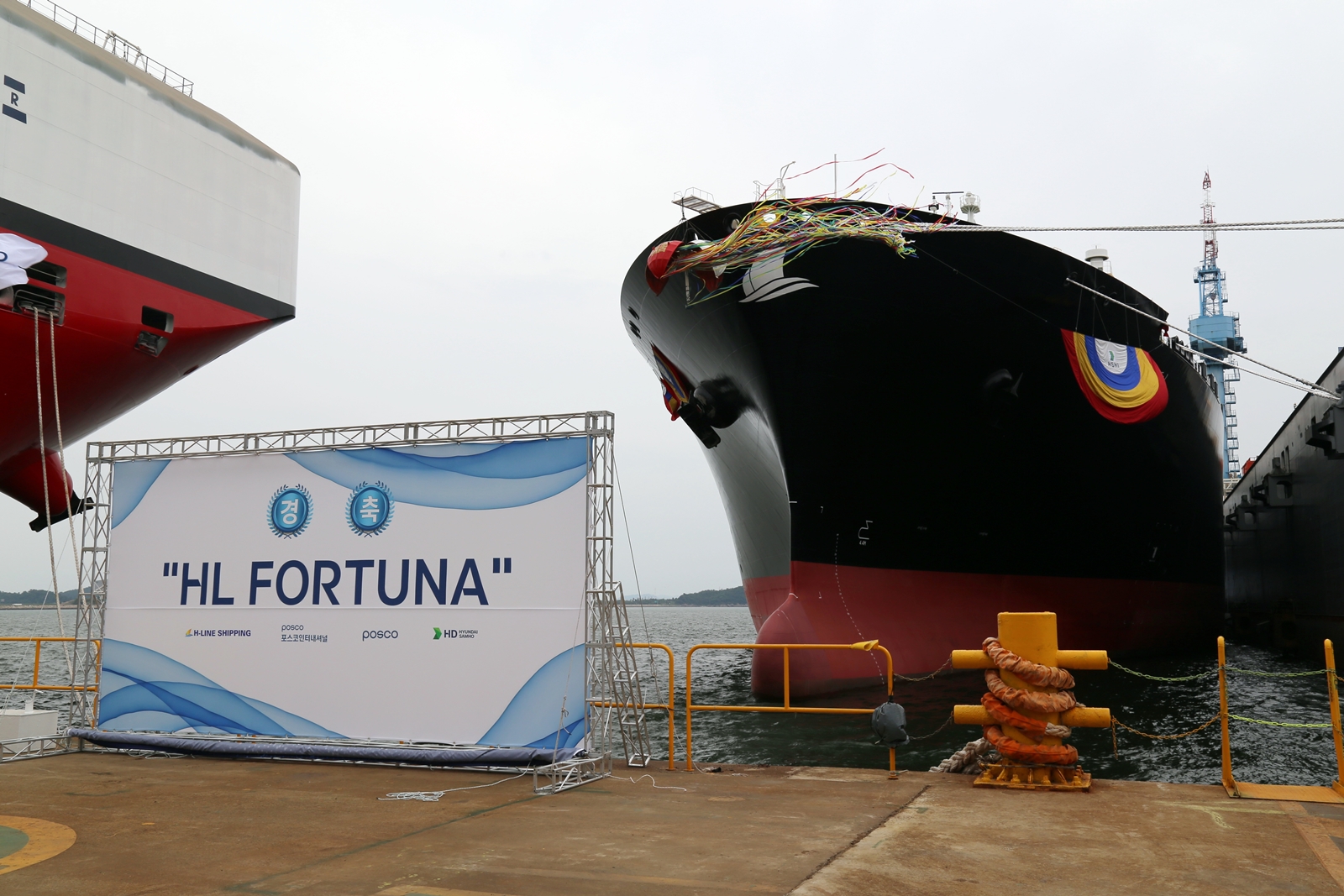
South Korea’s Posco says first LNG carrier to start ops in H2

Posco International, a unit of South Korean steel producer Posco, plans to start shipping LNG with its first dedicated LNG carrier in the second half of this year. The vessel will mainly deliver US LNG supplies to South Korea.

This story requires a subscription

Get 12 months of full digital access to LNG Prime for only $295 instead of $600.
This includes a single user license.
Check our FAQ for more info. For group subscriptions please contact us.

Most Popular

Atlantic LNG shipping rates down, Pacific rates climb

Atlantic spot LNG shipping rates dropped this week, while Pacific rates rose compared to the week before, according to Spark Commodities.

Cheniere nears launch of seventh Corpus Christi expansion train

US LNG exporter Cheniere is close to launching the seventh and final train of the Corpus Christi Stage 3 expansion project in Texas.

Vietnam’s Cai Mep LNG terminal starts gas deliveries to Phu My power complex

Nebula Energy’s AG&P LNG has started delivering natural gas from Vietnam's Cai Mep liquefied natural gas (LNG) import terminal to the 900 MW Phu My 2.1 and 2.1E power plants operated by EVNGENCO3.
spot_img

More News Like This

South Korea’s Posco International, Kospo ink HoA for Gwangyang LNG terminal

Posco International, a unit of South Korean steel producer Posco, and Korea Southern Power (Kospo) have signed a heads of agreement on the use of Posco International's Gwangyang LNG import terminal and the construction of a pipeline.

Asyad Shipping names LNG carrier duo in South Korea

Oman's Asyad Shipping has named two newbuild liquefied natural gas (LNG) carriers in South Korea.

BW confirms new LNG carrier move

BW LNG, a unit of Singapore-based gas shipping giant BW, confirmed that it has ordered two new three-tank LNG carriers from South Korea’s HD Hyundai Samho.

BW orders LNG carrier duo at HD Hyundai Samho

BW LNG, a unit of Singapore-based gas giant BW, has ordered two LNG carriers from South Korea’s HD Hyundai Samho. These vessels are expected to feature three tanks instead of four, according to shipbuilding sources.