
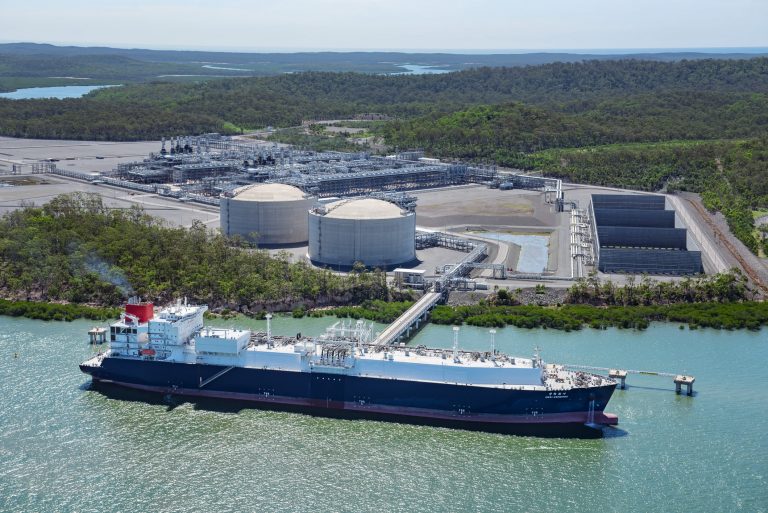
Origin Energy said the Australia Pacific LNG project has shipped its 700th cargo, while revenue coming from the development continued to increase in the fourth quarter.
In its quarterly report, Origin said that the 700th cargo left the APLNG plant in January, but it did not reveal any additional information regarding the milestone shipment.
The firm said APLNG commodity revenue rose 91 percent year-on-year and 33 percent on the prior quarter to A$2.25 billion ($1.59 billion), primarily driven by higher realized oil prices and spot LNG prices.
Origin said that the 9 mtpa LNG export facility on Curtis Island near Gladstone had delivered three JKM-linked spot cargoes in the December quarter.
North Asian LNG market prices delivered in the quarter averaged $28/mmbtu, it said.
In addition, the APLNG partners sold another five JKM-linked spot cargoes for delivery in the March quarter, Origin said.
“December quarter APLNG realized gas price was A$13.29/GJ, comprising an average LNG price of $11.80/mmbtu (contracted and spot) and an average domestic price of A$6.33/GJ (legacy and short-term),” the firm said.
APLNG production also rose 2 percent to 177.9 PJ in the October-December period when compared to the prior quarter. However, it dropped two percent when compared to the same quarter in the year before.
Stake sale
CEO Frank Calabria said, “Australia Pacific LNG has continued its strong performance and was able to benefit from the substantial increase in oil and spot LNG prices and favourable currency movements, helping to drive a large increase in revenue compared to the prior year.”
“Origin recently announced ConocoPhillips had exercised its pre-emption rights in relation to Origin’s sale of 10 percent of its shareholding in Australia Pacific LNG, subject to FIRB approval. Origin remains upstream operator and will retain a 27.5 percent interest,” Calabria said.
The Australian firm previously said it would sell a 10 percent stake in the project to Energy investor EIG but after that ConocoPhillips said it would exercise its preemption right to purchase up to an additional 10 percent shareholding interest in APLNG.
ConocoPhillips currently has a 37.5 percent share in the project and operates the LNG plant and the export sales business. China’s Sinopec owns a 25 percent share in APLNG as well.