This story requires a subscription
This includes a single user license.
According to a statement by the Offshore Alliance, which includes the Maritime Union of Australia and Australian Workers’ Union, the ballot of roughly 346 members opened on April 20 and closed on Friday.
The Offshore Alliance said that “a huge majority of Offshore Alliance members are in favor of exercising their right to take strike action in pursuit of their bargaining claims.”
Between 99 percent and 100 percent of voting Alliance members endorsed each of the 26 actions proposed by the union, according to the Alliance.
The members have endorsed various forms of protected industrial action including bans such as refusing to change from day shift to night shift, refusing to review risk assessments, offtake bans, and undertaking work stoppages from 30 minutes to 24 hours, it said.
The endorsement of industrial action allows Offshore Alliance members to theoretically commence strike action from May 7.
However, the parties have agreed to engage in a six-day bargaining facilitated by Australia’s industrial relations umpire, the Fair Work Commission between May 5 and 15, the Offshore Alliance said.
LNG Prime invited Inpex to comment on the matter.
“We are aware of the outcome and can confirm we have not received notification of protected industrial action,” a spokesman for Inpex said.
“Inpex continues to actively engage in the bargaining process in good faith and work collaboratively to address feedback from our workforce,” he said.
The spokesman added that Inpex “remains focused on maintaining safe operations at Ichthys LNG, reaching a fair and equitable agreement with employees – and importantly, ensuring reliable energy supply to our key trading partners in the Indo-Pacific region amid disruption to global energy markets.”
Inpex told LNG Prime on April 17 that the majority of Ichthys workers had voted against a new employment agreement.
Launched in October 2025, the process has involved extensive engagement from Inpex employees, bargaining representatives, and unions.
The company said that the proposed enterprise agreement offer was “fair and competitive” and it “maintains alignment of our employment conditions with the external market and meets or exceeds peer conditions in several areas.”
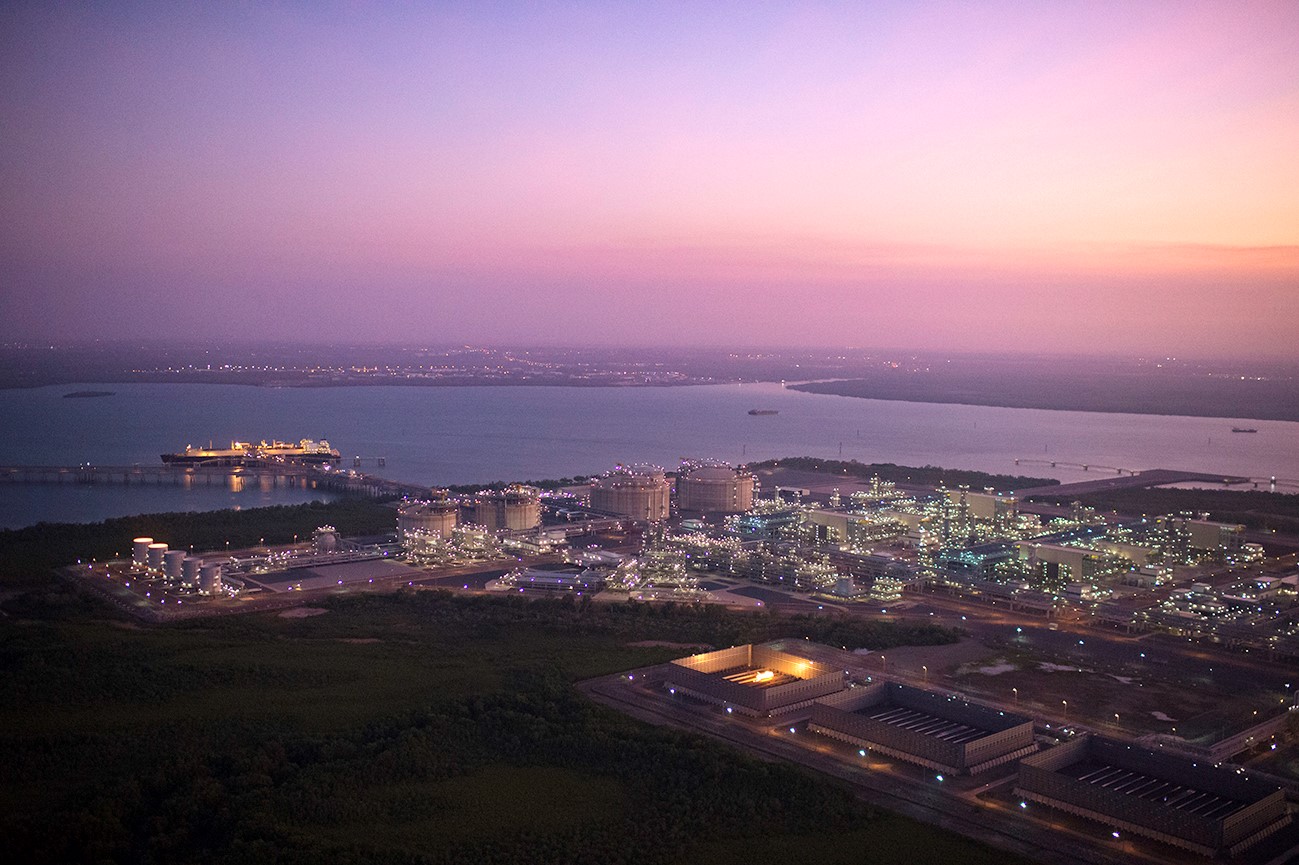
Ichthys LNG
Last year, Ichthys LNG accounted for 8 percent of both Japan and Taiwan’s respective LNG import volumes, delivered via long-term sales and purchase agreements, according to Inpex.
The facility shipped 112 LNG cargoes in 2025, and expects to ship 120 cargoes this year.
It currently features two trains, but Inpex previously announced plans to build the third liquefaction train.
Ichthys LNG is a joint venture between operator Inpex and major partner TotalEnergies.
In 2024, Inpex also purchased a small stake in Ichthys LNG from compatriot Tokyo Gas to boost its stake from 66.245 percent to 67.82 percent.
Besides TotalEnergies, other partners in the Ichthys project include Australian units of CPC, Osaka Gas, Kansai Electric Power, Jera, and Toho Gas.
Natural gas arrives to the LNG plant at Bladin Point, near Darwin, from the giant Ichthys field offshore Western Australia via an 890-kilometer-long export pipeline.
(This article was updated on April 27 to include comments by Inpex.)