This story requires a subscription
This includes a single user license.
Woodside revealed this on Monday in an economic impact assessment by Deloitte Access Economics.
The Australian firm has a 30.6 percent operating stake in the project, BP has a 44.33 percent stake after it bought a 27 percent stake from Shell in 2023, Japan Australia LNG, a joint venture of Mitsubishi and Mitsui, owns a 14.4 percent stake, while PetroChina International has a 10.67 percent.
Woodside and its partners lodged the project proposal in 2018 with a capital estimate of A$27.3 billion, while a CCS solution was subsequently added to enable a reduction of 53 million tonnes (MT) CO2e in GHG emissions, compared to the project’s 2019 Scope 1 emissions estimate.
The Browse to NWS project has a forecast production capacity of 11.4 million tonnes per annum (LNG, LPG, and domestic gas) and a peak condensate production rate of 50,000 barrels per day.
Natural gas from the Calliance, Torosa, and Brecknock fields would be delivered to the Karratha gas plant via an approximately 900-kilometer pipeline, connected to two floating production storage and offloading facilities.
Australia’s biggest undeveloped offshore gas resource
Woodiside said on Monday that the project is currently in the “concept definition phase, and key activities continue in support of progress towards front-end engineering and design entry.”
Woodside said that the economic impact assessment estimates the Browse to NWS project could contribute a “long-term uplift of more than A$141 billion in gross domestic product nationally and more than A$56 billion in taxes, including A$19.8 billion in petroleum resource rent tax (PRRT).”.
The company also stated that the project could deliver to 4,760 direct and indirect full-time equivalent jobs across Australia at peak operations.
“Browse is Australia’s biggest undeveloped offshore gas resource and represents a major opportunity for the nation at a time when energy security matters more than ever, Woodside CEO Liz Westcott said.
“Independent modeling shows Browse has the potential to power homes and businesses, support thousands of Australian jobs and generate significant revenue for governments while also helping to manage the risks and costs of the energy transition,” she said.
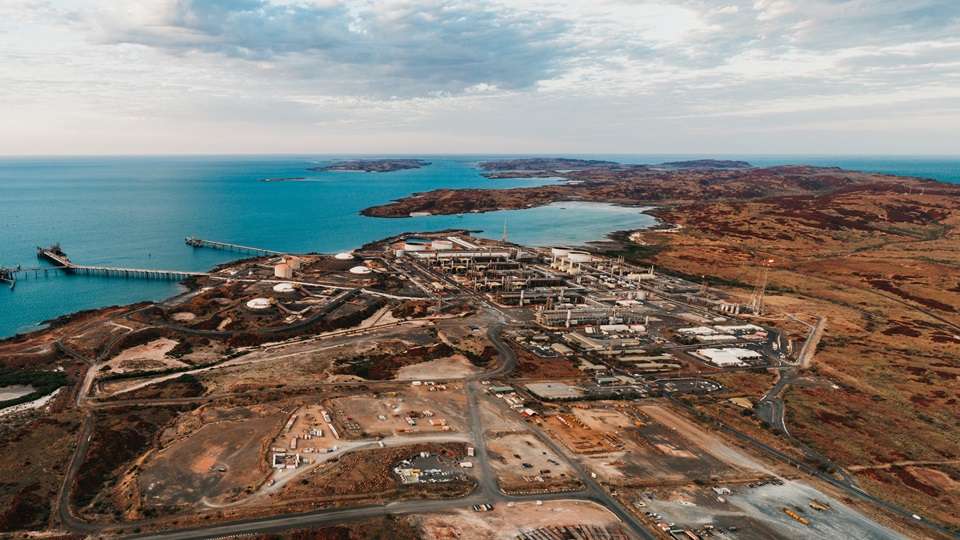
Karratha gas plant
The Karratha gas plant is part of the Woodside-operated North West Shelf (NWS) project.
The NWS project has supplied energy to Australian and international customers since the 1980’s.
Last year, Woodside completed the permanent retirement of the second LNG train at its NWS LNG terminal due to declining natural gas supplies.
This resulted in a reduction of the Karratha gas plant’s capacity from 16.9 mtpa to 14.3 mtpa.
Including the retired train, the plant has five LNG trains, launched between 1989 and 2008, and most of these volumes supply customers in Japan.
The facility also has domestic gas trains, condensate stabilization units, and LPG units.