This story requires a subscription
This includes a single user license.
Based on this amendment approval from the Staatliches Amt für Landwirtschaft und Umwelt Vorpommern (StALU), the terminal “Deutsche Ostsee” can now be operated permanently using the onboard gas generators, according to a statement by Deutsche ReGas.
Since its commissioning, the FSRU-based facility has operated using the onboard gas generators that provide electricity for regasification trains, cryogenic pumps, and mooring equipment.
This was initially permitted under the existing approval dated April 9, 2024, and subsequently through deadline extensions.
With the amendment approval now granted, this operational status has been converted from a temporary to a permanent status, Deutsche ReGas said.
In ongoing standard operations, this energy concept has proven effective, as the approved
limit values, particularly noise limits, have not been exceeded, the firm said.
“A secure legal framework for the operational status, which has proven effective since
commissioning in early 2023, is of utmost importance to Deutsche ReGas,” Ingo Wagner,
CEO of Deutsche ReGas said.
“The procedure can now be successfully concluded. This allows us to focus on our core business and ensure the gas supply for up to 13 million households. At the same time, there is certainty that the approved limit values for operation with the onboard gas generators are being complied with,” he said.
During the current heating period, since October last year, around 21 TWh have been fed into the German long-distance gas network via the FSRU-based facility.
Deutsche ReGas claims this makes the terminal, as the only site in eastern Germany, “by far the largest entry point for liquefied natural gas in the country.”
The terminal also “ranks among the most powerful floating LNG terminals in Europe in the winter of 2025/2026,” the firm said.
One FSRU
Last month, the LNG carrier Minerva Amorgos delivered a Plaquemines LNG cargo to the FSRU-based LNG import facility in Mukran, Germany’s only operational private LNG import terminal, after two icebreakers cleared the path for the vessel.
Before this, the 174,000-cbm LNG carrier had been waiting off Mukran for days to unload its US LNG cargo due to icy conditions and the malfunction of the federally-owned icebreaker Neuwerk in the Greifswalder Bodden.
Moreover, Deutsche ReGas is offering up to two billion cubic meters per annum of additional long-term regasification capacity at its FSRU-based LNG terminal.
The LNG terminal operator is advancing its plans to expand its facility on the Baltic Sea to the nameplate capacity of 13.5 bcma under the BNetzA regulatory exemption.
In December, a spokesman for Deutsche ReGas told LNG Prime that the company was running a tender process to bring back a second floating storage and regasification unit at its LNG import facility in Mukran.
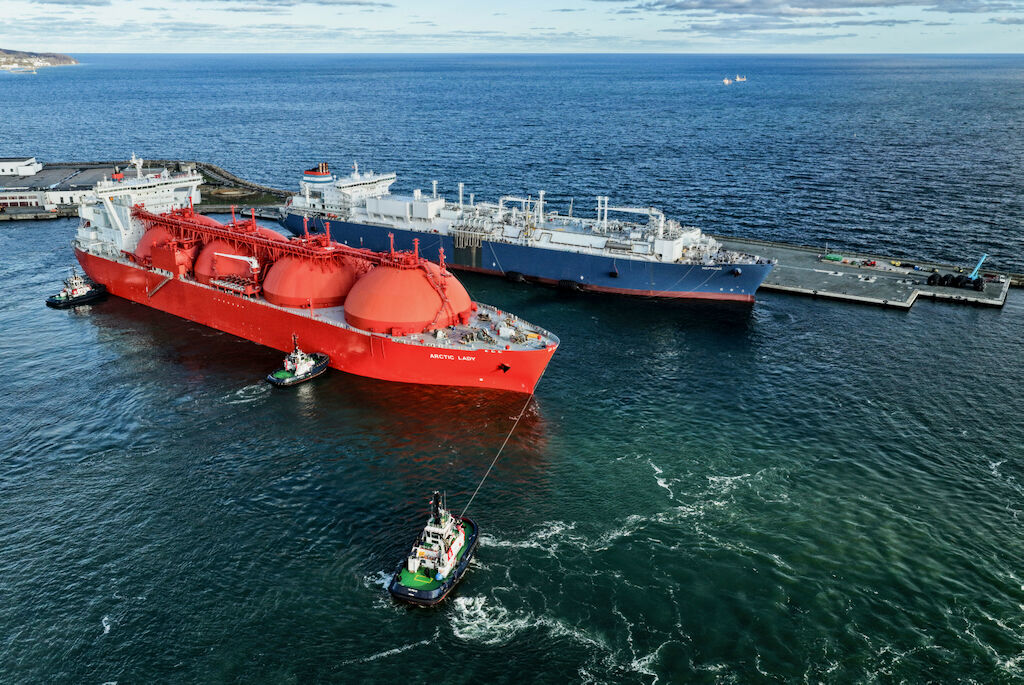
The Mukran LNG terminal currently consists of FSRU Neptune, after Deutsche ReGas terminated the charter contract for the 174,000-cbm FSRU Energos Power with the German government.
The FSRU Neptune is 50 percent owned by Hoegh Evi and sub-chartered by Deutsche ReGas from TotalEnergies, who also holds capacity rights at the Mukran facility along with trader MET.