
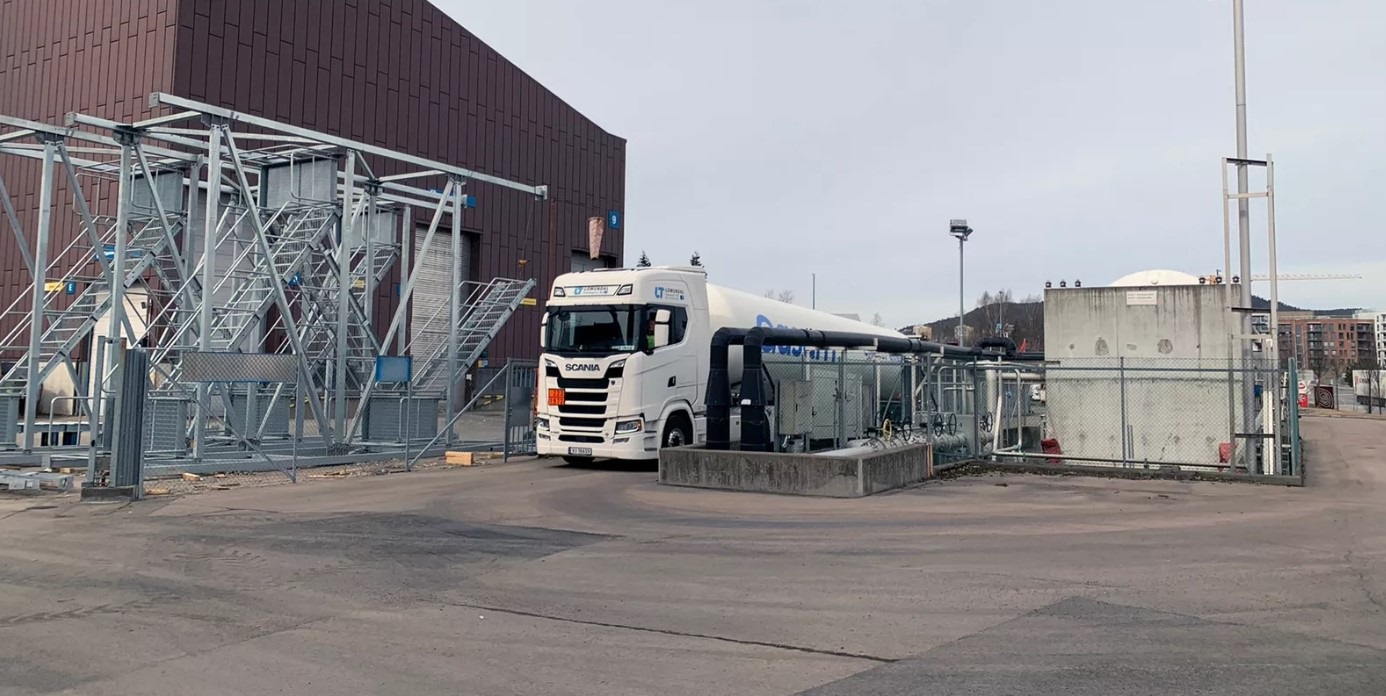
Finland’s Gasum is supplying Norway’s Hafslund Oslo Celsio with bio-LNG or liquefied biogas (LBG) to produce district heating for the city of Oslo.
In April 2022, Gasum delivered bio-LNG to Hafslund Oslo Celsio, previoulsy known as Fortum Oslo Varme, whose aim is to produce and deliver district heating in Oslo with “lowest possible carbon footprint”, the Finnish firm said.
Hafslund Oslo Celsio provides 20 percent of the heating demand in Oslo.
In 2021, only 1.5 percent of the energy mix in the production of district heating was fossil fuel LNG, according to Gasum.
“The LBG from Gasum will partly replace the remaining LNG and contribute to Hafslund Oslo Celsio’s goal to be fossil free in a normal production situation,” Gasum said.
The firm did not provide any information regarding the quantities of bio-LNG.
Sourced from cellulose and fish farming biowaste, Biokraft’s bio LNG plant in Skogn located north of Trondheim produces the renewable fuel, it said.
“Over the last years we have invested heavily in new production plants based on renewable heating technologies and technologies that allow us to use excess energy in the city,” Kristin Paus, Hafslund Oslo Celsio’s communication manager said in the statement.
“In our view, biogas is one of the key solutions to replace the flexible and immediate energy source LNG,” Paus said.
Slashing emissions
In many cases biogas is the fastest, most reliable and most cost-effective renewable energy alternative to fossil fuels such as coal or oil, Gasum claims.
Also, the use of biogas in the district heating of Oslo demonstrates it can be safely and effectively used for different types of industrial purposes, it said.
When replacing natural gas with biogas, customers do not have to invest in their facilities as the products have similar physical properties and energy content.
Gasum aims to slash carbon emissions from 345,000 tons in 2021 up to 1 million tons in 2025 by increasing biogas availability to 4 TWh.
“We are very excited about this cooperation with Hafslund Oslo Celsio, and the vast possibilities biogas has to offer for low-emission energy production,” Trond Jerve, Gasum’s sales manager said in the statement.
“The fact that a city like Oslo is so predominantly heated by renewables, as LBG, only strengthens our focus to convert more coal or oil-fired heating plants to biogas and subsequently reduce our customers’ carbon footprints substantially,” Jerve said.