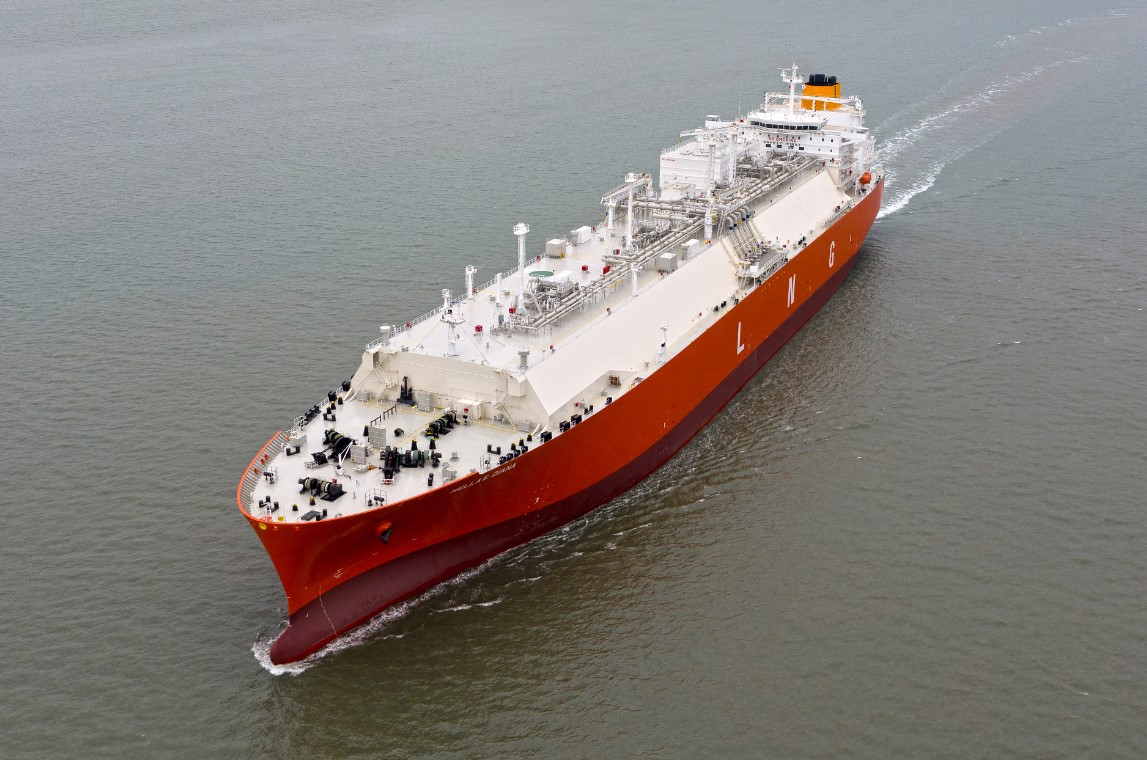
Germany’s Mukran FSRU terminal gets US LNG cargo

German LNG terminal operator Deutsche ReGas has received a cargo of liquefied natural gas from the US at its FSRU-based LNG import terminal in Germany’s port of Mukran. The 2021-built 174,000-cbm LNG carrier, Hellas Diana, owned by Latsco and chartered by Trafigura, was on Wednesday located at the Mukran FSRU terminal, which consists of two…

LNG Prime Annual Subscription Membership Required

You must be a LNG Prime Annual Subscription member to access this content.

Join Now

Already a member? Log in here

Most Popular

Equinor takes first LNG cargo from Cheniere

Norwegian energy firm Equinor has taken delivery of its first liquefied natural gas (LNG) cargo under long-term supply agreements with US LNG exporting giant Cheniere.

Brunei LNG seals long-term SPA with Japan’s Japex

LNG producer Brunei LNG has signed a long-term LNG sales and purchase agreement with Japan Petroleum Exploration Co (Japex).

Venture Global secures $3 billion credit facility

A unit of US LNG exporter Venture Global has entered into a new $3 billion 364-day revolving credit facility to fund growth.

More News Like This

Atlantic spot LNG rates rise for first time in seven weeks

Atlantic spot LNG shipping rates rose for the first time in seven weeks, rising $3,750 week-on-week to $15,500 per day, according to Spark Commodities.

US weekly LNG exports reach 32 shipments

US liquefied natural gas (LNG) plants sent 32 cargoes during the week ending September 2, up one shipment from the week before, according to the Energy Information Administration.

Germany’s DET says FSRU on its way to Stade

The 2021-built 174,000-cbm FSRU Energos Force is heading towards Germany's Stade as state-owned LNG terminal operator DET prepares to launch its fourth FSRU-based LNG import facility in Germany.

EIA says US LNG exports up 23 percent in H1

US liquefied natural gas (LNG) exports averaged 17.4 billion cubic feet per day (Bcf/d) in the first six months of the year, 23 percent more than the same period in 2025, according to the Energy Information Administration.