
Tor Olav Troim-led Golar LNG said it had ordered long-lead items worth about $300 million for its third FLNG conversion project on the back of a growing opportunity set for new FLNG growth projects.
Golar placed orders for items targeted for a 3.5 mtpa Mark II FLNG, that can also be interchangeably used on its other two FLNG designs.
The order of these items, primarily comprised of compressors, gas turbines, cold boxes, and heat recovery steam generators, puts Golar in a position to deliver an FLNG during 2025, the firm said in its third-quarter report on Wednesday.
In February, Golar said it was expecting to win a new contract for a floating LNG producer this year, and confirmed in August plans to order order long-lead items during the second half for a MKII design FLNG.
“Strong customer engagement”
Golar said in the third-quarter report it continues to experience “strong customer engagement” for new FLNG projects.
This includes working with an upstream company for a potential integrated FLNG project, and paid development agreements, one with a supermajor that is exploring FLNG for a proven large gas reserve, and another with an independent E&P company, the company said.
“Under the development agreements both parties commit to deliver a defined scope of work within set deadlines to progress potential new FLNG opportunities and agree on key steps to reach final investment decisions,” it said.
Gimi FLNG 90 percent complete
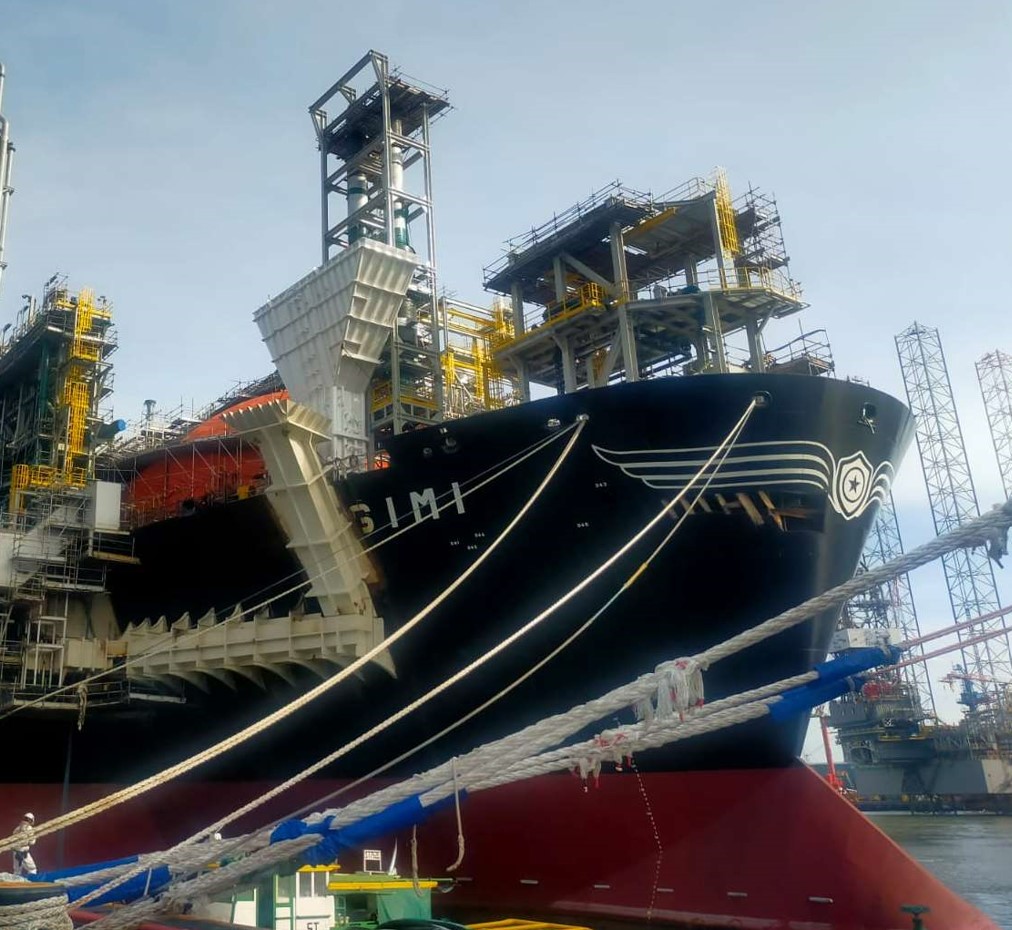
Golar owns the 2.4 mtpa Hilli FLNG located in Cameroon and the 2.5 mtpa Gimi FLNG currently under conversion at Singapore’s Keppel Shipyard.
The firm said that the FLNG Gimi conversion project is 90 percent technically complete.
Golar expects the unit to depart the yard in the first half of the next year.
It is scheduled to start serving BP’s Tortue FLNG project under a 20-year charter deal in the fourth quarter of 2023, Golar said.
“Several suitable candidates” for third FLNG project
The company’s CEO Karl Fredrik Staubo said during the company’s third-quarter conference call later on Wednesday that Golar is looking into Moss-type LNG carriers as potential candidates for the third conversion FLNG project.
“We have inspected several suitable candidates, and we are discussing to if and when we will acquire a ship for conversion,” he said.
Staubo said that Golar could also use its old 125,000-cbm LNG carrier Gandria for the conversion project.
“So we’re not 100 percent dependent on buying another ship. We would like to buy one with somewhat higher storage capacity, but it’s not the requirement,” he said.