This story requires a subscription
This includes a single user license.
The company announced this in its fourth-quarter results report.
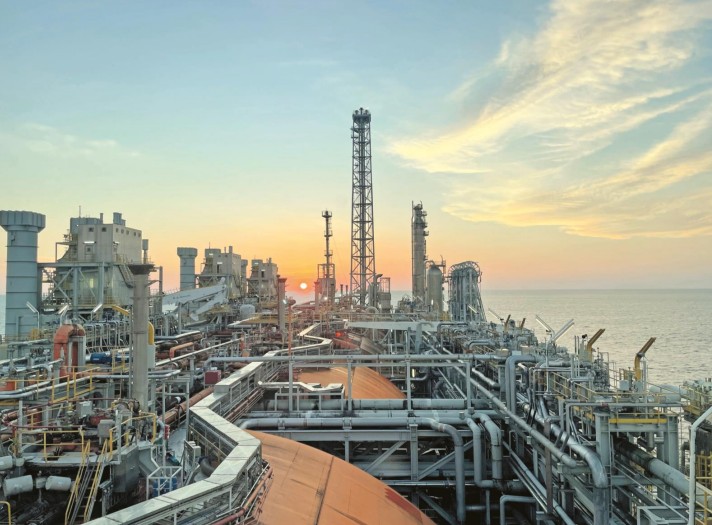
In November 2025, Golar said that it remains on track to decide on the vessel design for its fourth FLNG conversion in “the coming months.”
The company said at the time that it planned to order long-lead equipment in the fourth quarter of 2025.
Golar said on Wednesday that it has obtained updated yard availability, price, and delivery terms during the fourth quarter for each of its three different FLNG designs, ranging in size from 2 to 5 mtpa.
“Given the different size requirements of the projects in development, we will refrain from committing significant capital expenditure on our fourth FLNG until commercial terms for the next project are matured,” the company said.
“We see demand for several additional FLNG units. Development of FLNG projects is complex and time-consuming. In addition to agreement of commercial terms, they require regulatory and environmental approvals that impact timing,” the company said.
According to Golar’s earnings presentation, the company is in discussions for FLNG deployment projects in Africa, the Middle East, and South America.
Demand
During the second half of 2025, the LNG market saw an increasing focus on a supply wave of new liquefaction capacity to be added over the next five years.
Golar noted that most of these capacity additions will be based out of the US, which is already the largest LNG exporter and the marginal producer globally.
“We are pleased to see FLNG project FID’s continue in this environment, with Eni progressing its 2nd FLNG for Mozambique and our own commercial prospects advancing at an unaffected pace,” the company said.
“The ability of FLNG to monetize competitive gas reserves, attractive liquefaction capex, flexibility and often a shorter shipping distance from production to end-users versus market averages drives the relative competitiveness of our business model, it said.
Based on recent market sentiment, Golar expects the energy needed to support emerging Artificial Intelligence (AI) and data center build-outs to address some of the LNG oversupply fears.
“We also see significant elasticity in LNG demand relative to alternative fuels. Rising oil prices support the floor for LNG demand elasticity. Additionally, recent geopolitical developments in Europe and the Middle East have once again highlighted the risks to security of global energy supply caused by over dependence on a single supplier or on freedom of navigation,” the company said.
Results
Golar reported fourth-quarter 2025 net income of $10 million, inclusive of $28 million of non-cash items, adjusted Ebitda of $91 million, and total Golar cash of $1.2 billion.
The company reported full-year 2025 net income of $66 million, inclusive of $84 million of non-cash items, and adjusted Ebitda of $265 million.
Golar declared a dividend of $0.25 per share for the quarter, payable on March 18.
Golar CEO Karl Frederik Staubo said the fourth quarter was “another active quarter, closing 2025 as a record year of execution for Golar.”
“During the year, we secured $14 billion in adjusted Ebitda backlog between the two 20-year contracts for the FLNG Hilli and MKII FLNG to SESA in Argentina, with further upside through attractive commodity exposure,” he said.
During the year, Golar executed $2.275 billion of new financing facilities, Staubo noted.
“We see continued strong development of our commercial pipeline and are pleased to advance multiple discussions in both existing and geographies new to FLNG deployment. We strive to utilize the platform value, further financing optimization, and our growth pipeline to drive stakeholder value during 2026,” Staubo said.