This story requires a subscription
This includes a single user license.
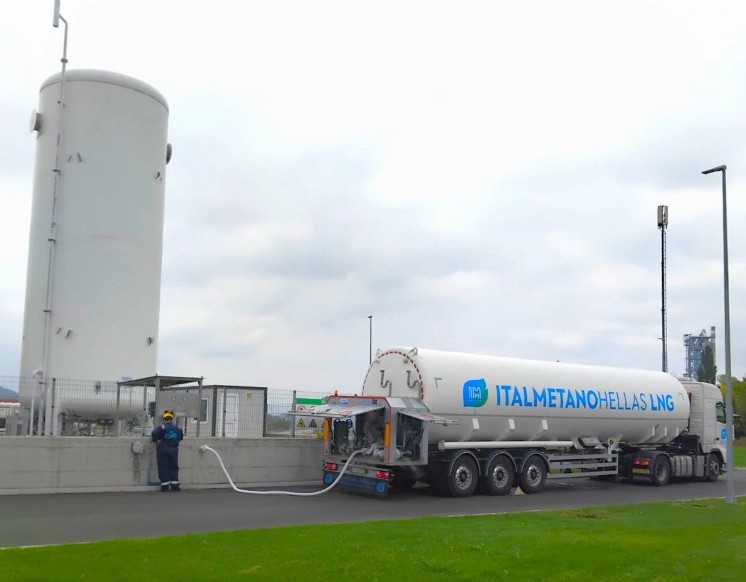
“With this achievement, the company becomes the first Greek enterprise to transport LNG to Bosnian territory, strengthening cross-border energy cooperation and promoting sustainable growth in the region,” the company said via its social media on Wednesday.
Italmetano-Hellas did not provide further details regarding the trucked LNG delivery.
Greek transport firms load LNG at DESFA’s Revithoussa truck loading station.
Italmetano-Hellas probably delivered the shipment to Bosnia’s Junuzović Kopex.
According to Junuzovic Kopex’s website, the company owns the first LNG refueling station for vehicles in Bosnia.
It opened the Lukavac station last year.
Bosnia does not have an LNG import facility, and it receives only Russian pipeline gas.
However, a pipeline project called the southern interconnection aims to connect the country’s grid with the recently upgraded Krk FSRU-based LNG import facility in Croatia.
The project has been in the early stages of development for years, and the US and EU governments have previously supported it.
According to the website of Croatian state-owned gas firm Plinacro, which is one of two shareholders of LNG Croatia, the southern interconnection of the gas transmission systems of Croatia and Bosnia and Herzegovina, on the route Zagvozd – Imotski – Posušje – Tomislavgrad – Zenica with the branch to Mostar, is of strategic importance for the security of supply of Bosnia and Herzegovina.
Croatian sections of the southern interconnection Croatia – Bosnia and Herzegovina include the section Dugopolje – Zagvozd with a total length of 52 km, and the section Zagvozd – Imotski – border of Croatia and Bosnia and Herzegovina with a total length of 22 km, while on the Bosnian and Herzegovinian side, the total length of the route is 169 km.
The anticipated interconnection capacity is up to 1.5 billion cbm per year.