This story requires a subscription
This includes a single user license.
Shell provided the forecast in its LNG Outlook 2026, which says global demand for LNG is expected to increase to nearly 700 million tonnes a year by 2050, an increase of around 65 percent from 2025 levels.
According to forecasts, LNG bunkering will grow sevenfold to 27 million tonnes by 2035, more than the amount of LNG imported by India last year, Shell said.
Shell did not provide exact figures for 2040-2050, but its chart (below) shows that LNG bunkering demand is expected to reach nearly 40 million tonnes per year by 2040 and 45 million tonnes per year in 2045 and 2050.

Shell said there are now 922 operational LNG-powered vessels and 770 on order, excluding LNG carriers.
“If you add that all together, that’s actually an increase of 200 compared to what we had expected a year ago. We see that increase across all sectors of vessels, but probably most critical in container vessels and vehicle carriers,” Cederic Cremers, president of integrated gas at Shell, said in a presentation of the Outlook on Tuesday.
He noted that it is important for the industry to continue reducing emissions across the entire value chain, including reducing methane slippage and adding carbon capture and storage (CCS).
This includes increasing the use of bio-LNG, whether in marine or trucking applications.
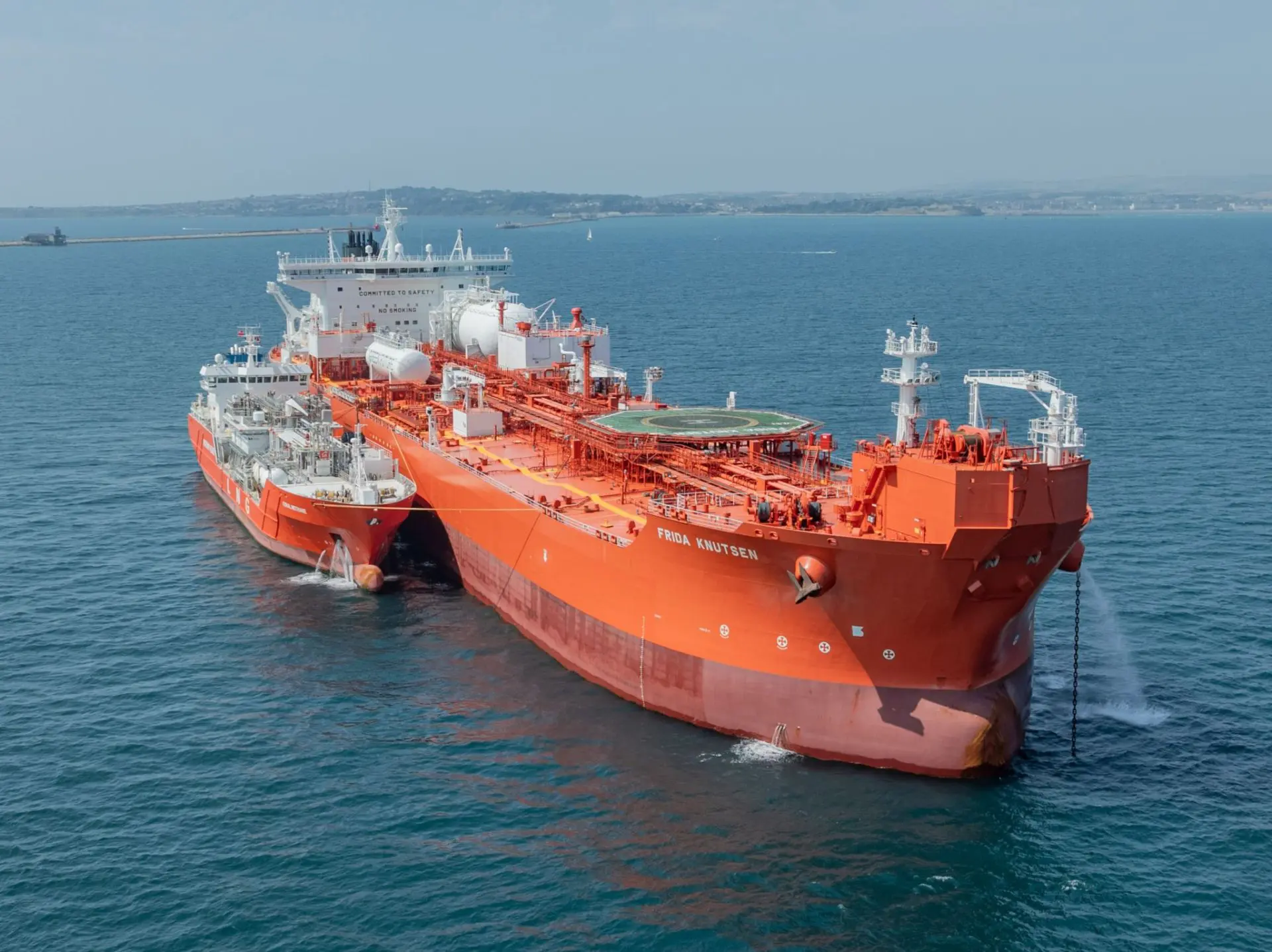
Shell claims it operates the world’s largest LNG bunkering network, supplying LNG and bio-LNG to vessels at key locations along major international trade routes.
This growing network includes 29 locations in 13 countries, while Shell has completed more than 4,000 bunkering operations across the globe, according to its website.
The company’s LNG bunkering fleet includes 15 operational vessels and four under construction.