This story requires a subscription
This includes a single user license.
Dragon LNG said in a statement that this represents “one of few opportunities to secure long-term primary LNG regasification capacity in Northwest Europe, within the liquid and flexible UK gas market.”
In September last year, the LNG terminal operator launched a market consultation, ahead of this auction.
Dragon LNG said the product offer and auction process have been developed following “extensive” engagement with market participants and in accordance with Ofgem’s ‘guidance on the regulated third-party access regime for LNG facilities, ensuring a “transparent and non-discriminatory process for remarketing capacity.”
The company is offering a “bundle” model, with capacity available in tranches as small as approximately 1.2 billion cubic meters per year (12,760 GWh per year).
Also, Dragon LNG is offering the opportunity for those with larger capacity requirements to secure anywhere between 50 percent and 100 percent of its capacity.
The LNG terminal operator also offers flexibility for customers to bid for any combination of small or large capacity tranches and different tenors, with capacity available for a minimum term of 10 years, starting August 26, 2029.
The notice for the auction data room will be open starting Thursday, 16 April 2026.
Participants will have access to the binding 2029 Dragon LNG throughput agreement and supporting documentation to allow them to prepare and submit their bids by Monday, July 13, 2026, Dragon LNG said.
VTTI and Shell
In 2024, Rotterdam-based storage terminal owner VTTI, co-owned by Vitol, IFM, and Adnoc, completed its deal with infrastructure manager Ancala to buy its 50 percent shareholding in the Dragon LNG terminal.
UK-based LNG giant Shell also has a 50 percent stake in Dragon LNG.
Dragon LNG’s regasification terminal is one of the three LNG terminals in the UK.
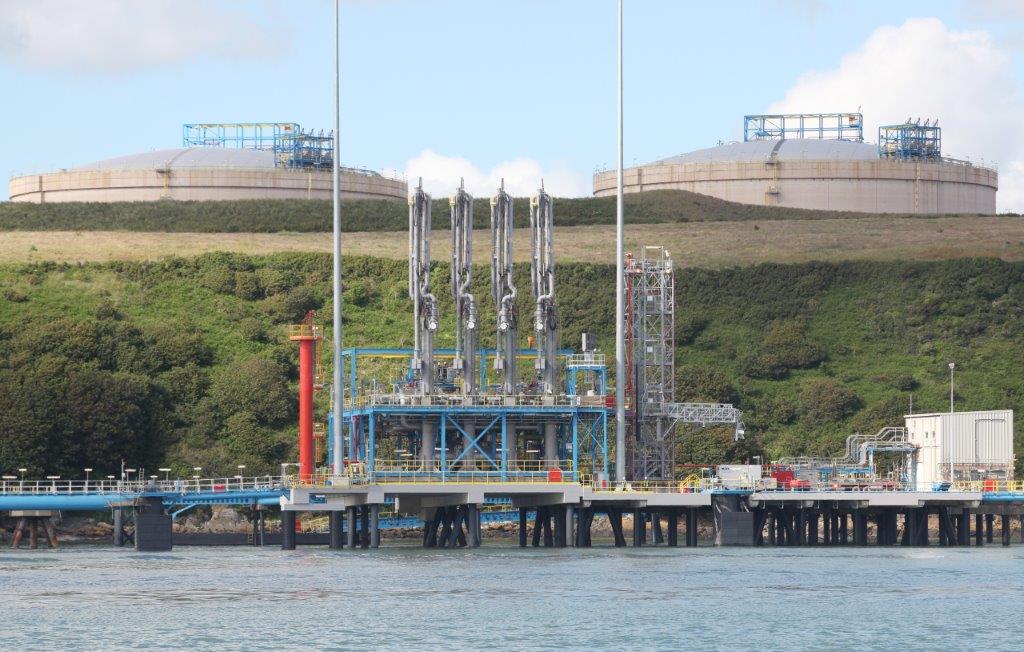
The terminal’s infrastructure includes a jetty and two 160,000-cbm storage tanks.
Shell and Petronas have 50 percent capacity rights at the facility, each. The Malaysian company sold its 50 percent share in the facility to Ancala in 2019, but it kept a long-term throughput agreement with the terminal.