
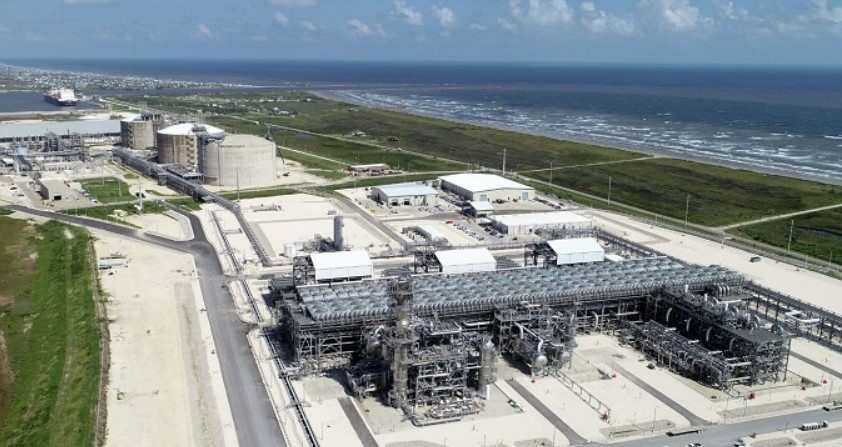
Freeport LNG, the operator of the three-train 15 mtpa liquefaction plant in Texas, is still working to restart operations at the facility following an incident that took place on June 8.
In August, Freeport LNG delayed the restart of the facility on Quintana Island from October to November.
The LNG terminal operator said at the time that initial production would start in “early to mid-November, and ramp up to a sustained level of at least 2 Bcf per day by the end of November, representing over 85 percent of the export capacity of the facility.”
Last month, Freeport LNG confirmed it was still expecting to restart operations in November.
“We continue to work towards the safe restart of our liquefaction facility, which includes obtaining the necessary regulatory approvals required for the restart,” a Freeport LNG spokeswoman told LNG Prime late on Tuesday.
The spokeswoman did not say when Freeport LNG expects to restart the facility.
Several recent reports said that the plant could stay offline in November but also in December due to delays with the regulatory approvals.
“We have no comment on the continued market speculation and rumors,” the spokeswoman said.
Freeport LNG, led by billionaire Michael Smith, launched commercial operations in May 2020 for the third train at its Quintana Island facility.
This event also marked the full commercial operation of Freeport LNG’s $13.5 billion, three-train facility.
BP, Jera, Osaka Gas, SK E&S, and TotalEnergies have long-term contracts with Freeport LNG.
Freeport LNG is also planning to add another production unit with a capacity of 5 mtpa, but it has not yet taken a final investment decision.
US energy regulators recently granted Freeport LNG’s request for a 26-month extension of time to build the fourth liquefaction train.
Root cause failure analysis
Freeport LNG provided the results of an independent, third-party root cause failure analysis (RCFA) report on the June 8 incident in a separate statement issued late on Tuesday.
The RCFA report was commissioned by Freeport LNG and independently conducted by incident investigation company, IFO Group, over the course of almost five months in order to identify the causes underlying the incident.
According to the report, the direct cause was isolation of a piping segment containing cryogenic LNG without proper overpressure protection, which LNG then warmed and expanded due to exposure to ambient conditions, resulting in a boiling liquid, expanding vapor explosion, or BLEVE, and the rupturing of the piping segment.
Root causes include pressure safety valve testing procedure and car seal program deficiencies, and failure to repurpose temperature indicator alarms used for cool down operations during commissioning on LNG piping, as well as operating procedures.
Moreover, contributing causes include failure of 2016 hazard and operability study to evaluate the potential for a blocked-in LNG piping segment with inadequate overpressure protection, failure to utilize management of change process for revisions to tank management operating procedures, and operator fatigue as a result of significant overtime needs.
IFO Group proposed recommendations to resolve each of the above root and contributing causes, and Freeport LNG is implementing each of those recommendations, the LNG terminal operator said.